Saturday, December 31, 2022

Plastic Waste Drifting in the Ocean

Plastic Waste Drifting in the Ocean
Dr Abe V Rotor

Our waste in the ocean is visible like the tip of an
iceberg, 90 percent is down under. Internet

Hidden under the rug of the ocean.
plastic waste to be forgotten;
eons hence submerged and drifting
and we call Nature our friend!

Thursday, December 29, 2022


Guava, the Wonder Tree

 Guava, the Wonder Tree
By Dr. Abe V. Rotor
If there is another wonder of the world, it is the guava.

Have you seen a tree bearing “fruits” bigger – and heavier - than its whole structure?

Picking guava on the tree, a childhood adventure (Internet photo)

Here is for the Book of Guinness Record. Have you heard the guava tree talk, laugh and shout, sing beautifully or grunt, make echolocation signals? Its branches bend without wind, the trunk sways at 9.0 intensity, leaves fall as confetti.

Parents know where to find their children, and fetch them from their perch in the tree for their siesta or class. At once the tree falls silent, but the doldrums reigns briefly. Soon the children are back to their bailiwick tree.

Take the backseat London Bridge, Golden Gate or Eiffel Tower. The guava tree can bend and touch the ground, and become upright again – not once, not twice but many times in its lifetime. And every branch equally obliges to the 180-degree weight and pull of children. No wonder the best spinning top and the best frame for slingshot are made from guava wood, and is perfect "Y", too.

It is a living Christmas tree, sort of. Birds come frequently. The perperoka and panal - migratory birds from the North, come with the Amihan and eat on the berries, while combing the place of worms, and gleaning on anything left by harvesters. The pandangera  bird (fan-tailed) dances on the branches, while the house sparrow perches, picking ripe fruits and some crawlers. And if you wake up very early, meet the butterflies and bees gathering nectar and pollen from the flowers. Take a deep breathe of the morning air spiced with the fragrance of both flowers and ripe fruits.


And the tree has eyes. True. Round and luminescent in the dark, mingle with the fireflies and the stars – and a waning moon. It is romantic, scary, sacred. Fruit bats come at night and pick the ripe fruits. Rodents and wild pigs scavenge at night. Moths and skippers, relatives of the butterfly, are nocturnal in their search for food and mate. Old folks would warn us kids never to go near the tree at night. In my career as biologist I had the experience to see in the middle of a field guava trees lighted with fireflies. This scene was in Sablayan in Mindoro island. What a sight - Christmas in another time and in another place. What a magnificent sight!

Would a child go hungry where guava trees abound? I don’t think so. Because the fruits are packed with sugar, vitamins and minerals. The fruits are made into jelly, pickled and cooked as vegetable. It is perfect for sinigang. Have you heard of guava wine? It is the most aromatic of all table wines made from tropical fruits, and it displays a rare pinkish glow. Nutritionists say guava is rich in Vitamin C, richer than most fruits, local and imported. I came to learn later of the cancer-preventing substance derived from Psidium guajava,its scientific name, and its miraculous healing attributes.

Name the ailments commonly encountered, and the guava offers a dozen home remedies. Chew the tops and make a poultice to relieve toothache. The village dentist tells you to first make a poultice the size of a marble, then after he has extracted your tooth, he tells you to seal the wound with it to prevent bleeding and infection. Pronto you can go back to your usual chore.

Guava stem is the first toothbrush, try it. Soften the smaller end and you can also use it as toothpick. This is practical when traveling in a remote rural area. Chew a leaf or two for astringent and tooth paste. Crushed leaves serve as aromatherapy, a new term for an old remedy. And for an unconscious person, burn some dried leaves, fan the smoke toward the patient while pressing his large toe with your thumb nail. The patient senses both pain and smoke and soon takes a deep breathe - another, and another, until he gets enough oxygen and he wakes up.

Decoction of guava leaves for bath is practical in eliminating body odor. Guava soap is effective against skin disorders like pimples and eczema. With this knowledge my daughter Anna Christina formulated an oitment from guava as her college thesis. It is an all-natural antibacterial formula of the plant’s anti-inflammatory and therapeutically active properties against wounds or burns. Extract from the leaves contains 5 to 10 percent tannin, and fixed oils that have antibacterial and inhibitory effect against harmful microorganisms.

When I was a kid my auntie-yaya would gather succulent green guava fruits as remedy for LBM. Tannin regulates the digestive enzymes and stabilizes the digestive flora. She would also make guava leaf tea as a follow-up treatment.

As an offshoot of all these experiences, I asked my students to look into the potential value of guava seeds. The seeds contain 14 percent oil, 15 percent proteins, and 13 percent starch. And study also the bark and leaves in the development of drugs against diarrhea, and as astringent.

At one time I was isolating yeasts that occur in nature which I needed in preparing bubod – yeasts complex for basi wine fermentation, I stumbled upon two kinds of yeasts -Saccharomyces elipsoides and Brettanomyces. The second, I discovered is the secret of French wine quality. This French yeast resides in our home yard, in the flower of the native guava! Later I found out with the help of Food Development Center of the National Food Authority the same yeast naturally occurs in the flowers of macopa (Eugenia jambalana) and duhat (Syzygium cumini), both are members of the guava family - Myrtaceae.
---------------------------------------------------------------------------------------------------------------------
Guava is the tree of happy childhood. The tree bears fruits and children. Look at all the children climbing, swinging on its branches, some armed with bamboo poles, others with small stones, still others with slingshots aiming at one thing: the ripe fruits on the tree. The tree builds sweet childhood memories.
--------------------------------------------------------------------------------------------------------------------
The guava seed is an example of Nature’s way of breaking dormancy of seeds and enhancing their dissemination. Dormancy is a temporary delay for seeds to germinate, which may last for a few days to several years. This is important as a survival mechanism of plants. Guava seeds are not destroyed by gastric juice and peristalsis of the digestive system of animals – cold or warm blooded - because of their very thick and hard pericarp. This biological property ensures the species to colonize a new land.

You can’t crack guava seeds. If you do, especially with a decayed tooth you’ll end up going to your dentist. Oh, how I would wince and hold on anything. Either the old tooth is forced out of its place or the seed has lodged in the cavity.

Old folks also believe that guava seeds can cause appendicitis. Well, its seed is too large to enter this rudimentary organ. I believe though that it is its abrasive nature that makes way for the bacteria to enter and cause infection. And subsequently inflammation. Well, if this is true, then it’s a risk one takes in eating guava. You really can’t remove all the seeds, and if you succeed you take away the fun and quaintness of eating this berry.

We have introduced foreign varieties of guava which really don’t grow into a tree. The fruits are very much bigger, but far from being as sweet as those of our native variety. In a few years the guapple, as it is called, becomes senile and die, while the native guava lasts for a lifetime, and longer.


Today when I see children climbing guava trees it reminds me of my childhood. It reminds me of its many friends – birds, ground fowls like ducks, chicken, bato-bato, goats and self-supporting native pigs. I imagine butterflies, dragonflies and Drosophila flies attracted by the ripening fruit. And frogs and toads patiently waiting for these flies to become their prey. Finches and sparrows, the quick and dainty La Golondrina (swift), the pandangera, panal and perperroka – I miss them.

Yes, the fruit bats, they are the source of children’s stories, among them is about clumsy bats dropping their load of ripe fruits accidentally falling of rooftops. In the dead of the night what would you imagine? “It’s the manananggal! (female half-bodied vampire).” Our folks at home would even make their voice tremble. And we would cling to each other in bed we kids of our time. Our elders take advantage of the situation and whisper, “If you don’t sleep, it will come back.”

In the morning who would care about the manananggal? Or seeds causing appendicitis? Or the danger of falling from the tree. Or chased by a wild boar? Or challenged by a billy goat or a brooding hen? As usual we would search for ripe berries and have our fill. Then we would hurry down and run to relieve ourselves, too loaded we simply take comfort in some nearby thickets. In time guava trees would be growing this these spots.

Children would be climbing these trees, having their fill of the fruits, and joyous in the adventure of childhood, making the guava tree the greatest wonder of the world. ~ 


Wednesday, December 28, 2022

Landscapes - Bridge of Nature and Human, Reality and Fantasy

Landscapes - Bridge of Nature and Human,
Reality and Fantasy

Dr Abe V Rotor

 The Forest is a Natural Beauty in acrylic by the author , 2015

"I love the tranquility I feel each time I step into the forest. The forest has a calming and therapeutic effect on me. I enjoy listening to its music – the chirping of the birds, the trickling of water from the leaves, the sound of flowing streams..." - Tan Ee Long, The Forest is a Natural Beauty 

Clouds Over the Mountain in acrylic by the author 2020

“The air up there in the clouds is very pure and fine, bracing and delicious. And why shouldn’t it be?- it is the same the angels breathe.” -  Mark Twain

The Rock in the Sea,  in acrylic by the author, c 2005

"Think how we sailed up-wind, the brine
  Tasting of daphne, the enormous wave
  Thundering in the water cave—
  Thunder in stone..."
         Archibald MacLeish, “The Rock in the Sea” 

A Field of Wild Lilies in acrylic by the author, 2015

A lily of a day
Is fairer far in May,
Although it fall and die that night,
It was the plant and flower of light.
In small proportions we just beauties see,
And in short measures life may perfect be.
- Ben Jonson

Walden Pond in acrylic as envisioned  by Anna Christina Rotor,
then in the grade school, circa 1995. 

"Where have all the trees and the pristine waters gone?"

“I find it wholesome to be alone the greater part of the time. To be in company, even with the best, is soon wearisome and dissipating. I love to be alone. I never found the companion that was so companionable as solitude.” ― Henry David Thoreau, Walden ~

"Sea on the Wall" Forever. The Old Man and the Sea


"Sea on the Wall" Forever

Mural inspired by Ernest Hemingway's Pulitzer Prize novel, 
The Old Man and the Sea
                                                      
 Mural by Dr Abe V Rotor


I love to paint the sea, the sea
     when I was young,
as young today in my memory,
     and after I'm gone.

"Sea on the Wall" Mural detail, A V Rotor 2015 at author's residence 
in Lagro QC (30ft x 15ft)

Quotations from 
The Old Man and the Sea
By Ernest Hemingway

Everything about him was old except his eyes, and they were the same color as the sea and were cheerful and undefeated.

“Every day is a new day. It is better to be lucky. But I would rather be exact. Then when luck comes you are ready.”

“But man is not made for defeat. A man can be destroyed but not defeated.”

“Now is no time to think of what you do not have. Think of what you can do with what there is.”

“Let him think that I am more man than I am and I will be so.”

“Why do old men wake so early? Is it to have one longer day?”

The thousand times he had proved it meant nothing. Now he was proving it again.

He no longer dreamed of storms, nor of women, nor of great occurrences, nor of great fish, nor fights, nor contests of strength, nor of his wife. He only dreamed of places now and of the lions on the beach. They played like young cats in the dusk and he loved them as he loved the boy.

“I may not be as strong as I think, but I know many tricks and I have resolution.”

“If the others heard me talking out loud they would think that I am crazy. But since I am not crazy, I do not care.”

“No one should be alone in their old age, he thought.”

You did not kill the fish only to keep alive and to sell for food, he thought. You killed him for pride and because you are a fisherman. You loved him when he was alive and you loved him after. If you love him, it is not a sin to kill him. Or is it more? ~


Monday, December 26, 2022

Research is ... with emphasis in the field of communication

Research is ... with emphasis in the field of communication

Dr Abe V Rotor
Former Professor, Faculty of Arts and Letters
University of Santo Tomas
1. Research is… a historical and comparative study of People, Media and Power, referring to the role of media in people’s revolution such as People’s Power at Edsa, Arab Spring in the Middle East, Occupy Wall Street in the US, and similar contemporary mass uprisings - not to mention, their precursor of French Revolution, and our own struggle of Independence during Rizal’s time.

2. Research is … tracing the “Theories of the Press” (Authoritarian, Libertarian, Social Responsibility, Soviet-Totalitarian, and the latest - Development Communication), how they evolved into dominant movements, and ultimately analyzing their role in shaping our society and our world.

3. Research is … inquiring into Culture and Values, national and universal in a fast changing world as people move from rural to urban centers, cities bursting at the seams, so to speak, and modern living shifting to post modernism.

4. Research is … looking into participatory journalism, and investigative journalism, their increasing importance as tools in carving out excesses and abuses of power on one hand, and anarchy on the other, in pursuit of a peaceful, orderly, and progressive life.

5. Research is … examining and evaluating the modern tools of communication, from print to multimedia, with the vast application of cyber technology and network that can reach the far ends of the earth, carrying information, entertainment, education, heretofore abreast and encompassing.

6. Research is … looking into the flaws of media, violation of the Code of Ethics and Human Rights, and offering corrective measure and setting directions of responsibility and accountability of media practitioners.

7. Research is … investigating the root cause of libel cases, and other media violations, legal and moral, and how these can be avoided through legislation and implementation.

8. Research is … determines what kind of research must be given importance and priority, where developing countries such as ours should aim at applied or functional research, rather than basic research which is expensive and fundamentally - but not functionally and directly - useful.

9. Research is … studying the effective means of distance learning or teaching through media (university without walls, e-learning) whereby students can obtain their education with affordable cost without leaving their home-base and workplace, thus enabling a country to provide mass quality education to its population.

10. Research is … determining the scope and limits of Press Freedom vis-avis Human Rights and state security, among other considerations.


11. Research is … looking into the role of media in crisis situation, on the battle front, or war zones, and under conditions where the media is placed in perilous and sensitive situation.

12. Research is … finding out the effectiveness of many learning instruments such as Paaralang Bayan sa Himpapawid (People’s School on Air); Laedza Batani (Let’s wake up!), Sokhothai Thammathirat Open University or STOU (Thailand), Kibbutz (Israel) and commune schools, outreach programs, rural immersion, barefoot doctors, school in Blog, and others.
13. Research is … finding out the complementary role of media in the implementation of the new general education under the K to 12 Program, catalyzing the program’s objectives and goals.

14. Research is … preparing the student in working for his thesis (Bachelor’s and Masteral), and dissertation (doctoral), and guiding him in the actual performance of his study.

15. Research is … critiquing Advertisements and Promotions of products and services in order to guide both producer and the public to uphold dignity and decency, and exercise prudence and responsibility in not only on the merits of products, but their educational aspects as well.

16. Research is … consolidating, interpreting and writing implementation guides of laws and rules – international and local – governing media, these include Copyright Laws, the Constitution, Code of Ethics, and those that govern Press Councils, Journalist Associations, Press Conventions.

17. Research is …guiding students in choosing their topics based on practicability (cost, time frame, facility), especially in the research proper, which comprise the methodology, analysis and interpretation of data and findings, conclusion, and finally in drawing out recommendations regarding the findings.

18. Research is … guiding students in the publication of the results of their research in Journals, books, TV and radio broadcast, on the Internet, and in local publications for the information of the grassroots.

19. Research is … linking laboratory findings and field application, technology with enterprise, thus establishing a system whereby findings are brought to people’s use, and therefore contributory to growth and development.

20. Research is … never static, exclusive, and academy-centered; neither a monopoly of a few, and that as the prime mover of invention and discovery, it must address itself to the needs of a a progressive, sustainable society.~


Saturday, December 24, 2022

Dr Jose P Rizal: Man for All Seasons and Humanity

Dr Jose P Rizal: Man for All Seasons and Humanity
Dr Jose P Rizal
Man for All Seasons and Humanity

Dedicated to our country's National Hero, born June 19, 1861, and whose martyrdom on December 30, 1896 ignited a revolution against Spain leading to Philippine Independence.  

Rizal: boy and man; Artist's study: head profile of Rizal

 
Rizal as a student in Europe; right, most popular portrait, in official documents and books; Rizal, had he reached 90. Acknowledgment: Mr. Philip Cabrera, son of the artist; and the National Historical Institute.

This article serves as a reference to students taking the Rizal Course, a three-unit subject in college. 

Dr Abe V Rotor
Former Professor, Rizal Course, UST and SPUQC

The following article about Dr Jose Rizal is widely circulated on the Internet in celebration of Rizal Day which is observed every 30th day of December, the day he was executed in Bagumbayan by Spanish authorities, 126 years ago. To preserve the originality of the report, I am presenting it the same way it is found on the Internet and as written by two sources of information, for which I express my indebtedness and gratitude. Rizal as the Father of Filipino Nationalism (Manila: Bureau of printing, 1941), pp.3-4.; and Rizal's Concept of World Brotherhood,  1958, pp.48-60. The intention of printing this article about Dr. Rizal, is to provide a fresh perspective about him and his teachings - and principally for the cause for which he gave his life - a cause which we would like to review in the light of present problems and challenges. - AVR 

TRIVIA: Complete name of Jose Rizal: José Protasio Rizal Mercado y Alonso Realonda
The Philippine national hero, Jose Rizal, has his own views and concepts about Global Fellowship which is synonymous to "Internationalism", "Worldwide Brotherhood", "International Alliance", and "Global Fellowship of Humankind". The following concepts are taken from Rizal's own words, speeches, literature, and careful analysis of his personal history and works.

"It is not what your country can do for you, but it is what you can do for your country." - Rizal

Factors that shaped Rizal
Among the factors that shaped Jose Rizal as a person:

1. Racial origin: Rizal descended from the Malay race and also genetically inherited the mixed Ilocano and Pangasinan bloodline of his mother. He also has Chinese and Spanish lineage.

2. Faith (religion): Christianity also shaped Rizal's way of thinking. He was born, baptized, and raised as a Roman Catholic.

3. His being a reader of books: He read many manuscripts, books, and other publications printed in various languages.

4. His being a linguist: His knowledge of different languages apart from his own. He can speak and understand 22 languages.

5. His voyages: He was able to befriend foreigners from the various nations that he was able to visit.

Rizal's ideas about "Brotherhood" (Fellowship)
These are Rizal's ideas about the subject of having a fellowship or brotherhood of humankind:

1. Education: The proper upbringing and education of children and daughter in order for them to prevent the same fate and suffering experienced by the uneducated and ignorant fellowmen under the rule of the Spaniards.

2. Faith or religion: The belief in only one God. The existence of different religions should not be the cause of misunderstandings. Instead, this existence of many religions should be used to attain unity and freedom. There should be deep respect to every individual's faith; the beliefs that one had become accustomed to and was brought up with since childhood.

3. Fellowman: It is important for one person to have a friend (fellow) and the establishment of an acquaintance with fellow human beings. (It is also important) to recognize the equality of rights of every fellow human being regardless of differences in beliefs and social status.

Rizal's efforts to promote a "Global Fellowship"

Rizal promoted global fellowship through the following:
a. Formation of organizations: Included here are known scholars and scientists recognized as the International Association of Filipinologists.

b. Friendship: In every journey, he was able to meet and befriend foreigners who sympathize with the experiences and events occurring in the Philippines.

c. Maintenance of communication: Before and during his exile at Dapitan, Rizal was able to keep in touch with his friends located in different parts of the world. He was also able to exchange opinions, writings and even specimens which he then studied and examined.

d. Joining organizations: Rizal believed in the goals of organizations that are related to the achievement of unity and freedom of humankind. He always had the time and opportunity to join into organizations.

Basis of "Worldwide Brotherhood" (Worldwide Fellowship)

These are the basis of the above ideas, which were then taken from Rizal's opinions found in his own writings and speeches which intend to establish unity, harmony, alliance and bonding among nations: The fundamental cause or reason for having the absence of human rights is eradicated through the establishment of unity.

One of Rizal's wishes is the presence of equal rights, justice, dignity, and peace. The basis for the unity of mankind is religion and the "Lord of Creations"; because a mutual alliance that yearns to provide a large scope of respect in human faith is needed, despite of our differences in race, education, and age. One of the negative effects of colonialism is racial discrimination. The presence of a worldwide alliance intends to eradicate any form of discrimination based on race, status in life, or religion.

Rizal wishes Peace to become an instrument that will stop the colonialism (colonization) of nations. This is also one of Rizal's concerns related to the "mutual understanding" expected from Spain but also from other countries. Similar to Rizal's protest against the public presentation (the use as exhibits) of the Igorots in Madrid in 1887 which, according to him, caused anger and misunderstanding from people who believed in the importance of one's race.

Hindrances towards the achievement of a "Worldwide Brotherhood"

However, Rizal also knew that there are hindrances in achieving such a worldwide fellowship: Change and harmony can be achieved through the presence of unity among fellowmen (which is) the belief in one's rights, dignity, human worth, and in the equality of rights between genders and among nations.

From one of the speeches of Rizal:

“The Philippines will remain one with Spain if the laws are observed and carried out (in the Philippines), if the Philippine civilization is "given life" (enlivened), and if human rights will be respected and will be provided without any tarnish and forms of deceitfulness. ”

Rizal's words revealed the hindrances against an aspired unity of humankind:

1. The absence of human rights.

2. Wrong beliefs in the implementation of agreements.

3. Taking advantage of other people.

4. Ignoring (not willing to hear) the wishes of the people.

5. Racial discrimination.

Excerpt from one of Rizal's letter to a friend:


“ If Spain does not wish to be a friend or brother to the Philippines, strongly the Philippines does not wish to be either. What is requested are kindness, the much-awaited justice, and not pity from Spain. If the conquering of a nation will result to its hardship, it is better to leave it and grant it its independence. ”

This letter presents Rizal's desire and anticipated friendship between Spain and the Philippines, but one which is based on equality of rights.

 Translation:

"What? Does no Caesar, does no Achilles appear on your stage now,
Not an Andromache e'en, not an Orestes, my friend?"
"No! there is naught to be seen there but parsons, and syndics of commerce,
Secretaries perchance, ensigns, and majors of horse."
"But, my good friend, pray tell me, what can such people e'er meet with
That can be truly great? - what that is great can they do?"

- Friedrich Schiller, "Shakespeare's Ghost," translated by John Bowring


Translation:

TO MY COUNTRY

Recorded in the history of human suffering are cancers of such malignant character that even minor contact aggravates them, endangering overwhelming pain. How often, in the midst of modern civilizations have I wanted to bring you into the discussion, sometimes to recall these memories, sometimes to compare you to other countries, so often that your beloved image became to me like a social cancer.


Therefore, because I desire your good health, which is indeed all of ours, and because I seek better stewardship for you, I will do with you what the ancients did with their infirmed: they placed them on the steps of their temples so that each in his own way could invoke a divinity that might offer a cure.


With that in mind, I will try to reproduce your current condition faithfully, without prejudice; I will lift the veil hiding your ills, and sacrifice everything to truth, even my own pride, since, as your son, I, too, suffer your defects and shortcomings.~
-----
Anecdotes about Rizal 
Acknowledgement: Internet

1. One day, intending to cross Laguna de Bay, the boy Rizal rode on a boat. While in the middle of the lake, he accidentally dropped one of his slippers into the rough waters. The slipper was immediately swept away by the swift strong currents.  Do you know what he did? He intentionally dropped the other slipper into the water. When somebody asked why he did such a thing, he remarked, "A slipper would be useless without its mate".

2. It was Jose Rizal's Mother who told him about the story of the moth. One night, her mother noticed that Rizal was not paying anymore attention to what she is saying. As she was staring at Rizal, he then was staring at the moth flying around the lamp. She then told Rizal about the story related to it.

There was a Mother and son Moth flying around the light of a candle. The Mother moth told her son not to go near the light because that was a fire and it could kill him easily. The son agreed. But he thought to himself that his mother was selfish because she doesn't want him to experience the kind of warmth that the light had given her. Then the son moth flew nearer. Soon, the wind blew the light of the candle and it reached the wings of the son moth and he died.

Rizal's mother told him that if the son moth only listened to what his Mother said, then he wouldn't be killed by that fire. 
Rizal must have remembered his mother's anecdote that night a moth visited him in Fort Santiago where he awaited his execution the following morning. He must have thought of the moth dying for his country's freedom. It died for a cause. It is the way martyrs die.  
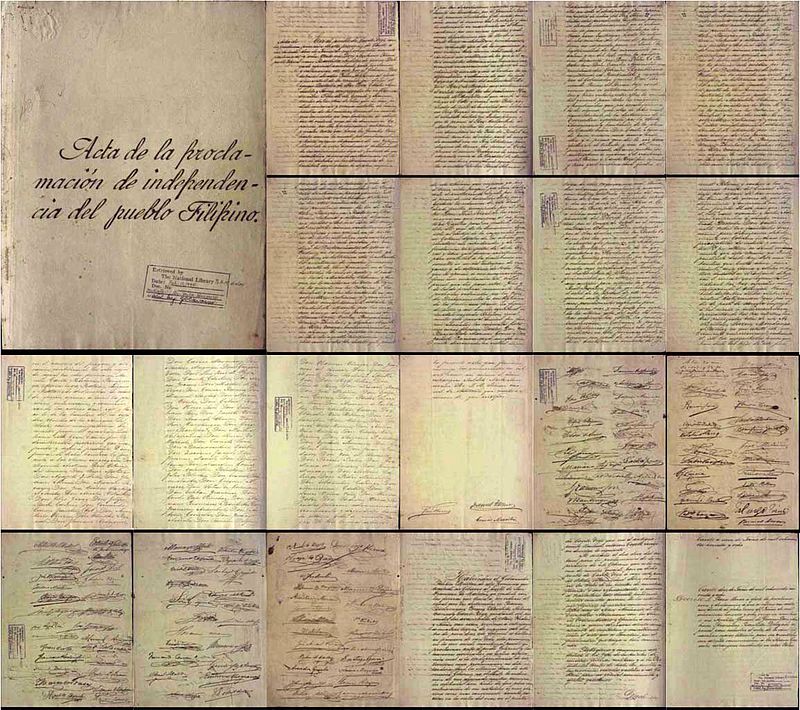
Documents of the Declaration of Philippine Independence  on June 1, 1898   Philippine independence.jpg

Artist's interpretation on Rizal on his way to execution at Bagumbayan. Note lively gait and stride, and apparently jovial conversation with the escorting military officer. It was reported by an attending doctor that Rizal's pulse rate was normal even as he faced the firing squad.

  Rizal as a Zoologist

As a zoologist, Rizal discovered living organisms unnamed in his time, such as a flying (gliding) lizard (Draco Rizali), Harlequin Tree Frog (Racophorus Rizali), among others, named after him. 


Acknowledgement: Internet

Friday, December 23, 2022

A Search for Meaning in a Child's Art

A Search for Meaning in a Child's Art 
 Mateo M Rotor, 9 

Interpreted by Dr Abe V Rotor

Sparse clouds floating free in the sky;
how I wish they fall into rain 
on the arid mountain and dying trees,
and not just pass by in vain. 

It's full of controversies, yet rich in meaning;
sunset in midnight, or the other way around;
 a quarter moon with a child happily fishing
  amidst silhouettes of trees and stars falling. ~  

Wednesday, December 21, 2022

Christmas Season Offering: Mother Teresa Nobel Peace Prize Lecture on LOVE. "We have been created in Christ's image to love and be loved,"

Christmas Season Offering:
Mother Teresa Nobel Peace Prize Lecture on LOVE

"We have been created in Christ's image to love and be loved." Selected parts of Mother Teresa's lecture on peace. Nobel Lecture by Mother Teresa. Oslo, Norway - December 11th 1979

xxx "We have been created in his (Christ) image. We have been created to love and be loved, and then he has become man to make it possible for us to love as he loved us. He makes himself the hungry one- the naked one - the homeless one- the sick one- the one in prison- the lonely one - the unwanted one- and he says: You did it to me. Hungry for our love, and this is the hunger of our poor people. This is the hunger that you and I must find, it may be in our own home.

I never forget an opportunity I had in visiting a home where they had all these old parents of sons and daughters who had just put them in an institution and forgotten maybe. And I went there, and I saw in that home they had everything, beautiful things, but everybody was looking towards the door. And I did not see a single one with their smile on their face. And I turned to the Sister and I asked: How is that? How is it that the people they have everything here, why are they all looking towards the door, why are they not smiling? I am so used to see the smile on our people, even the dying one smile, and she said: This is nearly every day, they are expecting, they are hoping that a son or daughter will come to visit them. They are hurt because they are forgotten, and see- this is where love comes. That poverty comes right there in our own home, even neglect of love. Maybe in our own family we have somebody who is feeling lonely, who is feeling sick, who is feeling worried, and these are difficult days for everybody. Are we there, are we there to receive them, is the mother there to receive the child?

I was surprised in the West to see so many young boys and girls given into drugs, and I tried to find out why- why it is like that, and the answer was: Because there is no one in the family to receive them. Father and mother are so busy they have no time. Young parents are in some institution and the child takes back to the street and gets involved in something. We are talking of peace. These are things that break peace, but I feel the greatest destroyer of peace today is abortion, because it is a direct war, a direct killing- direct murder by the mother herself. And we read in the Scripture, for God says very clearly: Even if a mother could forget her child- I will not forget you - I have carved you in the palm of my hand. We are carved in the palm of His hand, so close to Him that unborn child has been carved in the hand of God. And that is what strikes me most, the beginning of that sentence, that even if a mother could forget something impossible - but even if she could forget - I will not forget you. 


And today the greatest means - the greatest destroyer of peace is abortion. And we who are standing here - our parents wanted us. We would not be here if our parents would do that to us. Our children, we want them, we love them, but what of the millions. Many people are very, very concerned with the children in India, with the children in Africa where quite a number die, maybe of malnutrition, of hunger and so on, but millions are dying deliberately by the will of the mother. And this is what is the greatest destroyer of peace today. Because if a mother can kill her own child- what is left for me to kill you and you kill me- there is nothing between. 

And this I appeal in India, I appeal everywhere: Let us bring the child back, and this year being the child's year: What have we done for the child? At the beginning of the year I told, I spoke everywhere and I said: Let us make this year that we make every single child born, and unborn, wanted. And today is the end of the year, have we really made the children wanted? I will give you something terrifying. We are fighting abortion by adoption, we have saved thousands of lives, we have sent words to all the clinics, to the hospitals, police stations - please don't destroy the child, we will take the child. So every hour of the day and night it is always somebody, we have quite a number of unwedded mothers- tell them come, we will take care of you, we will take the child from you, and we will get a home for the child. And we have a tremendous demand from families who have no children, that is the blessing of God for us. And also, we are doing another thing which is very beautiful- we are teaching our beggars, our leprosy patients, our slum dwellers, our people of the street, natural family planning.

And in Calcutta alone in six years- it is all in Calcutta- we have had 61,273 babies less from the families who would have had, but because they practise this natural way of abstaining, of self-control, out of love for each other. We teach them the temperature meter which is very beautiful, very simple, and our poor people understand. And you know what they have told me? Our family is healthy, our family is united, and we can have a baby whenever we want. So clear- those people in the street, those beggars- and I think that if our people can do like that how much more you and all the others who can know the ways and means without destroying the life that God has created in us.

The poor people are very great people. They can teach us so many beautiful things. The other day one of them came to thank and said: You people who have vowed chastity you are the best people to teach us family planning. Because it is nothing more than self-control out of love for each other. And I think they said a beautiful sentence. And these are people who maybe have nothing to eat, maybe they have not a home where to live, but they are great people. The poor are very wonderful people. One evening we went out and we picked up four people from the street. And one of them was in a most terrible condition- and I told the Sisters: You take care of the other three, I take of this one that looked worse. So I did for her all that my love can do. I put her in bed, and there was such a beautiful smile on her face. She took hold of my hand, as she said one word only: Thank you - and she died.

I could not help but examine my conscience before her, and I asked what would I say if I was in her place. And my answer was very simple. I would have tried to draw a little attention to myself, I would have said I am hungry, that I am dying, I am cold, I am in pain, or something, but she gave me much more - she gave me her grateful love. And she died with a smile on her face. As that man whom we picked up from the drain, half eaten with worms, and we brought him to the home. I have lived like an animal in the street, but I am going to die like an angel, loved and cared for. And it was so wonderful to see the greatness of that man who could speak like that, who could die like that without blaming anybody, without cursing anybody, without comparing anything. Like an angel- this is the greatness of our people. And that is why we believe what Jesus had said: I was hungry- I was naked - I was homeless - I was unwanted, unloved, uncared for - and you did it to me.

I believe that we are not real social workers. We may be doing social work in the eyes of the people, but we are really contemplatives in the heart of the world. For we are touching the Body Of Christ 24 hours. We have 24 hours in this presence, and so you and I. You too try to bring that presence of God in your family, for the family that prays together stays together. And I think that we in our family don't need bombs and guns, to destroy to bring peace - just get together, love one another, bring that peace, that joy, that strength of presence of each other in the home. And we will be able to overcome all the evil that is in the world.

There is so much suffering, so much hatred, so much misery, and we with our prayer, with our sacrifice are beginning at home. Love begins at home, and it is not how much we do, but how much love we put in the action that we do. It is to God Almighty- how much we do it does not matter, because He is infinite, but how much love we put in that action. How much we do to Him in the person that we are serving.

Some time ago in Calcutta we had great difficulty in getting sugar, and I don't know how the word got around to the children, and a little boy of four years old, Hindu boy, went home and told his parents: I will not eat sugar for three days, I will give my sugar to Mother Teresa for her children. After three days his father and mother brought him to our home. I had never met them before, and this little one could scarcely pronounce my name, but he knew exactly what he had come to do. He knew that he wanted to share his love. xxx

And so here I am talking with you- I want you to find the poor here, right in your own home first. And begin love there. Be that good news to your own people. And find out about your next-door-neighbor - do you know who they are? I had the most extraordinary experience with a Hindu family who had eight children. A gentleman came to our house and said: Mother Teresa, there is a family with eight children, they had not eaten for so long - do something. So I took some rice and I went there immediately. And I saw the children - their eyes shining with hunger - I don't know if you have ever seen hunger. But I have seen it very often. And she took the rice, she divided the rice, and she went out. When she came back I asked her - where did you go, what did you do? And she gave me a very simple answer: They are hungry also. What struck me most was that she knew - and who are they, a Muslim family - and she knew. I didn't bring more rice that evening because I wanted them to enjoy the joy of sharing. But there were those children, radiating joy, sharing the joy with their mother because she had the love to give. And you see this is where love begins - at home. And I want you- and I am very grateful for what I have received. It has been a tremendous experience and I go back to India- I will be back by next week, the 15th I hope - and I will be able to bring your love.

And I know well that you have not given from your abundance, but you have given until it has hurt you. Today the little children they have- I was so surprised - there is so much joy for the children that are hungry. That the children like themselves will need love and care and tenderness, like they get so much from their parents. So let us thank God that we have had this opportunity to come to know each other, and this knowledge of each other has brought us very close. And we will be able to help not only the children of India and Africa, but will be able to help the children of the whole world, because as you know our Sisters are all over the world. And with this prize that I have received as a prize of peace, I am going to try to make the home for many people that have no home. Because I believe that love begins at home, and if we can create a home for the poor- I think that more and more love will spread. And we will be able through this understanding love to bring peace, be good news to the poor. The poor in our own family first, in our country and in the world. 

xxx Around the world, not only in the poor countries, but I found the poverty of the West so much more difficult to remove. When I pick up a person from the street, hungry, I give him a plate of rice, a piece of bread, I have satisfied. I have removed that hunger. But a person that is shut out, that feels unwanted, unloved, terrified, the person that has been thrown out from society - that poverty is so hurtable and so much, and I find that very difficult. Our Sisters are working amongst that kind of people in the West. So you must pray for us that we may be able to be that good news, but we cannot do that without you, you have to do that here in your country. You must come to know the poor, maybe our people here have material things, everything, but I think that if we all look into our own homes, how difficult we find it sometimes to smile at each other, and that the smile is the beginning of love.

And so let us always meet each other with a smile, for the smile is the beginning of love, and once we begin to love each other naturally we want to do something. So you pray for our Sisters and for me and for our Brothers, and for our Co-Workers that are around the world. That we may remain faithful to the gift of God, to love Him and serve Him in the poor together with you. What we have done we should not have been able to do if you did not share with your prayers, with your gifts, this continual giving. But I don't want you to give me from your abundance, I want that you give me until it hurts.

The other day I received 15 dollars from a man who has been on his back for twenty years, and the only part that he can move is his right hand. And the only companion that he enjoys is smoking. And he said to me: I do not smoke for one week, and I send you this money. It must have been a terrible sacrifice for him, but see how beautiful, how he shared, and with that money I bought bread and I gave to those who are hungry with a joy on both sides, he was giving and the poor were receiving. This is something that you and I - it is a gift of God to us to be able to share our love with others.


 And let it be as it was for Jesus. Let us love one another as he loved us. Let us love Him with undivided love. And the joy of loving Him and each other- let us give now - that Christmas is coming so close. Let us keep that joy of loving Jesus in our hearts. And share that joy with all that we come in touch with. And that radiating joy is real, for we have no reason not to be happy because we have no Christ with us. Christ in our hearts, Christ in the poor that we meet, Christ in the smile that we give and the smile that we receive. Let us make that one point: That no child will be unwanted, and also that we meet each other always with a smile, especially when it is difficult to smile.

I never forget some time ago about fourteen professors came from the United States from different universities. And they came to Calcutta to our house. Then we were talking about that they had been to the home for the dying. We have a home for the dying in Calcutta, where we have picked up more than 36,000 people only from the streets of Calcutta, and out of that big number more than 18,000 have died a beautiful death. They have just gone home to God; and they came to our house and we talked of love, of compassion, and then one of them asked me: Say, Mother, please tell us something that we will remember, and I said to them: Smile at each other, make time for each other in your family. Smile at each other. 


And then another one asked me: Are you married, and I said: Yes, and I find it sometimes very difficult to smile at Jesus because he can be very demanding sometimes. This is really something true, and there is where love comes - when it is demanding, and yet we can give it to Him with joy. Just as I have said today, I have said that if I don't go to Heaven for anything else I will be going to Heaven for all the publicity because it has purified me and sacrificed me and made me really ready to go to Heaven. I think that this is something, that we must live life beautifully, we have Jesus with us and He loves us. If we could only remember that God loves me, and I have an opportunity to love others as he loves me, not in big things, but in small things with great love, then Norway becomes a nest of love. xxx

Mother Teresa Speech (Nobel Lecture Speech, Internet) 
Living with Nature School on Blog - Paaralang Bayan sa Himpapawid (People's School on Air) with Ms Melly C Tenorio 738 DZRB AM Band, Evening Class, Monday to Friday