Thursday, October 22, 2026

Halloween: Dialogue with the Dead. "Remember our dead beloved, the unsung, unknown;..."

Halloween: Dialogue with the Dead 

Dr Abe V Rotor

"There is something at work in my soul, which I do not understand."
 - Mary Shelley, "Frankenstein"

Remember our dead beloved, the unsung, unknown;
     catch up with time for our failed expression,
prayers unsaid, love denied,  gesture unrequited -
     day of the souls to amend our infraction. 

 
   The evil spirit comes for a visit. Merging of the real and imaginary. 

 "What’s the good of being a ghost if you can’t frighten people away?" - Barbara, Beetlejuice

Dialogue with the dead. 

Come let's visit Dante's Inferno, and Milton's world,*
call on Frankenstein,** his monstrous creation;
travel to Transylvania, track the undead Dracula;
join the dead, their ghosts in celebration.

Good and evil for once their boundary open,
so with that of heaven and hell we implore;
take the backseat apostasy, paganism alive!
make haste, before Hades closes the door.

Transported to the land of the dead. 

"Believe nothing you hear, and only one half that you see."
Edgar Allan Poe

 
 Treat or threat.

"A witch never gets caught. Don’t forget that she has magic in her fingers 
and devilry dancing in her blood." - Roald Dahl

   Whose party? Where have all the people gone?

"Halloween wraps fear in innocence, As though it were a slightly sour sweet.
 Let terror, then, be turned into a treat." - Nicholas Gordon


            Masks or real faces?

   Faces, faces, young and old,
  fair and coy and bold;
masks, masks, masks we are told,
sans feeling, and cold. 

    
The dead takes center stage. 

"Everyone is a moon and has a dark side, which he never 
shows to anybody." - Mark Twain

* Paradise Lost and Paradise Regained, epic by John Milton
** Frankenstein, novel by Mary Shelley ~

Tuesday, October 20, 2026

^ MMSU Students Visit the Living with Nature Center. "To see a World in a Grain of Sand..."

MMSU Students Visit the Living with Nature Center
"To see a World in a Grain of Sand..."
San Vicente, Ilocos Sur
Dr Abe V Rotor

   MMSU students pose with their work in a quick painting session
       
"Nature is the best teacher, model and friend." Painting by the author. 
 
Begin the begin, a song goes on;
end does not end in perfection;
yet in between lies the challenge
of art to its fullest expression.
 
            
Living with Nature museum and art gallery

Bring Nature home in an art gallery,
     a home museum and library;
preserve history into a living memory,
     folk stories and mythology.

    
18th Century Basi wine cellar

Basi meets European standard of Port and Sherry,
reminiscent of the Galleon Trade's long history,
basi long controlled under Spanish monopoly,
until a Revolt broke up, so with the basi industry.

MMSU guests pose with the author-host at the Center's museum and library.

A museum is best described in imagery,
in William Blake's famous allegory:

"To see a World in a Grain of Sand
And a Heaven a Wild Flower,
Hold Infinity in the palm of your hand,
And Eternity in an hour." 
- William Blake 
Auguries of Innocence

“Real museums are places where Time is transformed into Space.”
― Orhan Pamuk, The Museum of Innocence

 
"Books are the greatest treasure of mankind, its collective attributes as humanity, the very stimulus of man's rationality to rise above other creatures - and himself." - avr
 
"Learn and Live" (Motto of the Open University)

"Books enlighten man to care for the environment, guide the young and future generations to a better future, and lead man to save his own species 
from extinction." - avr

 
Symbolism of The Old Man and the Sea
defined in Frankl's logotherapy;
countless in real life wanting to be free,
make the world's greatest story.

"Books grew with knowledge, brought new schools and movements 
in arts and philosophy, in unending search for truth." - avr

 
Books that changed the way we live
      are seemingly impossible to believe. - avr

"Books are the most widely read, the Bible; the shortest, Albert Einstein’s e=mc2, and book-to-cinema versions of Spielberg, Lucas, Cecil B DeMille, et al." - avr

 
Enshrined bust of Dr Jose Rizal in the Living with Nature garden, 
with heritage trees around.

Known mainly in books and in the classroom,
     little understood as hero of his kind;
yet closest to his fellowmen in far away Dapitan,
     and in a garden he is now enshrined.

 
MMSU coeds pose with seedlings of palomaria  (Calophylllum inophyllum*).
At the background is a garden shrine of Dr Jose Rizal.

Now endangered this tree once locally common,
into the hands of the young hangs its future;
lest lost to man's folly and greed to oblivion;
hurrah! to the new breed of heroes of nature

* Calophyllum is a genus of tropical flowering plants in the family Calophyllaceae. They are mainly distributed in Asia, with some species in Africa, the Americas, Australasia, and the Pacific Islands. Wikipedia
---------------------
* The Mariano Marcos State University (MMSU) is a state university in Ilocos Norte, Philippines, established on January 6, 1978, Main Campus: City of Batac (300 hectares with Satellite Campuses: Laoag City, Paoay, Currimao, and Dingras. Academics: 14 colleges offering undergraduate and graduate programs. University President: Dr. Virgilio Julius P. Manzano Jr. 
-------------------
Annex - AI Overview
"To see a World in a Grain of Sand..."
Mariano Marcos State University Students in Humanities Visit the Living with Nature Center” with reference to Dr. Abercio V. Rotor’s Blog

In Dr. Abe V. Rotor’s blog entry on the MMSU Humanities students’ visit to the Living with Nature Center, the phrase “to see a world in a grain of sand” is used as a poetic metaphor to express the idea that small, seemingly insignificant details can reveal the essence of the whole. naturalismavrotor.blogspot.com+1.

Meaning of the metaphor
The expression comes from the philosophical and literary idea that a microcosm can reflect the macrocosm — that by closely observing a small object or scene, one can perceive patterns, values, or truths that mirror the larger world see2think.wordpress.com. In this case, the “grain of sand” symbolizes the small-scale experiences, artifacts, or natural elements encountered at the Living with Nature Center, while “the world” represents the broader cultural, historical, and ecological narratives that the Humanities students are meant to understand.

How it applies to the MMSU visit
According to the blog, the Living with Nature Center is described as a museum, art gallery, and home library that “brings nature home” and preserves history, folk stories, and mythology naturalismavrotor.blogspot.com. The Humanities students, through activities like painting sessions and guided exploration, are encouraged to engage with these small but rich cultural and natural elements.

Rotor’s use of the metaphor suggests that:

Close observation of local traditions, artifacts, and natural features can lead to deeper understanding of the community’s identity and history. The humanities curriculum is not just about abstract study, but about finding meaning in tangible, everyday details — much like seeing the whole world reflected in a single grain of sand. The visit is meant to connect the students’ academic learning with lived experience, fostering empathy, cultural awareness, and ecological consciousness.

Why it matters in the blog
By framing the visit this way, Rotor emphasizes that the value of the Humanities lies in the ability to “see the world” through these small, tangible experiences. It’s a reminder that learning is not only in books but in the direct encounter with the environment and culture around us, and that such encounters can reveal universal truths.

In short,
in this context, “to see a world in a grain of sand” is a poetic way of saying that the Humanities students, by engaging with the small but meaningful details at the Living with Nature Center, are learning to perceive the larger world through its smallest, most vivid parts. ~

Monday, October 19, 2026

A Halloween Story: “To Heaven and Back"

A Halloween Story
“To Heaven and Back"

Remembering the good old days and thanking people for all the good things they did, is perhaps the best offering one can give to someone who had "died, and came back." 
Dr Abe V Rotor

Towards the Light, Concept of the way to Heaven based on Christian teaching. On-the-spot painting by the author at the Sacred Heart Novitiate, Novaliches QC

This is a true story - the story of Auntie Dorotea who went to heaven and returned for a second life.
 
This is not an unusual story.  Many people I am close with have a story to tell about close encounter with death.

How close is this encounter? It is leaving the world of the living and going to the world of the spirits, of the saints and angels for those who led a life worthy of a place in heaven. In the process the traveler encounters a mysterious scenery, a realm strangely beautiful.  The spirits are simply suspended in place, they appear weightless, and have no mass at all.  Angelic notes pipe through the calm and fades out into the din. There are no boundaries, Nothing moves except the travelers, in slow animated pace, all toward the source of light. They are all in white, flowing white. They seem not to know each other as they traveled on the long, long road. 

Finally Auntie Doting reached the source of light.   It is a kingdom different from any kingdom. She saw her son who died when he was a young boy. She saw uncle, her husband.  She recognized others, relatives, friends, neighbors. But they simply look at each other. And nothing more.

"Did you see my mom?" I ventured to asked.  To which she readily answered, yes. I felt happy mom is in heaven, even if I knew by religious belief.  

I allowed her to enumerate all acquaintances she saw in her sojourn. I was expecting a very important name. My father’s.

She paused and thought deeply. "No, I can't recall," she said. She was drawing in the air  with her fingers.an imaginary map.

"Try to remember, Auntie," I pleaded. 

Silence. 

Auntie Doting and my dad were partners in business for years in Ilocos. When I went to college in Manila Dad entrusted me under her guidance, together with my two cousins who were then high school teachers. Had it not been for them I would not have made it to what I am today. I was a wartime baby, and mom died when I was two. Dad never recovered his health although he lived to a ripe age. 

As a farmhand I used to tell dad, "I can't leave you alone, I can help you manage the farm." Dad would just remain silent. Dad graduated from De Paul University in Chicago during the Great Depression. He was among the bona fide balikbayan.  He returned and put up a mechanized furniture shop and bought some land.  Then the war broke, my mom died, so with my baby sister.  Slowly dad manage to put back what was left in his business which enabled us his three children to go through with our studies.  

Although I was the youngest I insisted to stay put on the farm.  Dad finally confronted me, "Is that  all you aspire in life?" Finishing a college degree was far from my dream. That was the time he sought help from Auntie Doting.   

Remembering the good old days and thanking people for all the good things they did, is perhaps the best offering one can give to someone who had "died, and came back."  It is a special way of expressing how grateful I am to my Auntie Doting. 

Days passed, Auntie's condition was fast deteriorating. At her deathbed she held my hand and whispered, "I saw your dad." ~

Friday, October 16, 2026

^ Water Conservation at Home and on the Farm in 3 Articles

Water Conservation at Home and on the Farm

Dr Abe V Rotor
"Water, water, everywhere, nor any drop to drink." 
 - Samuel Taylor Coleridge, The Rime of the Ancient Mariner
.
Part 1 - Automatic Rainwater Collection and Storage in Brisbane, Australia  
Part 2 - Water Conservation: Harvesting Rainwater in Metro Manila
Part 3 - "Palay-isdaan" (Rice-Fish Culture) - An Agro-Ecology Model
Annex - AI Overview: Concept and Practice of Water Conservation 
              in Dr. Abercio V. Rotor’s Blog Articles

Part 1 - Automatic Rainwater Collection and Storage
Brisbane, Australia 

Rainwater is collected from the rooftop, filtered, stored, and used in watering the garden, and for other domestic uses. Rainfall is scarce in eastern Australia where Brisbane is the capital of Queensland state. Although seasons are distinct,  it does not snow in winter which is in the months of July to September, the summer months in the Northern hemisphere. The photographs shown here were taken in August, by the author on his visit during the coolest part of the year with temperature ranging from 5 to 15 degrees Celsius. Rainwater is a precious resource for which reason water conservation is very important - harvesting rainwater directly from rooftops, and building reservoirs like ponds (lower PHOTO) which gathers and stores runoff, or building a series of dams along an intermittent stream.  Here are the main features of harvesting rainwater, based on the home of the author's daughter and family in Brisbane. 
    • Integrated with housing program
    • Built-in system, pre-fabricated design  
    • Practical, easy to operate system
    • Support from government and organizations
    • Economical and environment-friendly
Water impounding on the countryside, Norvic Star cottage.
Brisbane, Queensland, Australia.  Photos by the author.

A pond is formed from a natural basin, or it is a man-made catchment of runoff water and spring. Water is also conserved in a similar way by building a series of dams along an intermittent stream, to store water for the dry months which is otherwise lost during rainy season. Ponds attract wildlife, stopover of wild ducks and herons and other migratory birds. It is home of reptiles and amphibians, and a good number of freshwater fish, for which ponds are fishing grounds for fish farming and sports, for their aesthetic function and beauty as park, notwithstanding. 

Part 2 - Water Conservation 
 Harvesting Rainwater in Metro Manila


A bountiful harvest of rainwater cuts down water bill; it is environment-friendly
 and a source of enjoyment. At home, Lagro QC. Photos by the author.
  1. Join downspouts together to maximize harvest of rainwater in one place.
  2. Keep roof, gutter and downspout, regularly clean and de-clog any debris.
  3. Avoid using red lead paint, use epoxy paint instead, to avoid lead contaminant.
  4. Filter rainwater with fine screen or cloth before transferring to container.
  5. Plastic containers are convenient but they serve only as temporary storage.
  6. Wide mouth containers may cause accident. They are not designed as bath tubs.
  7. Use water within five days, otherwise it breeds mosquitoes and other vermin.
  8. Clean and expose containers under the sun for an hour or two to disinfect.
  9. Invert and be ready for the next rain to come. Store only clean rainwater.
  10. Final storage is ideally a garden pond. It is multipurpose: fish culture, water for cleaning, watering and for use in case of fire.

A garden pond adds aesthetic beauty to the place, adds coolness and tranquility, cum gentle sound of a fountain and running stream. Garden Pond at home in Lagro, QC. Take Nature Home wall mural complex by the author.
  1.  
Catfish and pako fish raised in a garden pond at author's residence.

Part 3
"Palay-isdaan" (Rice-Fish Culture)
An Agro-Ecology Model 
Dr Abe V Rotor
  
Living with Nature Center Garden Pond
San Vicente, Ilocos Sur, Photos by the author

Palay-isdaan is a revival of a virtually lost art and indigenous farming system and industry. Since the late fifties, the introduction of pesticides and chemical fertilizers and their rampant use decimated wildlife in ricefields. As a rule therefore, the ricefields must be free of these poisons, for palay-isdaan to succeed.
 
 
Top, clockwise: lowland ricefield during monsoon season; harvesting fish ahead of rice harvest as monsoon ends; close-up of Azolla, aquatic fern as natural source of fertilizer, fish food, and mulch in controlling weeds in the ricefield; duck raising may be integrated with rice-fish culture. 

This technology is indigenous. What we call palay-isdaan is an innovation of a traditional way of raising fish and other freshwater organisms while the rice plant is growing in the field during the rainy season.

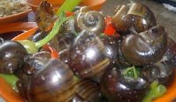
Many wildlife species are found in ricefields as their natural habitat. These are commonly freshwater fish like hito, dalag, gurami, martiniko, and lately, since the fifties, tilapia. Then we have ulang PHOTO (freshwater lobsters), shrimps, kuhol, PHOTO suso’, and tulya. 
Strong rains release these organisms from their hibernation, usually in carabao wallows, ponds, and river basins – or in mud where they were ensconced during summer. The ricefields become one huge lake at the peak of the rainy season, and as the water subsides, these organisms are trapped in the paddies. Farmers pick them up for food, which is indeed a good source of protein for his family. Many find it a sport hunting them, while others find ways of protecting them until they reach maturity. The latter is the basis of palay-isdaan technology, which has these features.

1. The dike (pilapil) must be strong and high enough to prevent the fish to escape. To do this, trenches are dug around the rice field like a moat, two meter wide and one-half meter deep. The soil material is used to rebuild the dike.


2. Another model is to build a wide trench, 3 to 4 meters wide and one-half meter deep, running through the center of the rice paddy. This is usually done in low-lying areas where the water stays much longer. The trench serves as a natural trap for the fish as the surrounding water subsides.


3. A third model is recommended for irrigated areas where the rice field is managed like a fishpond. Here the farmer selects the fish he wants to grow, provides them with supplemental feeds, and gives attention more than what the other two models require. A commercial model would mean converting 30 percent of the total area into trenches.


Palay-isdaan is a revival of a virtually lost art and indigenous industry. Since the late fifties, the introduction of pesticides and chemical fertilizers and their rampant use decimated wildlife in ricefields. As a rule therefore, unless the ricefields are free of these poisons, palay-isdaan will never succeed.

4. Because it takes time for the fish to grow to maturity it is advisable to plant traditional varieties which mature in 110 to 130 days. But this is feasible only where the rainy season is long and water supply is readily available. Traditional varieties generally do not need chemical spraying and fertilization.

Well-managed rice-fish farms in Central Luzon and other parts of the country can yield as much as 200 kg of tilapia per hectare. At P100 per kilo, the gross value is P20,000. While this gives around15 percent additional income, the farmer should consider a reduction in rice yield by at least 5 percent. Still palay-isdaan gives more income than rice monoculture.

Irrigated areas can have two fish crops a year, but this is not advisable because of the high cost of irrigation. Besides, it is virtually impossible to grow palagad rice (summer crop) without heavy dependence on chemical pesticides and fertilizers.~

-----------------------
Palay-isdaan is a practical and cheap source of food and nutrition for the farming family.  It provides a natural sport and recreation most especially to children. Palay-isdaan is among the attractions in agro-tourism.   
--------------
Acknowledgement: Internet photos as indicated

------------------------------------------
Annex - AI Overview
Concept and Practice of Water Conservation
in Dr. Abercio V. Rotor’s Blog Articles

Dr. Abercio V. Rotor’s blog articles, especially in his “Living with Nature” and “Naturalist’s World” series, present water conservation as both a scientific principle and a practical, community-based practice.

Concept: The 12 Principles of Water Conservation and Utilization
In his October 2026 “Usapang Bayan” article, Dr. Rotor outlines twelve guiding principles for water management Living with Nature - School on Blog by Dr. Abercio V. Rotor+2:

1. Recognize seasonal patterns – The Philippines has a wet (Habagat) and dry (Amihan) season; conservation is especially critical in the driest months (March–April, sometimes May).

2. Respect local micro-climates – Elevation, natural barriers, proximity to large bodies of water, and forest cover create distinct rainfall patterns that should guide water use.

3. Protect freshwater sources – Lakes, swamps, rivers, springs, and groundwater are the main supplies; they must be managed holistically, considering watershed interconnections.

4. Manage watersheds holistically – Preserve the network of tributaries and distributaries that sustain water bodies.

5. Adapt to climate variability – Account for El Niño and other climate phenomena in planning.

6. Harvest rainwater – Capture and store rainwater for domestic, agricultural, and community use.

7. Promote sustainable use – Avoid over-extraction and pollution; ensure equitable access.

8. Educate and engage communities – Build awareness and participation in water stewardship.

9. Integrate traditional and modern knowledge – Combine indigenous practices with scientific methods.

10. Ensure resilience – Design systems that can withstand droughts and floods.

11. Promote ecological balance – Maintain natural habitats that regulate water cycles.

12. Pass on a legacy – Ensure future generations inherit a sustainable water system.

These principles emphasize awareness, adaptation, and stewardship rather than just technical fixes.

Practice: Rainwater Harvesting and Community Action
Dr. Rotor’s “Harvesting Rainwater: The Art and Practice” article provides hands-on guidance avrotor2.blogspot.com:
  • System design: Join downspouts to collect rainwater from multiple roofs; keep gutters and downspouts clean.
  • Material choice: Use non-toxic paints (e.g., epoxy instead of red lead) to prevent contamination.
  • Filtration: Use fine screens or cloth before storage.
  • Storage: Use clean, sun-disinfected containers; store only clean rainwater and use within five days to prevent mosquito breeding.
  • Multipurpose use: Garden ponds for fish culture, cleaning, irrigation, and emergency water supply.
  • Maintenance: Regularly clean and prepare for the next rain.
  • These practices are low-cost, environmentally friendly, and adaptable to homes, schools, and communities.
Integration of Concept and Practice
Dr. Rotor’s approach links scientific understanding (climate patterns, watershed management) with actionable, community-level solutions (rainwater harvesting, pond use, education). His blog encourages local adaptation, ecological stewardship, and intergenerational responsibility.

In essence:
  • Concept – Understand and respect the natural water cycle, local climate, and watershed systems.
  • Practice – Apply rainwater harvesting, sustainable use, and community education to ensure water security and ecological balance.
For full details, see Dr. Rotor’s blog posts on Living with Nature and Naturalist’s World Living with Nature - School on Blog by Dr. Abercio V. Rotor+3.