Corporate Farming (Article in Progress)
Business and Farming in Tandem
- Key To Food Security
Dr Abe V Rotor
Retired Director NFA
Corporate Farming Directorate

PHP = 31.4162 USD 1974 United States Dollar To Philippine Peso
(In September 2026, the US Dollar to Philippine Peso (USD/PHP)
exchange rate is ₱63 on the average.

Progress Report in Six Years (1974-1981)


Philippine rice importation - 3.37 million metric tons
In 2025, the Philippines imported a total of 3.37 million metric tons (MT) of rice, a 30% decrease from 2024. The importation resumed in January 2026 with a flexible tariff scheme, following a significant reduction in tariffs in 2024 to control prices. The government's mandate to boost buffer stocks ahead of the incoming El Niño weather disturbance led to an increase in imports, with 3.46 million MT imported as of August 13, 2025. Most imports came from Vietnam, which remained the top supplier. Despite the importation, the government maintained that there would be no import ban to ensure an adequate supply of rice until early 2027.Department of Agriculture Internet


NFAC (National Food and Agriculture Council), 22 government agencies
organized in no time, Masagana 99 launched nationwide, mobilized resources, modern technology and expertise on the field;
Like the Phoenix bird*, the country attained self-sufficiency in rice in record time setting a world example, on the rank of net exporter, model for countries to follow the program's strategy;
Success is traced mainly to the government's Masagana 99 program, modern technology led by IRRI, UPLB and other institutions, Corporate Farming (GO 47), and infrastructure development;
Strong leadership under martial law united these factors under strict rules of implementation, and up to the eighties the euphoria of success spread on all sectors of society, particularly agriculture;
Rice self-sufficiency and net exporter at that, was the crowning glory of agriculture, NFAC's model of government and private sector trust and cooperation for a common good in times of crisis;
In the limelight, Corporate Farming played a major role; business executives rolled up their sleeves, so to speak, joined the farmers in the field, used their resources and expertise in compliance to GO 47;
Big viable corporations, local and transnational, numbering some 500,
reached out to "bail out" the beleaguered small farmer and the ordinary consumer, under corporate responsibility with missionary zeal;
In tandem, business and farming triumphed, but it was short lived, so that in about 12 years or so, the Philippines fell short of domestic rice production and reverted into rice importer status;
Today, the Philippines in the largest rice importer in the world for four consecutive years (2022 to 2025), and likely to include this current year with the largest ever importation between 4 and 5 million mt;
Aggravated by political turmoil, high inflation and peso devaluation, climate change and force majeure, Middle East crisis causing spiraling cost of energy - rice has become the "staple" issue everyday;
A version of Masagana 99, so with corporate farming, and those for production technology, economics for the people, need vital review, relaunching a rice industry program relevant to the times;
ANNEX 1 -
Philippines is world's top rice importer for 3 straight years2026: Forecasted by the US Department of Agriculture to top the list for a fourth straight year at 5.5 million MT
Philippines to remain as world’s top rice importer in 2025
Jasper Emmanuel Arcalas - The Philippine Star
May 13, 2024 | 12:00am
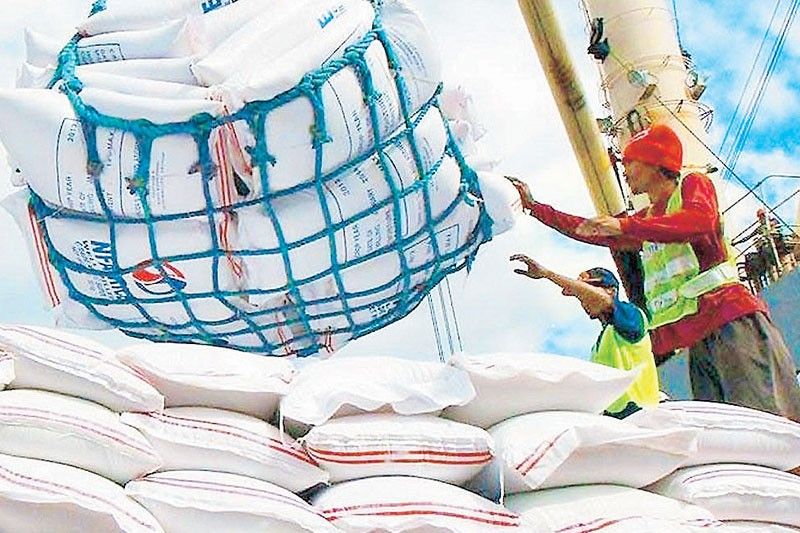
Tons of imported rice are hauled at a port in Manila.
For 3rd straight year
MANILA, Philippines — The Philippines will remain as the world’s largest rice importer in 2025 for the third consecutive year as the country turns to foreign supplies to feed its growing population.
The United States Department of Agriculture (USDA) made this projection in its monthly global grains market report, making its first forecast for calendar year 2025.
The USDA’s initial forecast pegs the Philippines’ total rice imports next year at 4.2 million metric tons (MT) to meet the “continued” increase in consumption that is driven by both growth in population and tourism.
The projected volume is 100,000 MT higher than the county‘s estimated 4.1 million MT of rice imports for this year, according to the USDA.
“The Philippines is expected to again be the largest global rice importer,” the international agency said recently.
If the projection materializes, then it would be the third consecutive year that the country would import the most rice in the global market, based on USDA data.
The USDA takes into account all forms of rice – from rough, brown to milled and broken – in its projection estimates. The USDA converts everything into a milled-equivalent basis to come up with its projections.
The Philippine Statistics Authority (PSA) earlier projected that the country’s population next year would hit at least 113.63 million, about 4.2 percent higher than the 109.035 million official population tally in 2020.
Based on its estimates, the PSA said the average annual growth rate of the country’s population would be 0.84 percent for the period 2020 to 2025.
The USDA projects that the Philippines would have a total rice consumption and requirement of 17.1 million MT next year, three percent higher than this year’s 16.6 million MT estimate. The Philippines would remain as the world’s sixth largest rice consumer.
“Global consumption is expected to rise to a new record, primarily from strong growth in India, Bangladesh, and the Philippines,” the USDA said while estimating that total rice consumption next year at 526.401 million MT.
The Philippines, however, may see another record rice harvest next year of about 12.7 million MT, 200,000 MT higher than this year’s estimate of 12.5 million MT, according to the USDA. The country is the seventh largest rice producer in the world behind Thailand and Vietnam.
Rice imports account for about a fifth of the country’s annual supply, excluding beginning stocks, based on government data, since the country liberalized and deregulated its rice trade regime in 2019.
The USDA raised its rice import forecast for the Philippines this year to 4.1 million MT from 3.9 million MT because of stronger buying from Vietnam.
The Philippines has imported over 1.6 million MT of rice from January to May 2, based on latest Bureau of Plant Industry data.
Jasper Emmanuel Arcalas - The Philippine Star
May 13, 2024 | 12:00am
Tons of imported rice are hauled at a port in Manila.
For 3rd straight year
MANILA, Philippines — The Philippines will remain as the world’s largest rice importer in 2025 for the third consecutive year as the country turns to foreign supplies to feed its growing population.
The United States Department of Agriculture (USDA) made this projection in its monthly global grains market report, making its first forecast for calendar year 2025.
The USDA’s initial forecast pegs the Philippines’ total rice imports next year at 4.2 million metric tons (MT) to meet the “continued” increase in consumption that is driven by both growth in population and tourism.
The projected volume is 100,000 MT higher than the county‘s estimated 4.1 million MT of rice imports for this year, according to the USDA.
“The Philippines is expected to again be the largest global rice importer,” the international agency said recently.
If the projection materializes, then it would be the third consecutive year that the country would import the most rice in the global market, based on USDA data.
The USDA takes into account all forms of rice – from rough, brown to milled and broken – in its projection estimates. The USDA converts everything into a milled-equivalent basis to come up with its projections.
The Philippine Statistics Authority (PSA) earlier projected that the country’s population next year would hit at least 113.63 million, about 4.2 percent higher than the 109.035 million official population tally in 2020.
Based on its estimates, the PSA said the average annual growth rate of the country’s population would be 0.84 percent for the period 2020 to 2025.
The USDA projects that the Philippines would have a total rice consumption and requirement of 17.1 million MT next year, three percent higher than this year’s 16.6 million MT estimate. The Philippines would remain as the world’s sixth largest rice consumer.
“Global consumption is expected to rise to a new record, primarily from strong growth in India, Bangladesh, and the Philippines,” the USDA said while estimating that total rice consumption next year at 526.401 million MT.
The Philippines, however, may see another record rice harvest next year of about 12.7 million MT, 200,000 MT higher than this year’s estimate of 12.5 million MT, according to the USDA. The country is the seventh largest rice producer in the world behind Thailand and Vietnam.
Rice imports account for about a fifth of the country’s annual supply, excluding beginning stocks, based on government data, since the country liberalized and deregulated its rice trade regime in 2019.
The USDA raised its rice import forecast for the Philippines this year to 4.1 million MT from 3.9 million MT because of stronger buying from Vietnam.
The Philippines has imported over 1.6 million MT of rice from January to May 2, based on latest Bureau of Plant Industry data.

No comments:
Post a Comment