In response to World Hunger Day May 28, 2026
Let's restore our indigenous and practical ways of living in these critical times
Dr Abe V Rotor
1. "Palay-isdaan" (Rice-Fish Culture)
An Agro-Ecology Model
Dr Abe V Rotor
Palay-isdaan is a revival of a virtually lost art and indigenous farming system and industry. Since the late fifties, the introduction of pesticides and chemical fertilizers and their rampant use decimated wildlife in ricefields. As a rule therefore, the ricefields must be free of these poisons, for palay-isdaan to succeed.


Top, clockwise: lowland ricefield during monsoon season; harvesting fish ahead of rice harvest as monsoon ends; close-up of Azolla, aquatic fern as natural source of fertilizer, fish food, and mulch in controlling weeds in the ricefield; duck raising may be integrated with rice-fish culture.
This technology is indigenous. What we call palay-isdaan is an innovation of a traditional way of raising fish and other freshwater organisms while the rice plant is growing in the field during the rainy season.
Many wildlife species are found in ricefields as their natural habitat. These are commonly freshwater fish like hito, dalag, gurami, martiniko, and lately, since the fifties, tilapia. Then we have ulang (freshwater lobsters), shrimps, kuhol, suso’, and tulya. Strong rains release these organisms from their aestivation, usually in carabao wallows, ponds, and river basins – or in mud where they were ensconced during summer. The ricefields become one huge lake at the peak of the rainy season, and as the water subsides, these organisms are trapped in the paddies. Farmers pick them up for food, which is indeed a good source of protein for the family. Many find it a sport hunting them, while others find ways of protecting them until they reach maturity. The latter is the basis of palay-isdaan technology, which has these features.
1. The dike (pilapil) must be strong and high enough to prevent the fish to escape. To do this, trenches are dug around the rice field like a moat, two meter wide and one-half meter deep. The soil material is used to rebuild the dike.
2. Another model is to build a wide trench, 3 to 4 meters wide and one-half meter deep, running through the center of the rice paddy. This is usually done in low-lying areas where the water stays much longer. The trench serves as a natural trap for the fish as the surrounding water subsides.
3. A third model is recommended for irrigated areas where the rice field is managed like a fishpond. Here the farmer selects the fish he wants to grow, provides them with supplemental feeds, and gives attention more than what the other two models require. A commercial model would mean converting 30 percent of the total area into trenches.

Palay-isdaan is a revival of a virtually lost art and indigenous industry. Since the late fifties, the introduction of pesticides and chemical fertilizers and their rampant use decimated wildlife in ricefields. As a rule therefore, unless the ricefields are free of these poisons, palay-isdaan will never succeed.
4. Because it takes time for the fish to grow to maturity it is advisable to plant traditional varieties which mature in 110 to 130 days. But this is feasible only where the rainy season is long and water supply is readily available. Traditional varieties generally do not need chemical spraying and fertilization.
Well-managed rice-fish farms in Central Luzon and other parts of the country can yield as much as 200 kg of tilapia per hectare. At P100 per kilo, the gross value is P20,000. While this gives around 15 percent additional income, the farmer should consider a reduction in rice yield by at least 5 percent. Still palay-isdaan gives more income than rice monoculture.
Irrigated areas can have two fish crops a year, but this is not advisable because of the high cost of irrigation. Besides, it is virtually impossible to grow palagad rice (summer crop) without heavy dependence on chemical pesticides and fertilizers.~
-----------------------
Palay-isdaan is a practical and cheap source of food and nutrition for the farming family. It provides a natural sport and recreation most especially to children. Palay-isdaan is among the attractions in agro-tourism.
--------------
Acknowledgement: Internet photos
2 - Relevance of Bahay Kubo Philosophy Today
Bahay Kubo is an enduring symbol of food self-sufficiency, indigenous biodiversity, simplicity and quaintness of living and natural beauty.
Dr Abe V Rotor

An old painting of Bahay Kubo, circa 1970
Bahay Kubo (My Nipa Hut) is one of the most loved traditional songs. All kids in my generation learned it by heart in the elementary. Not so many kids today are familiar with it. It is good to rediscover the beauty and lesson of the song.
Bahay kubo, hahit munti, ang halaman doon ay sari-sari. Singkamas at talong, sigidillas at mani, sitao, batao, patani. Kondol, patola, upo, kalabasa, at sa ka mayroon pa, labanos, mustasa. Sibuyas, kamatis, bawang at luya, at ang paligidligid ay linga.


Typical Bahay Kubo
These are main features of the song.
- There are eighteen (18) plants, which are indigenous, mostly native varieties. (biodiversity)
- Many of the plants have medicinal values and are effective home remedies for common ailments (luya, sibuyas, bawang).
- The four kinds of vegetables are represented: leafy (mustasa), fruit (kamatis, talong, kalabasa), root (labanos, singkamas), seed (linga, patani, mani).
- Spices and condiments are included in the list (linga, luya, bawang)
- The plants have different planting and harvesting schedules, thus enhancing whole year round supply of vegetables, and the use of resources and family labor.
- The plants have different growing types or habits which means they occupy specific places and have space allocations. (viny, herb, bush).
- Nutrition-wise they provide the basic requirements for growing up and good health.
- The ambiance projected by the scene is green, tranquil, clean, shady and cool (environment-friendly).
- The garden exudes a feeling of self-sufficiency and offers a potential for livelihood.
- Simplicity is the key to a contented life (with least energy consumption, and amenities).
- Such a scene expands the imagination to include a backyard fishpond, chicken coop, orchard trees and ornamental plants, among others – all of these contribute to the enrichment of the Bahay Kubo, without modifying its basic concept and structure.
3 - Talipapa - People's Market
Farm-to-Market Economics
Dr Abe V Rotor

Biking through, like drive in buying.
Market's birthplace,the primordial concept of commerce,beginning of exchange of goods by barter,where barter evolved into trade;flea market, local version, unique,beautiful, distinctly Filipino;a place for thrifty spending,classless marketing;it's people's economics,family enterprise,where business is unlimited -outlet of farm surplusso with home made crafts;where transaction is by bargaining,the suki system as an institution;it's the "nerve center" of daily activities,growth center of social and economic lifeon the grassroots,fallback of the economy in crisis,where the ordinary vendor,like the unknown soldieris an unsung hero. ~

San Vicente, Ilocos Sur


Talipapa in Mexico

Talipapa in the days of the Galleon Trade

Talipapa, a tourist attraction in Boracay
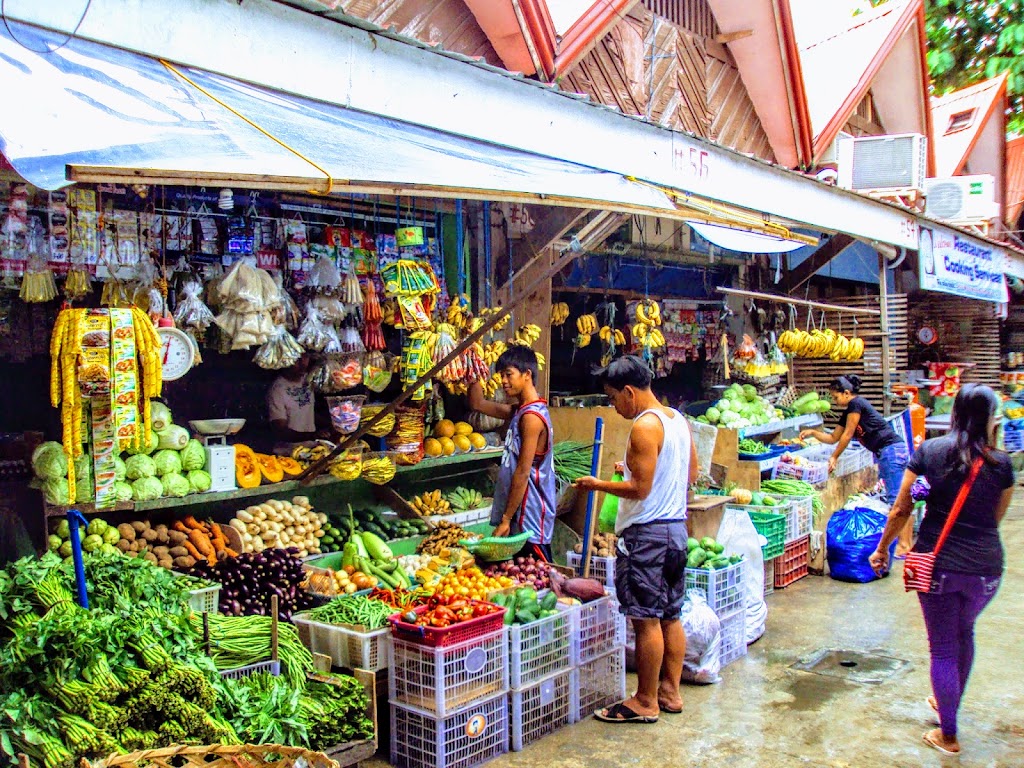


Freshness and accessibility are features of talipapa

"Stretching the peso" is another talipapa's feature.

Talipapa, makeshift market or "flea" market


Talipapa-on-wheels

Talipapa - starting point of entrepreneurship,
and recommended research topic in school ~
4. People’s Green Revolution 2
Agribusiness and Biotechnology on the Village Level
Dr Abe V Rotor


------------------------------------------------------------------------------------------------------------
Nature works silently through her invisible biological agents. We wake up to the fresh aroma of coffee, chocolate, vanilla, the cured taste of dried tapa, tinapa, ham and bacon – all these are products of a mysterious process we generally call fermentation. Aged wine is mellower, cured tobacco is more aromatic, naturally ripened fruits are sweeter, dried prunes, raisin and dates have higher sugar content and have longer shelf life. Why many foods taste better after allowing them to stand for sometime! Take suman, tupig, puto, bibingka, and the like. Thanks to the myriads of microorganisms working in our favor even while we are asleep.
----------------------------------------------------------------------------------------------------------
The vast potential uses of microorganisms - bacteria, algae, fungi and the like - in providing food, medicine and better environment to supply the requirements of our fast growing population and standard of living are being tapped by biotechnology. Biotechnology hand in hand with genetic engineering will likely dominate the Green Revolution of this century – the fourth since Neolithic time. But will this be a Green Revolution for the people?
Biotechnology is not new
My father, a gentleman farmer, was a brewer. He inherited the trade from my grandfather and from previous generations. I still use today the good earthen jars in producing the same products – basi, the traditional Ilocos wine, and its by-product, natural vinegar - using the same indigenous formula.
The making of basi and vinegar, as well as a dozen other products of sugarcane, like panocha, pulitiput, kalamay, sinambong, and kinalti, is a traditional cottage industry in the Ilocos region which is traced back to the Pre-Hispanic era when hundreds of small independent brewers like my father lived comfortably on this once flourishing industry.
Things appeared simple then. But time has changed. We know that sugarcane has long been planted with rice, legumes and vegetables, but it sounds like new in modern parlance with terms like crop rotation or crop diversification. Making of wine, vinegar and confectionery products are under agro-industry. Because the process generates profit, we call this value-added advantage. So with the tax that is now slap manufactured products. To determine the business viability of a business we determine its internal rate of return (IIR) and its return on investment (ROI). Brewing today is agro-processing and an agribusiness. And my father would be called not just a proprietor or entrepreneur - but as a business partner since family members and relatives share in the operation of the business. Possibly his title today would be general manager or CEO.
Things in my father’s time have become outdated, shifting away from traditional to modern. But it is not only a matter of terminology; it is change in business structure and system.
Big business is name of the game
Like many other village industries, the local breweries bowed out to companies that now control the production of commercial and imported brands. The proliferation of many products and the inability of local products to keep up with the growing sophisticated market have further brought their doom. Definitely under such circumstances the small players under the business parameter of economics of scale find themselves at the losing end. Bigness is name of the game.
Monopolies and cartels now control much of the economy here and in other countries. Transnational companies have grown into giants, that one big company far outweighs the economy of a small country. Today agribusiness and biotechnology are corporate terms that are difficult to translate on the village level and by small entrepreneurs.
All these fit well into the present capitalistic system that is greatly under the influence of IMF-WB on borrower-countries, and terms of trade agreements imposed by GATT-WTO on its members, many of which reluctantly signed the its ratification. Under the capitalistic system there has been a shift of countryside industries into the hands of corporations, national and transnational. Take these examples.
Coffee is raised by millions of small farmers all over the world, but it is monopolized by such giant companies like Nestle and Consolidated Foods. Cacao is likewise a small farmer’s crop, but controlled by similar multinationals. So with tea, the world’s second most popular beverage.
Unfortunately this inequity in the sharing of the benefits of these industries is exacerbated by the absence of a strong and effective mass-based program that emphasizes countryside development through livelihood and employment opportunities. Multi-national monopolies thrive on such business climate and biased laws and program in their favor.
We import rice, corn, sugar, fruits, meat and poultry, fish, fruits and vegetables in both fresh and processed products, when in the sixties and seventies we were exporters of the same products. We were then second or third in ranking after Japan in terms of economic development.
“Small business is beautiful”
Monopolies and cartels now control much of the economy here and in other countries. Transnational companies have grown into giants, that one big company far outweighs the economy of a small country. Today agribusiness and biotechnology are corporate terms that are difficult to translate on the village level and by small entrepreneurs.
All these fit well into the present capitalistic system that is greatly under the influence of IMF-WB on borrower-countries, and terms of trade agreements imposed by GATT-WTO on its members, many of which reluctantly signed the its ratification. Under the capitalistic system there has been a shift of countryside industries into the hands of corporations, national and transnational. Take these examples.
Coffee is raised by millions of small farmers all over the world, but it is monopolized by such giant companies like Nestle and Consolidated Foods. Cacao is likewise a small farmer’s crop, but controlled by similar multinationals. So with tea, the world’s second most popular beverage.
Unfortunately this inequity in the sharing of the benefits of these industries is exacerbated by the absence of a strong and effective mass-based program that emphasizes countryside development through livelihood and employment opportunities. Multi-national monopolies thrive on such business climate and biased laws and program in their favor.
We import rice, corn, sugar, fruits, meat and poultry, fish, fruits and vegetables in both fresh and processed products, when in the sixties and seventies we were exporters of the same products. We were then second or third in ranking after Japan in terms of economic development.
“Small business is beautiful”
 There must be something wrong somewhere. But while we diagnose our country’s ills, we should make references to our own successes, and even come to a point of looking on models within our reach and capability to emulate. There are “unsung heroes” in practically all fields from business, agriculture, manufacturing to folk medicine and leadership. Perhaps for us who belong to the older generation, it is good to feel whenever we recall old times when life was better – and better lived. For which, on the other side of the coin, we pose the present challenge to the youth.
Basi for export, tourists, and weddings
The first group involves the production of alcoholic drinks and vinegar through fermentation.
These products are
§ Basi (sugarcane)
§ Lambanog (coconut)
§ Tuba (coconut)
§ Layaw (nipa)
§ Bahalina (coconut and tangal)
§ Fruit wine (kasoy, bignay, pineapple, etc.)
§ Vinegar (nipa, sugarcane, coconut, various fruits)
With readily available raw materials and simple tools used, brewing is a practical industry. More so, with the simplicity of fermentation itself which is the conversion of sugar into ethanol through fermentation with yeast. The brewed product is either consumed immediately or aged. Aging improves quality and lengthens the shelf life of the product. These home breweries are reminiscent of European vintages. It is said that the best wine in the world is not found in public bars and wine shops, but in private home cellars of Europe. It is true.
There, wine making is an art, and a personalized enterprise, with each cellar having a distinctive quality trademark. Bordeaux in France for example, is famous for brand, while the Scotch Whiskey remains a top grade liquor made from grains. Similarly we have Basi in Ilocos amd lambanog in Southern Tagalog, Bahalina in Eastern Visayas and Mindanao, Tapoy in the Cordilleras, which is Kampai in Japan. So with Apple cider compared to our own Sukang Iloko, or Sukang Paombong.


The second group of village biotechnology products are beverages, food condiments, tobacco and betel for chewing. § Kapeng barako (Batangas and Cavite)
§ Cacao (Batangas, Mindanao)
§ Vanilla (Mindanao)
§ Tsaa (Batangas)
§ Fruit puree (mango, guyabano, etc., Southern Tagalog, Mindanao)
§ Bagoong and patis (Navotas, Balayan, Dagupan)
§ Kesong Puti (Laguna)
§ Betel or Nganga (Cordillera, Laguna, Ilocos)
§ Ketsup (banana, tomato)
§ Rolled tobacco (Cagayan Valley, Ilocos)
Like in the first group, these products are area-specific which point out to their indigenous production and processing, so with their patronage. Rolled tobacco or pinadis, for example, has a special market for old people who are used to the product – and not to the younger generation. This is also true with betel or nganga.
On the other hand, bagoong and patis, which used to be a specialty among Ilocanos, are now marketed abroad. So with kapeng barako a local coffee which is mainly grown in the highlands of Batangas and Tagaytay. Fruit puree and fruit preserve, though relatively new, are amazingly growing fast, as people are shunning away from carbonated drinks. Because of high demand, these products became a boom to small growers, who recently are becoming mere conduits or raw products suppliers of big companies, instead of making and marketing the finished products themselves. Tea, coffee, fruit juice and chocolate, in this order, make up the world’s top beverages, thus pointing out the vast opportunities of biotechnology.
The third and largest group of village biotechnology products is in food. § Puto and Kutsinta or rice cake, very popular among Filipinos
§ Bibingka (rice)
§ Maja (corn grit)
§ Burong manggang paho, mustasa
§ Burong Isda (dalag and rice)
§ Hamon (manok, baboy, pato)

§ Tocino, longganisa
§ Itlog na pula and century egg
§ Balot and Penoy
§ Tokwa (bean curd)
§ Taosi (fermented black bean)
§ Talangka Paste
§ Pickles (papaya, carrot, ampalaya, onion, cucumber, etc.)
§ Itlog na pula and century egg
§ Balot and Penoy
§ Tokwa (bean curd)
§ Taosi (fermented black bean)
§ Talangka Paste
§ Pickles (papaya, carrot, ampalaya, onion, cucumber, etc.)
Left, tinobong (rice cake in bamboo), longganisa, red egg, kapeng barako, sinangag rice
§ Toge (mungo sprout)
§ Cakes (banana, cassava)
§ Ripening of fruits (madre de cacao)
Food processing constitutes the bulk of village biotechnology in developing countries, on both domestic and commercial scales. Like in the other groups, these undertakings are seldom organized as formal establishments, but rather fall under the category of informal economics.
----------------------------------------------------------------------------------------------------
“The biggest piracy that is taking place today is not at sea and on the rich. It is stealing people’s resources – from herbal medicine to indigenous technology – stolen by rich countries and big corporations. Biopiracy and technopiracy constitute the greatest violation to human rights and social justice in that the people are not only deprived of their means of livelihood; they are forced to become dependent on those who robbed them.”
------------------------------------------------------------------------------------------------Informal or “underground” economy is the lifeblood of rural communities. They are the seat of tradition, rituals, barter and other informal transactions. They link the farm and the kitchen and the local market. They are versions of agro-processing and agribusiness on the scale of proprietorship and family business. They strengthen family and community ties.
Development Models on the Grassroots
It is for this reason that the NACIDA – National Cottage Industry Development Authority – was organized. And truly, it brought economic prosperity to thousands of entrepreneurs and families in the fifties to sixties. This concern for the common tao made Ramon Magsaysay the most loved president of the Philippines.
South Korea for one in the late sixties, saw our PRRM and NACIDA models and improved on them with their SAEMAUL UNDONG development program which ultimately brought tremendous progress in its war-torn countryside.
In Tanzania, one can glimpse similarities of our program with LAEDZA BATANI (Wake up, it’s time to get moving), a rural development program. The Philippines stood as an international model, recognized by the WB and ADB, for our countryside development – cottage industries, farmers’ associations, electric cooperatives, rice and corn production program, which made us agriculturally self-sufficient and net exporter of rice.
We developed biotechnology in farm waste utilization through composting with the use of Trichoderma inoculation, and in natural rice farming by growing Azolla in lieu of urea and ammonium nitrate. Another area of biotechnology is in the retting of maguey fiber, which is a work of decomposing bacteria. These and many other people-based approaches to development projected the image of then President Ferdinand Marcos among greatest nation builders like Mao Tse Tung, Chiang Kai Shek, Park Chung Hee, Dr Mahathir, Sukarno, Lee Kuan Yu, among others in the Western hemisphere - leaders who brought their respective countries out of the Thir World syndrome. There is but one abnd common denominator of progress in these countries, and that is development at the grassroots, or the so-called bottom-up development.

Rhizobium (photo) resides inside these nodules attached to the roots of leguminous plants. This bacterium fixes inert N2 gas into soluble NO3 or nitrate which is then absorbed and used by plants.
 Today there are many opportunities of biotechnology that can be tapped and packaged for small and medium size businesses and organized groups of entrepreneurs and farmers. These opportunities also pose a big challenge to the academe and to enterprising researchers in government and private institutions.
• Spirulina (blue-green alga or Eubacterium) - high protein, elixir.
• Chlorella (green alga) – vegetable, oxygen generator
• Pleurotus and Volvariella (fungi, mushroom) – anti-cancer food.
• Azolla-Anabaena (eubacterium with fern)– natural fertilizer
• Porphyra, red seaweed, high-value food (“food of the gods”)
• Hormophysa (brown alga) – antibiotics
• Eucheuma (red alga) – source of carageenan, food conditioner
• Gracillaria (brown alga) – source of agar, alginate
• Sargassum (brown alga) – fertilizer and fodder
• Saccharomyces (fungus, yeast) – fermentation
• Aspergillus (fungus) – medicine, fermentation
• Penicillium (fungus) – antibiotics
• Caulerpa (green alga) – salad (photo above)
 • Leuconostoc (bacterium) – nata de coco, fermentation of vegetables
• Acetobacter (bacterium) – acetic acid manufacture
• Rhizobium (bacterium) – Nitrogen fixer for soil fertility
• Nostoc (BGA or Eubacterium) – bio-fertilizer
• Ganoderma (tree fungus) – food supplement, reducer
Nata, newly harvested
• Halobacterium and Halococcus (bacteria)- bagoong and patis making
• Lactobacillus (bacterium) lactic fermentation, yogurt making
• Candida (yeast) – source of lysine, vitamins, lipids and inveratse
• Torulopsis (yeast) – leavening of puto and banana cake
• Trichoderma (fungus) – inoculant to accelerate composting time.
As I proceed, allow me to present a background of biotechnology in relation with the history of agriculture.
Three Green Revolutions
The First Green Revolution took place when man turned hunter to farmer, which also marked the birth of human settlement, in the Fertile Crescent, between the Tigris and Euphrates rivers where the present war in Iraq is taking place.
The Second Green Revolution is characterized by the improvement of farming techniques and the expansion of agricultural frontiers, resulting in the conversion of millions of hectares of land into agriculture all over the world. This era lasted for some three hundred years, and marched with the advent of modern science and technology, which gave rise to Industrial Revolution. Its momentum however, was interrupted by two world wars.
Then in the second part of the last century, a Third Green Revolution was born. With the strides of science and technology, agricultural production tremendously increased. Economic prosperity followed specially among post-colonial nations - the Third World - which took the cudgels of self rule, earning respect in the international community, and gaining the status of Newly Industrialized Nations (NICs) one after another.
• Lactobacillus (bacterium) lactic fermentation, yogurt making
• Candida (yeast) – source of lysine, vitamins, lipids and inveratse
• Torulopsis (yeast) – leavening of puto and banana cake
• Trichoderma (fungus) – inoculant to accelerate composting time.
As I proceed, allow me to present a background of biotechnology in relation with the history of agriculture.
Three Green Revolutions
The First Green Revolution took place when man turned hunter to farmer, which also marked the birth of human settlement, in the Fertile Crescent, between the Tigris and Euphrates rivers where the present war in Iraq is taking place.
The Second Green Revolution is characterized by the improvement of farming techniques and the expansion of agricultural frontiers, resulting in the conversion of millions of hectares of land into agriculture all over the world. This era lasted for some three hundred years, and marched with the advent of modern science and technology, which gave rise to Industrial Revolution. Its momentum however, was interrupted by two world wars.
Then in the second part of the last century, a Third Green Revolution was born. With the strides of science and technology, agricultural production tremendously increased. Economic prosperity followed specially among post-colonial nations - the Third World - which took the cudgels of self rule, earning respect in the international community, and gaining the status of Newly Industrialized Nations (NICs) one after another.

Cultured mushrooms: Shitake and Pleurotus Tagaytay
Towards the end of the last century, the age of biotechnology and genetic engineering arrived. Here the conventions of agriculture have been radically changed. For example, desirable traits are transferred through gene splicing so that trans-generic – even trans-kingdom – trait combination are now possible. Bt Corn, a genetically modified corn that carries the caterpillar-repelling gene of a bacterium, Bacillus thuringiensis, exemplifies such
case. Penicillin-producing microorganisms are not only screened from among naturally existing species and strains; they are genetically engineered with super genes from other organisms known for their superior production efficiency.
Biotechnology for people and environment. The need for food and other commodities is ever increasing. Together with conventional agriculture, biotechnology will be contributing significantly to the production of food, medicine, raw materials for the industry, and in keeping a balanced ecology. This indeed will offer relief to the following scenarios:
1. World’s population increases from today’s 8 billion to 10 billion well within a few years..
2. Agricultural frontiers have virtually reached dead end.
3. Farmlands continue to shrink, giving way to settlements and industry,
while facing the onslaught of erosion and desertification
4. Pollution is getting worse in air, land and water.
5. Global warming is not only a threat; it is a real issue to deal with.
These scenarios seem to revive the Apocalyptic Malthusian theory, which haunts many poor countries - and even industrialized countries where population density is high. We are faced with the problem on how to cope up with a crisis brought about by the population-technology-environment tandem that has started showing its fangs at the close of the 20th century.
Now we talk in terms of quality life, health and longevity, adequate food supply and proper nutrition - other human development index (HDI), notwithstanding.

Cultured tainga ng daga (Auricularia). It is a giant compared to the native species growing in the wild.
As scientists open the new avenue of genetic engineering to produce genetically modified organisms (GMO) for food, medicine and industry, entrepreneurs are shaping up a different kind of Green Revolution on the old country road – the employment of veritable, beneficial microorganisms to answer the basic needs of the vast majority of the world’s population.
Green Revolution for the masses
This Green Revolution has to be addressed to the masses. The thrust in biotechnology development must have a strong social objective. This must include the integration of the mass-based enterprises with research and development (R&D). Like the defunct NACIDA, a program for today should be cottage-based, not only corporate-based. Genetic engineering should be explored not for scientific reasons or for profit motives alone, but purposely for social objectives that could spur socio-economic growth on the countryside, and the improvement the lives of millions of people.
Alternative Food
These lowly organisms will be farmed like conventional crops. In fact, today mushroom growing is among the high-tech agricultural industries, from spawn culture to canning.
Spirulina, a cyanobacterium, has been grown for food since ancient times by the Aztecs in Mexico and in early civilizations in the Middle East. Its culture is being revived on estuaries and lakes, and even in small scale, in tanks and ponds. Today the product is sold as “vegetablet.”
Seaweeds, on the other hand, are being grown extensively and involving many species, from Caulerpa to Nori. Seaweed farming has caught worldwide attention in this last two decades, not only because it offers a good source of food, but also industrial products like carageenan and agar.
Environmental Rehabilitation
In the remote case that a nuclear explosion occurs, how possible is it to produce food and other needs in the bomb shelters deep underground? Fiction as it may seem, the lowly microorganisms have an important role. For one, mushrooms do not need sunlight to grow. Take it from the mushroom-growing termites. Another potential crop is Chlorella. While it produces fresh biomass as food it is also an excellent oxygen generator, oxygen being the by-product of photosynthesis. But where will Chlorella get light? Unlike higher plants, this green alga can make use of light and heat energy from an artificial source like fluorescent lamp.
Sewage treatment with the use of algae is now common in the outskirts of big cities like New York and Tokyo. From the air the open sewer is a series of reservoirs through which the sewage is treated until the spent material is released. The sludge is converted into organic fertilizer and soil conditioner, while the water is safely released into the natural environment such as a lake or river.
Marine seaweeds are known to grow in clean water. Their culture necessitates maintenance of the marine environment. Surprisingly seaweeds help in maintaining a clean environment, since they trap particles and detritus, and increase dissolved Oxygen and reduce dissolved CO2 level in water.
Bacteria being decomposers return organic substances to nature. So with algae and fungi. Fermentation is in fact, a process of converting organic materials into inorganic forms for the use of the next generation of organisms. In the process, man makes use of the intermediate products like ethyl alcohol, acetic acid, nata de coco, lactic acid, and the like.
Speaking of sustainable agriculture, take it from Nature’s biofertilizers like Nostoc and other Eubacteria. These BGAs form green matting on rice fields. Farmers in India and China gather this biomass, and use it as natural fertilizer. Another is Rhizobium, a bacterium that fixes atmospheric Nitrogen into NO3, the form of N plants directly absorb and utilize. Its fungal counterpart, Mycorrhiza, converts Nitrogen in the same way, except that this microorganism thrives in the roots of orchard and forest trees.
Let me cite the success of growing Azolla-Anabaena on ricefields in Asian countries. This is another biofertilizer, and discriminating consumers are willing to pay premium price for rice grown without chemical fertilizer - only with organic and bio-fertilizers.
At one time a good friend, a medical doctor and gentleman farmer, Dr. P. Parra, invited me to his Azolla farm in Iloilo. What I saw was a model of natural farming, employing biotechnology in his integrated farm –
• Azolla for rice,
• Biogas from piggery,
• Rhizobia inoculation for peanuts and mungbeans,
• Trichoderma for composting.
• Food processing (fruit wine and vinegar)
His market for his natural farm products are people as far as Manila who are conscious of their health, and willing to pay the premium price for naturally grown food.
Genetic Engineering
It is true that man has succeeded in splicing the DNA, in like manner that he harnessed the atom through fission. and Hydrogen through fusion. Genetic engineering is a kind of accelerated and guided evolution, and while it helps man screen and develop new breeds and varieties, it has yet to offer the answer to the declining productivity of farms and agriculture, in general, particularly in developing countries. Besides, genetically engineered products have yet to earn a respectable place in the market and household.
Genetic engineering of beneficial organisms is the subject of research institutions all over the world. I had a chance to visit the Biotechnology Center in Taipei and saw various experiments conducted by Chinese scientists particularly on antibiotics production. But biotechnology has also its danger. One example is the case of the “suicide seeds”. These are hybrid seeds which carry a trigger enzyme which destroys the embryo soon after harvest so that the farmers will be forced to buy again seeds from the same supplier come next cropping season. It is similar to self-destruct diskettes, or implanted viruses in computers. This is how an international company Monsanto, the inventor of suicide seeds, is creating an empire built at the expense of millions of poor farmers over the world.
Medicine and Natural Food
As resistance of pests and pathogens continue to increase and become immune to drugs, man is corollarily searching for more potent and safe kinds and formulations. He has resorted to looking into the vast medicinal potentials of these lowly organisms, as well as their value as natural food. Here are some popular examples.
1. Nori or gamet (Porphyra, a red alga) – elixir, claimed to be more potent than Viagra
2. Edible seaweeds - rich in iodine, vegetable substitute. There is no known poisonous seaweed.
3. Seaweeds as source of natural antibiotics, much safer than conventional antibiotics.
4. Mushrooms have anti-cancer properties.
5. Spirulina as food and feeds
6. Cyanobacteria prolongs life, restores youthfulness.
7. Yeast is a health food
8. Yogurt is bacteria-fermented milk, health drink.
9. Carica and Mamordica extracts for medicine and health food
10. Organically grown food (without the use of chemical pesticide and fertilizer)
Dr. Domingo Tapiador, a retired UN expert on agriculture and fisheries, helped initiate the introduction of Spirulina in the country. He showed me the capsule preparation produced in Japan. “Why can’t we grow Spirulina locally?” he asked.
Today a year after, there are successful pilot projects. Spirulina is not only good as human food but feeds as well. Professor Johnny Ching of De la Salle University Dasmariñas found out that Spirulina added to the feed ration of bangus improves growth rate. (MS Biology, UST) Similar studies point out to the beneficial effects of Spirulina on the daily weight gain in poultry and livestock. Earlier studies also discovered Azolla, an aquatic fern with a blue-green alga symbiont – Anabaena, as a valuable feed supplement to farm animals.

Native fruits (hastened to ripen with madre de cacao leaves)
These lowly groups of organisms which cannot even qualify as plants, but instead protists with which protozoa are their kin, biologically speaking that is, are after all “giants.”
They hold the promise in providing food, medicine, clean environment, and as a whole, a better quality of human life for the people today and the coming generations.
5 - Thirty (30) native vegetables are resistant to global warming - and are pesticide-free
Indigenous or native vegetables are more resistant to the effects of global warming, infestation, drought and other unfavorable conditions that destroy foreign varieties.
In general, leafy vegetables (e.g. pechay) and fruit vegetables (e.g. tomato) receive more chemical spraying than do root (sweet potato) and seed (mungo) vegetables. On the aspect of pesticide application, vegetables are classified into two: those that do not need spraying at all, and those which can not be raised economically without chemical protection.


Himbaba-o or alukong Ilk; papait (Mollugo oppositifolia)

Assorted native vegetables: patani, himbaba-o, eggplant


Talinum, alugbati


Dampalit, bagbagkong


Edible fern (pako'), saluyot
This lesson was aired in a series of radio broadcast on Paaralang Bayan sa Himpapawid (People's School-on-Air) on DZRB 738 KHZ and [www.pbs.gov.ph] This also serves as reference in Economic Botany, a three-unit subject offered at the UST Graduate School and De La Salle University,
The first is to build natural body resistance against the current epidemic of A(H1N1) or swine flu through the consumption of more fruits and vegetables.
The second is to promote a bottom-up approach of providing alternative sources of food through people's initiative to produce food and reduce food cost and increase the level of nutrition to cushion the effects of the worsening global economic crisis.
The third is to reduce the incidence of slow poisoning as a result of the accumulation of pesticide residue in the body. Vegetables and fruits are the principal carriers of residual poison from chemical spraying which leads to the development of many ailments, such as cancer and impairment of the senses and loss of control of the nervous system.
In general, leafy vegetables (e.g. pechay) and fruit (tomato) vegetables receive more chemical spraying than do root (potato) and seed (mungo) vegetables. On the aspect pesticides, I would rather classify vegetables into two: those that do not need spraying at all, and those which can not be raised economically without the protection of chemicals.
For the first category here is a list of 30 common vegetables in their common and scientific names. Farmers simply find them resistant to insects, mites, nematodes, snails, fungi, including weeds, rodents and birds. These vegetables may also be found in the wild, or in the open spaces.
1. Malunggay (Morinda oleifera)
2. Saluyot (Corchorus olitorius)
3. Wild ampalaya (Momordica charantia)
4. Katuray (Sesbania grandiflora)
5. Batao (Dolichos lablab)
6. Patani (Phaseolus lunatus)
7. Sinkamas (Pachyrisus erosus)
8. Summer squash (Cucurbita maxima)
9. Native eggplant (round) - (Solanum melongena)
10. Native tomato (susong kalabaw) - (Lycopersicum esculentum)
11. Native sitao (short) – (Vigna sesquipedalis)
12.Seguidillas (Psophocarpus tetragonolobus)
13.Alugbati (Basella rubra)
14.Talinum (Talinum triangulare)
15.Native spinach (Amaranthus sp.)
16.Gulasiman (Portulaca oleracea)
17.Sweet potato (tops and root) (Ipomea batatas)
18. Kangkong (Ipomea reptans)
19. Pepper or Sili (labuyo) (Capsicum frutescens)
20. Ginger (Zingiber officinale)
21. Rimas or breadfruit (Artocarpus altilis)
22. Sayote (Sechium edule)
23. Taro or gabi (Colocasia esculenta)
24. Kamoteng kahoy or cassava (Manihot esculenta)
25. Ubi (Dioscorea alata)
26. Tugui’ (Dioscora esculenta)
27. Kadios (Cajanus cajan)
28. Banana (Saba) (Musa paradisiaca)
29. Sampaloc (Tamarindus indica)
30. Kamias (Averrhoa bilimbi)
There are many other vegetables classified under the same category. These include alukong or himababa-o, bagbagkong, papait, sampaloc (flowers, tips and young pods), flowers of madre de cacao or kakawate.
6. Kitchen Garden - Practical Hydroponics
0176.JPG)
Three-week old kitchen garden
Fill to three-fourth a convenient glass jar with tap water. Place a healthy tuber on the mouth of the jar. To keep it steady, stick three pieces of toothpick like a tripod. Add water daily as roots develop. Be sure to replace water weekly to prevent mosquitoes from breeding in the jar.
In a week's time or two you can start harvesting. At first allow the tops to extend. Just clip the leaves you need in your cooking. Rotate the position of the tuber towards the source of light, so that you will have more shoots, and greener and bigger leaves.
Now you have a dish garden for a whole month or longer. You can grow fresh onion leaves with this technique. Try it on garlic.
You see, this is simple hydroponics - soil-less gardening. It is introduction to the science of hydroponics and aeroponics. For school children, why don't you try this as your project?

Read more about hydroponics and aeroponics. Happy gardening!
(Model: Miss Gelyn S Gabao, 19 Filipina)
Kamote (Ipomea batatas) tops contain more minerals and vitamins than any other vegetables, or its equivalent weight in meat and poultry. It is a glow food that enhances natural beauty and health, and gives that gait, poise and stride that many beauties display. It is the secret to acquiring and maintaining natural immunity and high resistance against diseases and other ailments. It contains substances that sharpen the brain and quicken responses to situations and the environment. It is a vegetable all year round. In summer kamote is grown in the fields and gardens for its enlarged roots or tubers which are rich in carbohydrates (go food) and rich in protein (grow food). In the habagat, it grows wild and luxuriant on hilltops, on levees and dikes, on the uplands, covering wide areas, keeping weeds down and protecting the soil from erosion.
Kamote tops make an excellent dish with mungo and pork, bulanglang with shrimp or fish, and mushroom, or cooked in other recipes, or served as salad, blanched with red, ripe tomatoes and sliced onions, with a dash of salt, or a dip of fish sauce - bagoong or patis. Or cooked in tinola in place of pepper leaves, and green papaya. Why not blanch the tops on rice in its final stage of cooking? Add bagoong squeezed with calamansi or lemon.
Kamote tops, maligned for being a poor man's food, rise to the apex of the food pyramid, top the list health programs, and doctors' prescription. Kamote tops occupies the rank of malunggay, alugbati, talinum, and spinach, relegating lettuce and other crucifers - cabbage and cauliflower and pechay - to the backseat.
Kamote tops are safe to health and the environment because they don't carry residues of pesticides applied on the field on many crops, and also those of toxic metals like lead, mercury and cadmium. Damaged parts are simply discarded, harvesting only the succulent and healthy leaves for further safety and better presentation.
Kamote tops come in green and purple, characteristic of the plant varieties, but in both cases, the same nutritive values are derived, with some advantage from the purple variety which contains xanthophyll in addition to chlorophyl. Both are recommended for anemic persons for their high iron content, and to those suffering from poor bone development, poor eyesight, and poor metabolism.
Kamote tops are used as planting materials, a case of cloning in the plant world, each stem becoming a new plant rejuvenated and true to type genetically - and younger than the parent source. The new plant is capable of carrying all processes that constitute the plant's cycle. It is a phenomenon known in variable observations in the living world, which heretofore remains unsolved by science.
Beauties come naturally with good food, simple and active lifestyle, in the rural areas where sunshine, clean air and surrounding, make a perfect combination from which spring the true beauty of man and woman, as compared to the makeup beauty from cosmetics, expensive salons, and by the so-called wonders of science and technology like liposuction and surgery. Why can't we simply eat kamote tops more often?
Grow native onion leek at home


This is one way to encourage kids to have a daily supplement of vegetables. Vary the use of leek in their diet. Onion leek is rich in vitamin K, A, C and B6, manganese, folate, iron, fiber, magnesium, molybdenum, copper, calcium, and potassium. It also contains thiamine, riboflavin, and niacin, and antibiotic substances like Allicin and Alliin - from Allium, the genus of onion (A. cepa), garlic (A. sativum), kutchay (A tuberosum), and the original leek (A. ampeloprasum). Leeks generally have also high calorie value, and fair amounts of protein and fat. It is no wonder onion is the most important vegetable in the world.


Grow leek where there is sufficient sunlight, preferably on an elevated place. It's easy to grow leek from shallot (Sibuyas Tagalog) and from bulb onions (Granex or Creole). Staggered planting assures continuous supply of leek for the family - and for neighbors too.
A pot of onion leek makes a unique gift to friends who love to cook, those in their senior years, and those convalescing. Don't forget to add a little ribbon and a personal message. Make this as project in school and community. ~


Oregano - native and variegated- for cough. Pick a pot (instead of cutting)
and take it to the patient.
--------------------
* Nutritional value of sweet potato tops (cooked or steamed)
This food is low in Saturated Fat and Sodium, and very low in Cholesterol. It is also a good source of Vitamin E (Alpha Tocopherol), Niacin and Phosphorus, and a very good source of Dietary Fiber, Vitamin A, Vitamin K, Thiamin, Riboflavin, Vitamin B6, Folate, Magnesium, Potassium and Manganese. (Internet) 7. Farming is a Way of Living, a Mode of Life

Farming - A Way of Living in acrylic by AV Rotor AVR
“Farming is a way of living,” says the dean of farm management in the Philippines, Dr Felix D. Maramba, quoting Eugene Devenport who said that farming is not only a business, but a mode of life. “Sometimes the business is the prominent feature, so successful that life seems to run on one long sweet song. Sometimes the business runs so low that life is a bitter struggle.”
The farm and the family home is intertwined; in fact they are one.
Anything that affects the farm as a business also affects directly as a home. The farm operator is the head of the household and the bulk of the farm work is done by the members of the family. The farmer is the farmer 24 hours a days, on weekdays as well as on Sundays and Holidays.
The children are brought up in close contact with nature. They develop an appreciation of the manifestations of the Creator through living things and their order. The farm boy does not have to wait until he is grown up before he can work and share family responsibilities. He is brought up early in the family business. In this way he will learn the value of industry and a sense of proprietorship early in life. The work habits and resourcefulness developed by farm children are kept throughout their lives.
This old school of Dean Maramba may not be the model progressive farmers are looking for today, but definitely the better farmer is the entrepreneur who grew up with farming and pursued training in technology and farm management, and has gain the confidence and skills in transforming the traditional concept of a farm into an agribusiness and therefore, he has a better chance in dealing with the complexities of world of the agriculture and business.
Make the correct decisions in farming.
Farming is no easy task. It is full of decisions - decisions based on socio-economic principles, and guided by rules of conduct and natural laws and of society. These are 10 guidelines in decision making.
1. Surplus labor resources of typically large rural families should be directed to labor-intensive projects, such as integrated farming.
2. Hillside or upland agriculture requires the cultivation of permanent crops, preferably through mixed cropping, such as intercropping of coconuts with orchard trees and annual crops.
3. Coastal and river swamplands should be preserved as wildlife sanctuaries, and should be managed as an ecosystem, rather than an agricultural venture.
4. Wastes can be recycled and converted into raw materials of another enterprise. Farm wastes and byproducts of processing can be processed biologically into methane, organic fertilizer, and biomass for vermiculture.
5. Productivity of small farms can be increased through pyramidal or storey farming. Batangas and Cavite farmers are well known for storied multiple cropping.
6. Poor soils can be rehabilitated through natural farming, such as green manuring, crop rotation and use of organic fertilizers, all integrated in the farming system. Corn-peanut, rice-mungo are popular models of crop rotations.
7. Cottage industries are built on agriculture, guided by profitability and practical technology. It is time to look at the many agro-industries, from food processing to handicrafts.
8. Tri-commodity farming maximizes utilization of resources, such as having an orchard, planting field crops, and raising fish and livestock on one farm.
9. Cooperative farming is the solution to economics of scale, these to include multipurpose and marketing cooperatives of farmers and entrepreneurs.
10. Since the number of days devoted to farming is only one-third of the whole year, livelihood outside of farming should be developed. Like a sari-sari store, a small farm cannot afford to have too many hands. Other opportunities should be tapped outside of farming by other members of the family.
Get rid of waste by utilizing them.
Agricultural byproducts make good animal feeds, as follows:
• Rice straw, corn stovers and sugarcane tops, the most common crop residues in the tropics, contain high digestible nutrients, and provide 50% of the total ration of cattle and carabaos.
• Rice bran and corn bran are the most abundant general purpose feed that provides 80 percent of nutritional needs of poultry, hogs and livestock, especially when mixed with copra meal which is richer in protein than imported wheat bran (pollard).
• Cane molasses is high in calorie value. Alternative supplemental feeds are kamote vines for hogs and pineapple pulp and leaves for cattle.
Here is a simple feed formula for cattle: Copra meal 56.5 kg; rice bran (kiskisan or second class cono bran) 25kg; molasses 15kg; Urea (commercial fertilizer grade, 45%N) 2.0kg; salt 1.0kg; and bone meal 0.5kg. Weight gain of a two-year old Batangas cattle breed fed with this formulation is 0.56 kg on the average,
These are byproducts which have potential feed value: These are byproducts or wastes in the processing of oil, starch, fish, meat, fruit and vegetables. The abundance of agricultural by-products offers ready and cheap feed substitutes with these advantages.
• It cuts down on feed costs,
• reduces the volume on imported feed materials,
• provides cheaper source of animal protein,
• provides employment and livelihood, and
• keeps the environment clean and in proper balance.
Protect nature through environment-friendly technology.
One example is the use of rice hull ash to protects mungbeans from bean weevil. Burnt rice hull (ipa) contains silica crystals that are microscopic glass shards capable of penetrating into the conjunctiva of the bean weevil, Callosobruchus maculatus. Once lodged, the crystal causes more damage as the insect moves and struggles, resulting in infection and desiccation, and ultimately death.
This is the finding of Ethel Niña Catahan in her masteral thesis in biology at the University of Santo Tomas. Catahan tested two types of rice hull ash, One is partly carbonized (black ash) and the other oven-burned (white ash). Both were applied independently in very small amount as either mixed with the beans or as protectant placed at the mouth of the container. In both preparations and methods, mungbeans – and other beans and cereals, for that matter – can be stored for as long as six months without being destroyed by this Coleopterous insect.
The bean weevil is a cosmopolitan insect whose grub lives inside the bean, eating the whole content and leaving only the seed cover at the end of its life cycle. When it is about to emerge the female lays eggs for the next generation. Whole stocks of beans may be rendered unfit not only for human consumption, but for animal feeds as well. It is because the insect leaves a characteristic odor that comes from the insect’s droppings and due to fungal growth that accompanies infestation. There are many kinds of vegetables you can choose
for backyard and homelot gardening.
Let’s aim at unifying agriculture and ecology into agro-ecology. This is what practical farming is all about.
8. Non-cash technology for small farms
Dr Abe V Rotor

Traditional Farming in the Philippines - a gradual shift to mechanized farming
"It is technology farmers do not have to pay cash for a non- cash input.” This definition by Dr. H. T. Chang of the World Bank actually refers to good basic farm practices which is small farmers can carry out themselves- first, to save on production cost; and second, to improve production efficiency.
Non- cash technology, however, should not be regarded as alternative to cash input per se, but can be a substitute to some costly items. What is significant in the concept is that good farm practices can maximize the value of cash input.
The best examples are found right in all fundamental steps of good farming. Good seeds generally produce more yields under any condition. These means farmers must practice seed selection, and plant only certified seeds. Grains produced from poor seeds are not only few; they produce low milling recovery due to admixtures of different grain shape, size and maturity.
The labor-intensive characteristic of typical farms in Asia ideally provides for greater attention to enhance proper farm management. After all, the progressive farmer is one who prepares is land more thoroughly, manages his nursery better, water his field more cleanly and has better water control, mainly through his effort and those of his large family.
Non-cash technology extends further from mere saving on direct expenses. It is also based on innovative approaches. A rice-garlic combination has these components; the garlic crop “rides” on the remaining soil moisture and on the tillage of early rice crop; and rice straw is used to mulch garlic in order to reduce water loss and weed population.
Other popular examples of non-cash inputs are:
- Use early maturing varieties to allow a second or third cropping.
- Make use of solar energy in drying palay, corn and other farm products.
- Follow precise timing of land preparation to turn up weeds to dry up. Plow them under to be decomposed to save on herbicide and laborious weeding
- Prepare rows parallel to East-West direction to allow more solar exposure to enhance growth and yield.
- Practice green manuring in place of or supplement to, commercial fertilizers.
- Recycle farm residues like corn stovers, rice straw and peanut hay for livestock, and farm wastes for organic fertilizer.
- Practice intercropping to reduce the spread and occurrence of pests and diseases, and to maximize the utilization of an input like fertilizer..
9. Odaira's Yojigen Postulate in Practical Application
(Four-dimensional integrated process in agribusiness)
Dr Abe V Rotor
 Two products - Basi and Sukang Iloko - are produced in one enterprise.
 Wine, wine, wine - but all made with the same process worldwide.
Wine making is universal through yeast fermentation, hence wine comes in different sources and brands - cane sugarcane, grapes, rice, corn, and many kinds of fruits - chico, guava, cashew, duhat, mango, pineapple, orange, etc. It is the same principle in beer making.
The second stage after wine is produced is acetification. Wine becomes sour (vin-egar) and turns into vinegar. Both wine and vinegar can be integrated into one enterprise. A third product is nata de coco. Another constitute the residues and spent must in wine fermentation which is converted to animal feeds.
There is really no waste if we follow Odaira's Yojigen. Actually his postulates are as old as agriculture - way back in the Fertile Crescent some 10,000 years ago. Odaira's great contribution is the revival of a traditional knowledge and skill put to practice in the light of tightening economy and endangered environment, and taking down to the grassroots the application of his postulates.
The long search for more efficient production systems may end where biology, ecology and agriculture converge and complement one another. Biology provides the principles for understanding life; agriculture applies such principles in the production of crops and animals; while ecology establishes the environment-friendly conditions.
This complementarity concept has led this author to the work of a Japanese scientist, Keihichi Odaira, who is the proponent of a four-dimensional process called Yojigen. In a capsule, this theory is made up of four pillars, namely
1. Take advantage of living creatures as producing machines.
2. Look for more than one product from a single process.
3. Take advantage of any material as a source for the next process.
4. Remember that the value of a given process can be greater than the sum of its parts.
Over the years, this writer has witnessed Odaira's Yojigen apply his theories on agriculture, reviving the old school of Farming, the Natural Way. Let us look at its application under Philippine conditions.
Take advantage of the functions of the living creatures as producing machines.
Plants grow and produce food by photosynthesis, a function of both genetic and environmental factors. This means that a potentially high yielding crop can be enhanced by favorable agro-climatic conditions. This is the principle of plant breeding and agronomy, so with animal husbandry.
In agronomy, time and space elements are crucial. Proper crop sequences and rotations take advantage of this principle. Wherever feasible, rice is often followed by cash crops like corn, legume and vegetables. When a farmer decides to practice crop rotation, he is able to identify the proper technology involved, as well as market suitable crops.
As producers, livestock animals should be maintained only during the most economical period in their life cycle. For example, pigs are kept from six to seven months, attaining a weight of around 80 kilos. After this period, the feed conversion ratio becomes economically inefficient. This is true with cattle raised and fattened for not more than three years. For poultry, marketing is programmed with both feed efficiency ratio and the desired weight and size of the broiler.
The principle of inter-cropping follows this postulate. Banana is intercropped with coconut in Quezon and Leyte. Coconut-banana-vegetables are combined on upland farms in Cavite and Camarines Norte, while coconut-lanzones-coffee is common in Laguna.
These schemes illustrate the maximization of plant function through proper combination and sequencing. Other examples illustrate the application of this assumption are the following:
5. Combined rice and fish culture in Central Luzon.
6. Integrated corn production and beef cattle fattening in Mindanao.
7. Upland agriculture or KABSAKA in Iloilo, combining
two or more upland crops on a given piece of land.
8. Corn and peanut intercropping in Isabela.
9. Ipil-ipil-black pepper-coffee intercropping in Batangas and Laguna.
The value of a given process can be greater than the sum of its parts. As a common practice, farmers and homesteaders plant cover crops such as kudzu (Pueraria javanica), Centrosema pubescens and giant spineless Mimosa to suppress obnoxious weeds on ranches and orchards. Cover crops, aside from being effective in controlling weeds, is also forage for cattle and other large animals. Their residues, when incorporated with the soil, add to its fertility. It also reduces the rate of evaporation of soil moisture, thus controlling soil erosion and loss of soil nutrients.
Through effective weed control, the farmer has a better chance of meeting his farming schedules, while reducing the risk of brush fire. Conserving soil moisture, especially when rainfall is sufficient enhances seed germination and survival. Beneficial soil organisms thrive best in soil with high organic matter. These include the earthworm and nitrogen-fixing bacteria that help maintain a good crop stand.
Here’s another example to illustrate this principle. The idea of burning is to get rid of farm wastes quickly. But by burning, the potential nutrient value of the straw, both as feed and as a source of organic matter, is lost. Rice straw is very useful to farmers as mulch, for mushroom production, and as well as composting material.
Many advantages are derived from these practices. First, mulching increases crop yield. It also doubles the production of garlic and onions. Mushroom can be a lucrative business, while composting contributes to soil fertility. Crops grown on soil with high organic matter do not only produce higher yields but also have higher food value.
This author would like to add a fifth postulate to Odaira's Yojigen.
Capitalize on the natural qualities of living things in their respective environments.
We know of certain natural properties of organisms in their indigenous locations. The sweetest mangoes grow in Zambales, the sweetest lanzones in Paete (Laguna), the largest and juiciest pineapples are found in Bukidnon. No bangus (milkfish) anywhere can beat the Bonoan (Dagupan, Pangasinan) breed. Sarangani (Mindanao) ranchers boast of their beef as among the best-tasting.
Benguet vegetables, like lettuce, cabbages and cauliflower, are distinctly superior over those grown on the lowland areas. Garlic grows best in the Ilocos region, bulb onions in Bongabong (Nueva Ecija), kapeng barako in Batangas, and peanuts in Jones (Isabela).
By analyzing Yojigen, one is led to know, in simple and discreet ways, the many gifts of nature. ~

No comments:
Post a Comment