Thursday, January 16, 2020

Doves Flying at Sunrise

Doves Flying at Sunrise
Mural and Verse by Abe V Rotor
Doves Flying at Sunrise (2000 to 2007). There is a feeling of ascendancy in this painting. The diagonal perspective enhances such movement, while splashes of light heightens daybreak. The rough sea and dark foreground give contrast to the painting. The hideous presence of large reptiles creates enigma as to what the artist wanted to imply. Mystery in art is an important element. (Wall Mural SPU-QC, 2007-2010. NOTE: Mural had to gave way to landscaping.)

Take me from this world a moment 
to a mural to be with You in this holy event;
From your seat to down below I see 
my friends, my enemies - and me.

Where have all the salmon gone? We might as well ask now.

Genetically Modified salmon could escape from farms and irreversibly destroy wild salmon populations and ultimately the ecosystem. 

So with GMO rice and other crops, GMO animals - they will irreversibly destroy natural gene pools and ultimately the integrity of environmental balance, the key to sustainability. 

 mourn for the inevitable fate of the beloved wild salmon

 Dr Abe V Rotor
 
David and Goliath, native and GM types in the wild, won't end up with the biblical ending; the smaller salmon won't stand any chance in competing for food, territory and mate, in fact in all aspects of competition in nature. 

Sockeyed salmon on the run to spawn upstream.

GM salmons will consume more - preys and other food sources - to mature earlier and bigger, armed with planned voraciousness, unwittingly limiting supply for their native counterparts, thinning the latter's population.

It is not just simple one-on-one competition; it is overall and interconnected displacement of members in the food chain, cutting links; worse, the food web is disrupted as chains are disturbed, destroying the integrity of the food web, and may collapse pulling down the local ecosystem.

Why the change in feeding habits? GM salmon carries genetic materials of two unrelated species of fish with different eating habits rolled into one - a heretofore salmon feeding, eating almost anything, small and big, live or dead, freely or covertly or savagely, often in quantities more than it needs called luxury feeding, a laboratory induced characteristic to gain Goliath size in a short time.

GM salmon invade and dominate, native salmon population narrows down, soon the overall biological diversity of streams and rivers and lakes, in fact even the ocean since salmons travel far and wide into the open sea before returning to their place of birth - exacerbated by unabated pollution, infrastructures like dam impeding free movement, over and illegal fishing notwithstanding.

Why GM salmon in the first place? Short term economic advantage to feed an exploding human population and meet virtually endless affluent living. Corporate dominance, cartel in the supply GM stock and methodology of production, making GM salmon growers down the line, captive of the "package" they themselves cannot provide except to grow the fish commercially.

Through corporate linkage with the exclusive supplier can GM producers operate, in the like of Bt Corn which is unprofitable to plant the F2 harvest in the hands of the farmer; the GM female salmon is made sterile, in the same way hybrid seeds carry suicide gene, and that hybrid vigor declines in the succeeding generations, an ethico-moral issue worldwide, 
on patenting life and depriving the small man of his right and need. 

Fishing as sport loses its essence, it is like fishing in a fishpond. The thrill dies with the GM salmon et al. In the first place, has the GM salmon lost its homing instinct? Would it rather join its half-brother eel fish living freely in the ocean? Or would the GM salmon rather stay put in its borrowed spawning ground - rivers and lakes? How about the GM-contaminated wild type, now a GM-native hybrid. Has it lost its homing instinct, or its adventurous lifestyle?

How fast will GM contamination spoil natural salmon gene pools; the answer is disturbing as egg fertilization occurs in open water, where the GM sperm fertilizes the native salmon egg, by the millions, nay billions, and here the GM female produces only sterile eggs; which means a single GM salmon male can spoil a whole stream in a short time of GM2 degenerate salmon, like BtCorn polluting whole fields of corn sans its intended resistance - both cases sowing fear, in reality and uncertainty, as to the consequences on humans and the environment.  


It might be the Waterloo of the natural salmon - symbol of pride, culture and values, barometer of pristine environment, doyen of Ichthyology, iconic specimen of natural history; I fear and lament, it might be gone forever, because genetic pollution is permanent, and that it spreads out indefinitely to contaminate the last member of the genetically related species. 

Community fishing, a favorite Canadian sport; lodging house for guests in Lac Du Bonnet where the author spent weekends fishing. 

Many a weekend I spent fishing in Lac Du Bonnet, Winnipeg River and Red River in pre-GMO era, when the adventure of youth was free of threats of modern technology, but today, in postmodern era, I can only go back to cherish sweet memories in archive - and holding hope for the brighter side of Homo sapiens to examine sustainability for the sake of future generations and our living world. ~  

Salmon farming in floating cages and fish pens. Acknowledgement: Internet photos
A First for Fish: Genetically Modified Salmon 
Reprint by Catherine Zuckerman
National Geographic, January 2015
Love them or hate them, genetically modified foods are making their way into grocery stores. 

Soybeans and corn have been for sale in the US since the 1990s.  Now if the FDA gives the green light, the first GM animal, a farmed fish known as AquAdvantage salmon, could one day join the ranks.

Developed by Canadian scientists, the fish (photo) is an Atlantic salmon with two tweaks  of its DNA: a growth-hormone gene from the large king salmon and genetic material from the eel-like ocean pout, to keep that growth hormone activated.  The fish which is female and sterile, should reach maximum size quickly in the land-based tanks where it could be raised. 

To keep feed a hungry planet, the GM technology could be used in other species, says spokesman Dave Conley: "Many of the benefits have been downplayed or ignored."

Still, the company was fined for environmental violations, and critics worry the fish could escape into the wild and create new problems.  The FDA has yet to approve it for human consumption.  If allowed, says Ocean Conservancy chief scientist George H Leonard, "it's imperative to be labelled, so consumers can vote with their wallet." 


AquaBounty salmon is the first genetically modified food animal to be approved for sale in Canada. (AquaBounty)

Tuesday, January 14, 2020

Nature's Early Warning - 12 Signs ^

Nature's Early Warning - 12 Signs

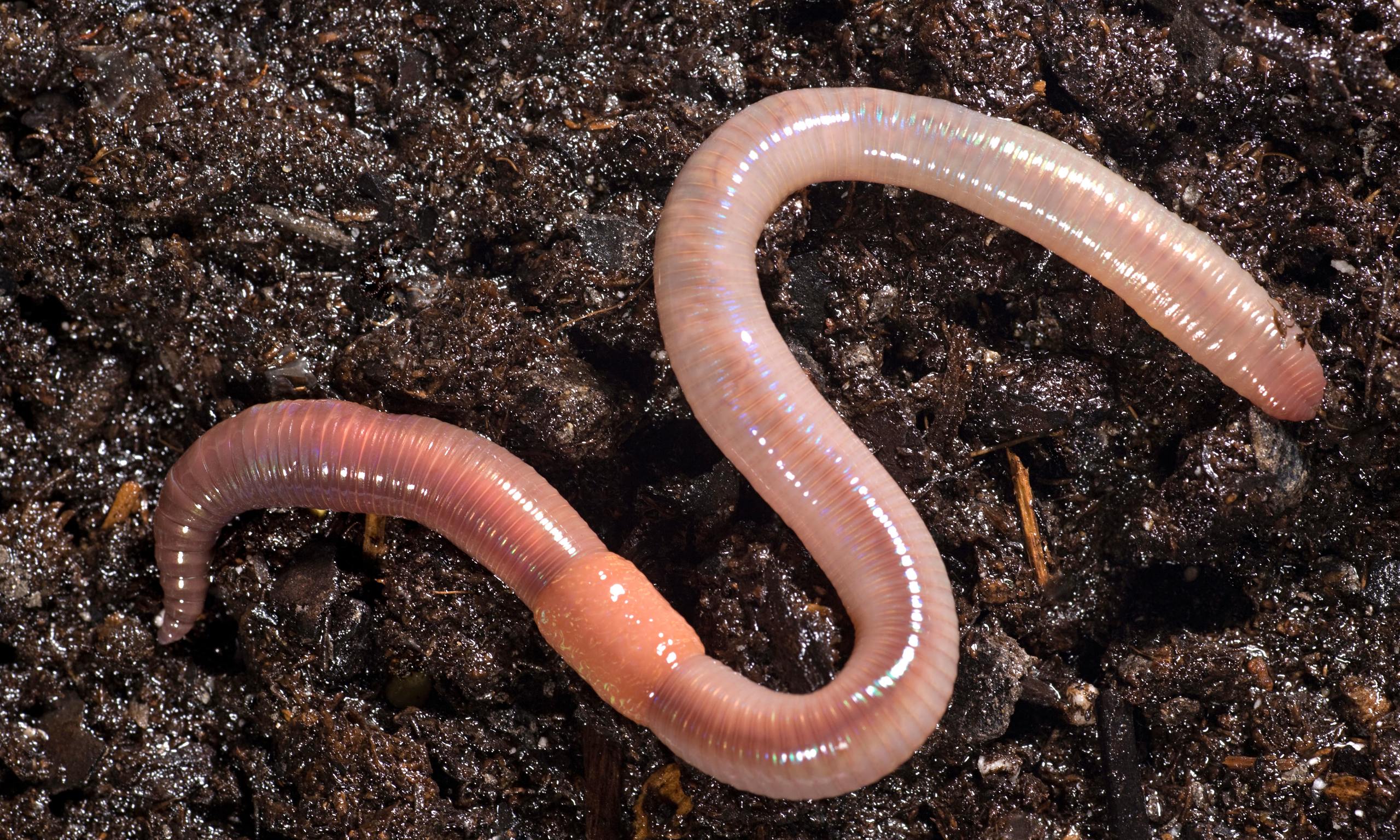
Cicada sings for rain.  Fruit laden kapok means poor harvest.  When earthworms crawl out of their holes, 
a flood is coming.  Are these true?

Dr. Abe V. Rotor

1. Animals can predict earthquake

Horses, reptiles, fowls and other animals perceive the minute tremors preceding a major shock. In explaining the principle of a tectonic earthquake, imagine a stick bent slowly to form an arch. As pressure continues to build up, minute fibers and strands begin to snap (tremors) until the stick suddenly breaks into two (shock). Our senses are not as sensitive as those of animals in perceiving such initial signal.

2. Dragonflies hover before a rain.

High relative humidity accompanies warm weather. Small insects are disturbed in their natural habitats and feeding. With their sensitive antennae they pick up the signal, which tells them to pack up and leave. Rain is usually preceded with high humidity and air temperature. This steamy condition progressively builds up into rain, and as the process continues, the ancient gene in these insects begins to work, as it has always been with their ancestors thousands, if not millions of years ago. Thus midges, hoppers, gnats, flies, and other insects flee to safer grounds on the instruction of this gene. It is during this mass evacuation that hordes of low flying dragonflies have their fill, snatching helpless preys in mid-air.

3. Fruit laden kapok means poor harvest

When you see plenty of dangling pods of cotton tree or kapok (Ceiba pentandra L), expect poor rice harvest. Kapok is sensitive to water stress. It does not have deep penetrating roots. Instead it has large spreading roots that depend largely on shallow water source. To compensate for lack of water in summer, the tree stores a lot water in its fleshy trunk and branches like how cactus does while water supply lasts. When the stored water is not sufficient to tide up with the long, hot summer months, a triggering mechanism controlled by hormone stimulates the tree’s physiology. The plant bears flowers and ultimately fruits and seeds, a trait universal to any organism facing stress. This is the key to the perpetuation of the species. In short, Nature has provided a means with which an organism’s ultimate biological function to reproduce is carried on. And the more progeny it produces the more is the chance of the species to continue on.

Stress stimulates reproduction. Wounding (cutting the bark, staggered and at close intervals with bolo) the trunk of a mango that refuses to bear fruits, stimulates it to flower. This is true with other orchard trees. Pruning follows the same principle. Botanists explain the phenomenon this way. “Food”, which is otherwise used for vegetative growth will now be diverted to the development of flowers and fruits. But geneticists have a further explanation. Again, a gene that controls this balance responds favorably to saving the species – even with the risk that the parent may die. In many cases this is also true in the animal kingdom, and among protists.

4. When earthworms crawl out of their holes, a flood is coming.

It was early morning at Kenting Park in southern Taiwan, my student and thesis advisee, Anthony Cheng, and I saw earthworms, bigger than the size of pencil crawling away from their burrows. He looked up the sky. “Is it going to rain?” I asked, noting the heavy overcast. “No, but we haven’t the monsoon yet.” It was already August.

Image result for earthwormsBy the way, earthworms are subterranean, eating on decomposing leaves, and converting them into humus, a very rich soil, called casting. That is why farmers and gardeners call the earthworm as Nature’s fertilizer factory. Tons and tons of castings are brought out from their burrows and deposited on the ground in small mounds.

Why do earthworms abandon their burrows before an impending heavy rain or flood? Earthworms drown when water fill their burrows, so that their recourse is to move out to higher grounds. Nature has equipped them with sensitive hairs around their body connected with a neural system that guides them find rich deposits of organic matter and water. In summer earthworms penetrate deep and wide. Then in monsoon as ground water rises, they burrow in higher areas, this time to keep away from too much water. Making use of this evolutionary tool - a kind of Noah’s sixth sense, so to speak - earthworms avoid getting entombed in their very burrows.

5. Swarming of winged termites confirms the rainy season (habagat) has finally arrived.

They come by the armies, careless and suicidal, attracted by light and ending in a basin of water. That is how we catch gamu-gamu, or simut-simut in Ilocano, which we feed to chicken, or sauté into a rare delicacy. Where did the swarm come from? And why only at a specific time of the year?

Termites belong to a very ancient Order of insects, Isoptera, which means “same wings”. Yet when we examine termites after digging their nest called anthill (punso’), we find them wingless, naked, and small, except their large heads, and mandibles especially in the case of the soldiers. In the royal chamber lies a queen, enormously large, the size of the index finger. Her job throughout her long life is to lay thousands of eggs everyday and keep the colony intact through a scent she produces called pheromone.

It is the end of summer. After the first heavy rain usually in May, the anthill becomes extraordinarily busy. Inside, the once sterile males and females – formerly soldiers and workers - awaken to the dictates of hormones. They develop strong wings, and with their bodies filled up with fats, they are ready for the once-in-a-lifetime adventure - swarming. The nocturnal swarm soon takes place, and moves as one huge army guided by light – celestial or neon – before it splits into congregans, allowing intermingling with members from other anthills. Now the much-awaited nuptial flight begins. For hours the winged termites circle around lights, very much like the proverbial moth in Rizal’s writings. In the process, individuals, which survive the frenzy and onslaught by predators, find their mates, move together to a potential place, and finding it suitable to start a new colony, soon lose their wings. Here they live together for a very long time. Termites are the longest living insects, surpassing the life of the 17-year old locust or cicada.

6. May or June Beetle heralds the coming of the rainy season.

We call it salagubang, scientifically Leucopholis irrorata, a destructive pest of many field crops. Its larva, a white grub, which feeds on roots, remains in the ground until the first strong rain comes. Then it comes out as beetle. If the monsoon is early they come out in May, otherwise they are seen coming out in June.

But this year I have noticed that the emergence of this beetle was as early as in April. Why is this so? It is because of the unusual rainfall pattern this year. Practically there was no summer as you have probably experienced. It means then that the insect responds to meteorological signals that govern its biological clock. How this phenomenon works is not well understood, but definitely, it is a product of a long evolutionary process that enabled the species to survive up to this day.

Co-evolution with plants on which it thrives in both larval and adult stages gradually developed through time into a dynamic pattern, that while the host plants are at the receiving end, the insect’s feeding habit and life cycle are attuned to a tolerable level. Thus we usually find the insect in areas where this natural relationship exists. If you find the salagubang, and its relative, the salaguinto, in May, farmers are likely to start plowing their fields soon. Farmers are glad to see the beetle come out in May, or as early as April. It is because they can plant earlier which allows for a second crop of vegetables or legumes – or another rice crop.

Related image7. Cicada sings for rain.

When you hear the shrilling song of cicada (kuliglig), it means the rains have finally arrived. From here we expect the rains to intensify throughout the southeast monsoon or habagat then tapers off in October. The cicada spends its immature or nymph stage in the ground feeding on roots of plants. There are species that complete their life cycle in one year (annual cicada which is most common), two years, and seventeen years (often called seventeen-year old locust). Whatever is the species, the emergence of cicada is at the onset of the rainy season, usually in April or May in most part of the country.

Rain softens the soil and signals the full-grown nymph to get out of its cell. It then climbs to the nearest tree and at some distance from the ground, it metamorphoses into an adult. It is the male cicada that “sings”, which is actually a continuous rapid high-pitched sound - tick-tack-tick-tack… produced by a pair of drums attached on its abdomen. Imagine the lid of a tin can pressed and released in rapid succession. On the other hand, the female cicada is totally mute and her response to a get near a Romeo whose song pleases her.

 8. Cockroaches come out of their abode and seek for shelter means that a strong rain, if not a typhoon, is coming. 

The biological clock of these creatures responds to invisible signals, which comprise decreased atmospheric pressure, high relative humidity and air temperature. Their sensitive antennae and tactile hairs covering their body pick these up these changes of the environment. Thus we find ants in exodus, they move as a colony carrying their eggs and young indoors. Cockroaches become unusually active, flying about in frenzy, in search for a new place. There is a common message, that is, to escape to safer ground, an archetype ingrained in their genes passed on to them by their ancestors through evolution.

9. Mosquitoes bite more aggressively before rain.

True. Like any organism preparing for reproduction, the female mosquito must be able to obtain blood to enhance egg fertility. Failure to do so may cause eggs to become sterile, a finding which can be applied in controlling this ferocious vampire which has caused human death more than all casualties of wars combined. Note: Only the female mosquito feeds on blood, the male depends on plant sap and exudates.

10. The kingfisher (salaksak) is an emissary of death.

The kingfisher’s throaty voice is a call of death, so the old folks say. Well, when ponds and rivers dry up because of drought, this fish eater will scour for alternative food outside its niche, poaching around farms and homes.

12. When the leaves of Samanea acacia fold it’s time to go home - before it gets dark.

It is time to fetch the carabao from the pasture and to start walking home before it gets dark. The fowls prepare to roast in their tree abode. The stew leaves a trail, as the western sky dims in the setting sun. By now the leaves of acacia (Samanea saman) have completely folded toward each other at the midrib, and the base of the midrib itself is bent on its attachment. This is also true with the leaves of sampaloc, ipil-ipil, kakawate - and more so with makahiya.

These plants, among others, belong to the legume family and are equipped with a special organ – pulvinus – that controls the erection and folding of the leaves. The principle is like a balloon. When turgid the leaves are erect; when flaccid, the leaves fold. The pulvinus is controlled by osmosis, that is, the intake and release of water in the cells.

Reference of time among old folks is built through observation of the natural environment and a lifestyle where the amenities of modern living are absent. This triggers our biological clock, and while it may not be accurate, brings people to a natural sense of time and quaint living.

Nature’s mysterious ways are discreet and take place when all is still and quiet. But anyone of us who stirs to the nuptial flight of winged termites and ants, to the restlessness of catfish before an impending earthquake, the dangling of numerous pods of kapok which signals the coming of El Nino, earthworms abandoning their underground homes to escape flood, the emergence of “April beetle”, - is indeed endowed with a special intelligence – naturalism. If however, no bird sings when the spring has come, either we have slept too long, or we have failed to prepare for its coming.

Acknowledgement: Internet photos, except that of kapok tree. ~


Sunday, January 12, 2020

Early Agricultural and Industrial Artifacts

Early Agricultural and Industrial Artifacts 
In recognition of the role of the Grains Museum of the National Food Authority, Cabanatuan City

Dr Abe V Rotor
   
This artifact is an indigenous pinawa (brown rice) hand mill. Grains Museum, Cabanatuan City. (AVR Photo)
Wooden sugarcane crusher, drawn by carabao on a circular path. The cane is fed between the rollers and repeated to extract the most juice which accumulate in a receptacle, usually an earthen jar or burnay.  The juice is cooked in large kettles and made into basi wine, vinegar, or directly cooked until it become red sugar, either powdered or in blocks. The wooden roller has been replaced by mechanized iron crushers.  (AVR Photo)  
  

Sleds for transport on rice paddy made of wood and bamboo; native hats and raincoats made of leaves of anahaw and buri palms. (Grains Museum, NFA Cabanatuan City) AVR Photo


Multi-purpose stone grinder for coffee, grain and bean, a universal tool on the farm and home, also for local industries, which is still used today in remote places, and in preserving ethnicity. (Internet photo).

Primitive tools and equipment as early as in prehistoric times. These have evolved into the scythes, mallet and stone grinder we may be familiar with. {Internet photo)
 Regional designs of palay hand harvester or rakem, (Ilk); headgear for the farm made of woven bamboo.  
 Multipurpose bullcart of a travelling merchant of native merchandise for the farm and home, Philippine version of the gypsy in medieval Europe. 
 
 Farming the terraces in the Cordillera still depends of native methods and tools.
 Traditional way of stripping fibers of abaca is still a common practice in Bicol and other abaca producing provinces.
Indigo Vats
Fermenting tanks in the manufacture of añil or azul during the Spanish era. The product is derived from a plant, indigo (Indigofera tinctoria) which was extensively cultivated in the Ilocos Region.  Añil was exported to Europe through the Galleon Trade which operated for two centuries (17th and 17th century). San Vicente, Ilocos Sur. (AVR Photo) 
------------------------
"When the Nobel Peace Prize Committee designated me the recipient of the 1970 award for my contribution to the 'green revolution,' they were in effect, I believe, selecting an individual to symbolize the vital role of agriculture and food production in a world that is hungry, both for bread and for peace."  - Norman Borlaug

Saturday, January 11, 2020

Catch your dreams with a DREAM CATCHER

Catch your dreams with a DREAM CATCHER
Dream catcher or Ojibwe asabikeshiinh originated from the Ojibwa (Chippewa) culture in native America. If you believe in the happy life, unity and cooperation among the native Americans - and those in later cultures - have a dream catcher at home
 Dr Abe V Rotor

Design of the original dream catcher. It is a good
project in school. And a wonderful gift, too.

 The web is made up of sinew or animal gut snugly
woven on a wooden or metal ring like tennis racket.
In Ojibwa (Chippewa) culture, a dream catcher (Ojibwe asabikeshiinh), the inanimate form of the word for "spider" or bawaajige nagwaagan meaning "dream snare" is a handmade object based on a willow hoop, on which is woven a net or web. The dream catcher is then decorated with personal and sacred items such as feathers and beads.

Dreams have many meanings to American Indians. One of the old Ojibwa traditions was to hang a dream catcher in their homes. They believe that the night air is filled with dreams, both bad and good. The dream when hung, moves freely in the air and catches the dreams as they float by. The good dreams know the way and slip through the center hole, then slide down off the soft feather so gently that many times the sleeper below doesn’t know he’s dreaming. The bad dreams not knowing the way, get entangled in the webbing and perish with the first light of the new day.

Small dream catchers were hung on cradle boards so infants would have good dreams. Other sizes were hung in lodges for all to have good dreams.

The dream catcher is a symbol of unity among the various Indian Nations, and a general symbol of identification with Native American or First Nations cultures. Outside of the pan-Indian communities, dream catchers are now made, exhibited, and sold by some new age groups and individuals.
Author shows a dream catcher, a gift from native Canadian Indian friends while he was on scholarship training in Winnipeg, Manitoba in 1976.
My children made dream catchers in our shop and gave them as gifts to relatives and friends. We believe in bonding through thoughts and dreams.

Then a movie in the later part of the nineties destroyed all that; it projected a fearful image of the dream catcher. It is nightmare rather than good dream that the dream catcher catches. And instead of protecting the owner, it brings harm to him - indeed an affront to the original good intention and "sacredness" of the object. There are movies that destroy sanity and good faith, movies that make our friends our own enemies, movies that urge us to destroy wildlife because they are bad, movies that cast doubts to lifelong traditions and beliefs. It is the evil side of media.

If you believe in the happy life, unity and cooperation among the native Americans - and those in later cultures - have a dream catcher at home. Hang it at the entrance, better still above a person who wishes to have peace and comfort in life. HAPPY DREAMS! - Night Eagle. ~

Saturday, January 4, 2020

Waterfall Under My Feet

Waterfalls Under My Feet 
"... when discovered they are made into a trade!
I wish waterfalls are seen only from above." 
Dr Abe V Rotor 
This waterfall, huge and imposing below,
where does it begin, where does it end?
minuscule from the air, the size of my shoe,
beyond sight afar, shrouded at the bend.

But I hear it hissing clear, tumbling down,
its rock walls shudder, the trees quiver,
flowing down the gully in leap and bound,
meanders and merrily pours into a river.

I've long wondered how a waterfall is made
Isn't by Nature alone, the presence of God?
yet when discovered is made into a trade!
I wish waterfalls are seen only from above.
 
These are two of a series of waterfalls on the slope of the mountain along the cable car route. Scanty rainfall at this time of the year (approaching autumn) explains the low water supply of the falls and their tributaries. Vegetation of the watershed is likewise poor, since many trees are deciduous (shedding of leaves) and dormant in preparation for the coming cool and windy months.


A cable car connects the main island of Hong Kong to Ngong Ping, Lantau Island, where the Big Buddha, a large bronze statue sits at the top near Po Lin Monastery. It symbolizes the harmonious relationship between man and nature, people and faith. It is from the cable car that these photos were taken through its glass floor. Upper photos were taken at the summit showing the silhouette of Buddha, and the adjoining peaks, while the lower photos showing the harbor and newly opened settlement are views half-way the car’s descent. The pair of shoes belongs to Markus two and one-half years old accompanied by his sister Mackie, their daddy and mommy, and grandparents.~

Thursday, January 2, 2020

Composting is an ancient practice; chemical fertilizers are a recent invention.

Composting is an ancient practice;
 chemical fertilizer is a recent invention.

Composting is a traditional farm practice photos, passed on to us since the start of agriculture.
 Dr Abe V Rotor


Composting is a traditional farm practice, passed on to us since the start of agriculture on the Fertile Crescent, and most likely in other places like ancient China, many centuries BC. The principle involved is the same, although the technique has been improved a lot.   

There are three components to produce ideal compost: 
  • animal manure (and chicken droppings), 
  • crop residues (hay and stalks, weeds, fruit peelings, etc), and 
  • loamy soil.  
All you need to do is to make several layers of these materials one on top of another, either in the form of a pile (preferred during the rainy season), or in a shallow pit (for the dry season), of any dimension that is suitable. Install some bamboo tubes to serve as posts and  “breathers” to allow air circulation in the pile or pit. The breathers work like chimney.  Punch the nodes to make a continuous tube, and make several holes staggered along its length. Moisten the pile as needed.  Too much water is not advisable.

Composting also uses seaweeds (like Sargassum) that litter coastlines; scums and algae growing on lakes and rivers; rinds and peelings of cacao, coffee, pineapple, and the like; corn cobs and husk, rice stalk and rice hull ash in rice and corn lands.  Then we have a lot of coconut husk and leaves, and copra meal wastes in coconut areas; guano (bat droppings) in caves; and a long list of materials from wastes in fishery, slaughterhouses, food manufacturing.  Lest we forget, the biodegradable materials by tons and tons which urban centers are turning out every day. The biggest bulk is domestic waste which the Chinese have developed a technique to converting it into humanure for their farms and gardens. A recent composting technique is with the use of biological agents like the earthworm (vermiculture). 

To hasten composting, farmers practice microbial inoculation with Trichoderma (fungus), Rhizobia (bacterium), Anabaena, (Blue Green Alga),   Nostoc (also a BGA), Saccharomyces (yeast, an Ascomycetes fungus), and many other microorganisms ubiquitously occurring in nature.        

What really is the secret of compost in enriching the soil?  Here are the benefits.

1.  It contains both major and minor elements (chemical fertilizers are specific only to the elements they supply). 

2. The release of nutrients is slow but continuous, allowing both crop and soil to adjust properly. 


3. The organic content of compost improves tilth (ease in cultivation), as well as the physical structure of the soil. 


4. Compost enhances favorable microbiological condition of the soil.  Fifth, it improves retention of soil moisture. 


5. It makes working on the soil a lot easier because of its porous nature.   


6. It stabilizes soil acidity (pH). 


7. It is not only a good source of income; it is a dollar save.


8. Composting, sanitation and beautification complement one another. ~

With spiraling cost of chemical fertilizer and its cumulative residues that pollute the rivers down to the sea, and destroy the ecosystem, it is time to go back to this ancient practice of composting.  It is the solution to many of our problems in meeting our need for enough and healthy food, and in helping keep the balance of nature.~ 

Newly harvested compost ready for use; composting of kitchen wastes at home.


(Acknowledgement: References; Living with Nature by AVR;  Internet, Wikipedia