Sunday, October 29, 2017

Verses in Ilokano: (Berso ni Bersio)
"Dumanon langit ti maikatlo nga takyag
ni Apo Baket."
A helping hand to an elderly reaches heaven,
figuratively speaking.
Dr Abercio (Bersio) V Rotor
Columnist, Okeyka Apong: Dagiti Tawid a Sirib ken Adal (Heritage of Wisdom and Lessons), Bannawag Magazine (weekly magazine in Ilocano, published by Manila Bulletin)
 1. Nangisngisit nasamsam-it -
Bugnay.
The darker it is, the sweeter. Duhat
2. Bislat: pagbaut, pagsurat
Ken sarukud.
Cane is for whipping, writing, and walking
3. Adda mata dagiti kaykayo,
No rumabii.
The trees have eyes at night.
4. Agkakabsat, aggugubat.
Ay, daksanggasat!
Brothers fighting each other in war,
what a tragedy!
5. Sabong nagukrad, alimbubuyog,
Makasulisug.
An open flower attract a bee. (photo)
6. Alipupus dua, maysa’t muging,
Nasukir isuna.
He who has two hair pools with one
on the forehead is stubborn
7. Perlas ken lua pangar-arigan
Panagkaddua.
Pearls and tears are symbols of friendship.
8. Pan-nangan’ awan agsaramsam,
Ti nagbaetan.
 Don't eat between meals.
9. Dumanon langit maikatlo nga takyag
Ni Apo Baket.
A helping hand to an elderly reaches heaven,
figuratively, speaking.
10. Agar-arasaas diay dadapilan,
Bubud diay burnay.
The sugarcane crusher whispers,
so with the brew (must) in the earthen jar.
11. Agparparintomeng, awan maka-asideg.
Lunsa-lunsa.
This kneeling creature dares anyone to get near. (preying mantis) - photo
12. Agbilangka't sangagasot ken maysa
No agduaduaka.
Count one-hundred-and-one if you are in doubt.
13. Itudom amin ida, no awan basolmo
ken nadaluska.
Point the blame at all others, if you are sinless
and pure. It is analogous to "He who has no sin casts the first stone." (Statement of Christ before
 a mob about to stone a sinner to death.)
14. Gura ken ayat, bumtak wenno umpes,
Kasla ulep.
Hate and love, like cloud, breaks and disappears.
15. Umisemkan tapno maturogen
Iti bulan.
Smile so that the moon goes to sleep.
ni Apo Baket."
A helping hand to an elderly reaches heaven,
figuratively speaking.
Dr Abercio (Bersio) V Rotor
Columnist, Okeyka Apong: Dagiti Tawid a Sirib ken Adal (Heritage of Wisdom and Lessons), Bannawag Magazine (weekly magazine in Ilocano, published by Manila Bulletin)
Bugnay.
The darker it is, the sweeter. Duhat
2. Bislat: pagbaut, pagsurat
Ken sarukud.
Cane is for whipping, writing, and walking
3. Adda mata dagiti kaykayo,
No rumabii.
The trees have eyes at night.
4. Agkakabsat, aggugubat.
Ay, daksanggasat!
Brothers fighting each other in war,
what a tragedy!
5. Sabong nagukrad, alimbubuyog,
Makasulisug.
An open flower attract a bee. (photo)
6. Alipupus dua, maysa’t muging,
Nasukir isuna.
He who has two hair pools with one
on the forehead is stubborn
7. Perlas ken lua pangar-arigan
Panagkaddua.
Pearls and tears are symbols of friendship.
8. Pan-nangan’ awan agsaramsam,
Ti nagbaetan.
Don't eat between meals.9. Dumanon langit maikatlo nga takyag
Ni Apo Baket.
A helping hand to an elderly reaches heaven,
figuratively, speaking.
10. Agar-arasaas diay dadapilan,
Bubud diay burnay.
The sugarcane crusher whispers,
so with the brew (must) in the earthen jar.
11. Agparparintomeng, awan maka-asideg.
Lunsa-lunsa.
This kneeling creature dares anyone to get near. (preying mantis) - photo
12. Agbilangka't sangagasot ken maysa
No agduaduaka.
Count one-hundred-and-one if you are in doubt.
13. Itudom amin ida, no awan basolmo
ken nadaluska.
Point the blame at all others, if you are sinless
and pure. It is analogous to "He who has no sin casts the first stone." (Statement of Christ before
 a mob about to stone a sinner to death.)
14. Gura ken ayat, bumtak wenno umpes,
Kasla ulep.
Hate and love, like cloud, breaks and disappears.
15. Umisemkan tapno maturogen
Iti bulan.
Smile so that the moon goes to sleep.
Thursday, October 26, 2017
Life is Synergy
Abe V Rotor

Jungle
in acrylic AVR
Life ‘s more than the sum of its parts,
as each creature comes and departs;
synergy the key to unity,
diversity and harmony
and seat of a great mystery.
Basi Revolt of 1807 in Paintings
Basi Revolt of 1807 in Paintings
Bantaoay River (San Vicente Ilocos Sur)
Researched by Dr Abe V Rotor
Basi Revolt 1807 - Paintings by Esteban Villanueva
The revolt took place 400 km north of Manila where Diego and Gabriela Silang heroically fought Spanish rule 50 years before. It was precipitated by the declaration of Wine Monopoly by the local Spanish government that virtually took from the hands of small cottage brewers an industry the Ilocos region enjoyed long before Spain colonized the islands. Basi was carried by the Galleon trade plying Ciudad Fernandina (now Vigan City) and Europe via Acapulco, Mexico (1565-1815).
The final battle took place along the Bantaoay River that runs through the town of San Vicente, some 4 km from the capital where the industry flourished. Scores of Spanish soldiers and natives were killed. Although the revolt spread to as far as Ilocos Norte, and Pangasinan to the south, it culminated on September 29, 1907 with the public execution of the captured rebels.
Fourteen big oil paintings depicting the Basi Revolt, also known as Ambaristo Revolt (named after its leader) can be seen today at the Vigan Ayala Museum, which is housed in the original residence of Filipino priest martyr, Fr. Jose Burgos. The painter, Don Esteban Villanueva was an eyewitness of this historic event.
Today, the Basi Revolt lives on with the fine taste and tradition of this unique product standing among the best wines of the world. Nine of the paintings are posted here.


Monday, October 23, 2017
Rice cake: Suman et al
Dr Abe V Rotor

 Suman
Suman Tupig
Tupig Patupat
Gift of Ceres to our land
in paddies golden in the sun;
manna at par with any kind,
for the young and folks around -
in celebration or just for fun -
life's without the suman.
All ingredients are local farm products: coconut, red sugar, and wrappings of banana leaves. Patupat basket is made of coconut leaves, suman sa ibo is wrapped with buri leaves. Even the bila-o is made of woven bamboo and rattan. It is associated with farm life. such as milling of sugar cane, harvesting rice, and on such social occasions like harana (serenade), fiesta, or just a simple celebration. The quaintness that goes with these delicacies creates a festive atmosphere that is part of our cultural heritage.
in paddies golden in the sun;
manna at par with any kind,
for the young and folks around -
in celebration or just for fun -
life's without the suman.
All ingredients are local farm products: coconut, red sugar, and wrappings of banana leaves. Patupat basket is made of coconut leaves, suman sa ibo is wrapped with buri leaves. Even the bila-o is made of woven bamboo and rattan. It is associated with farm life. such as milling of sugar cane, harvesting rice, and on such social occasions like harana (serenade), fiesta, or just a simple celebration. The quaintness that goes with these delicacies creates a festive atmosphere that is part of our cultural heritage.
Sunday, October 22, 2017
Rizal as Zoologist
Rizal as Zoologist
Dr Abe V Rotor
As a zoologist, Rizal discovered living organisms unnamed in his time, such as a flying (gliding) lizard (Draco Rizali), Harlequin Tree Frog (Racophorus Rizali), among others, named after him.


Acknowledgement: Internet
Saturday, October 21, 2017
Ügot ken Atab’ (Low Tide and High Tide): Haiku in Ilocano
Dr. Abe V. Rotor

Columnist,
Dagiti Tawid a Sirib ken Adal (Our Heritage of Values and Lessons)
Bannawag, Ilocano Weekly Magazine
Published by Manila Bulletin
Dagiti Tawid a Sirib ken Adal (Our Heritage of Values and Lessons)
Bannawag, Ilocano Weekly Magazine
Published by Manila Bulletin
Children Playing at Low Tide, in acrylic by AV Rotor
1. Agsinsinnublat,
Agmalmalem, agpatpatnag,
Ugot, atab’.
High and low tides come one after the other all day and night through.
2. Agkalintudo:
Ti nangisit pumuraw,
Puraw ngumisit.
Under continuous rain, black turns into white, and white into black.
3. Natagtagari,
No panagtutudo’t
Waig diay ngato.
It’s noisier upstream in the rainy season.
 Rampage after heavy rain painting by the author
 4. Maisa kaniada,
Pobre agparti’t manok,
Iti masakit.
If a poor man decides to eat his fowl - one of them is sick.
5. Panaginnayat
Diay bassit a kalapaw
Napudno unay.
Love that reigns in a simple home is true.
6. Rupat’ arigna
Uray nakakidemka,
Panagsarita.
Without looking you know the character of a person the way he talks.
7. Karraragsakan
Mangparagsak dagiti
Malmalday unay.
He who makes sad people happy is the happiest person.
8. Agbiddut ngata,
Ti awan aramidna,
Agmaymaysa?
Will one who hasn’t done anything commit error?
9. Awan agpada:
Bul-bulong, bit-bituen,
Kapanunutan.
No two leaves or stars are the same, so with thoughts.
10. Napnuan saririt,
Kabusor, rig-rigat,
Pannakaabak.
One has enough wisdom from trials, sufferings, failures.
11. Lukipem sakbay
Lukatam ti panunot,
Usisaem pay.
Study a thing first before you make your mind.
12. Ad-adut’ matay
Iti lamut ngem bisin.
Nakababain.
More die of gluttony than hunger – what a shame.
13. Natalna unay,
Tarampo wenno pilid,
Kaar-aramid.
Spinning top and wheel, they work perfectly well when new.
14. Agbilangkanto’t
Sangagasot ket maysa,
Oras panagdua-dua.
Count one hundred and one when you are in doubt.
15. Maturog kadi’t
Karasaen ken buaya?
Agan-annadka.
The wicked does not sleep – beware.
16. Atiddag iti biag
No dakkel iti lapayag.
Agkalkal-lingag.
He who has big ears lives long; he is keen to sound.
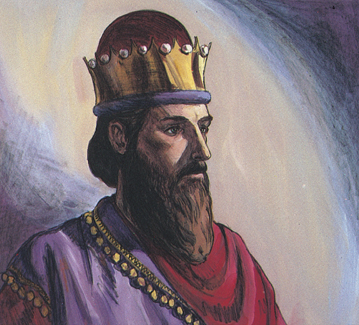 17. Sinardengam ti
Dumaldalan nga kuton,
Apo Solomon.
King Solomon halted his army for the ants to pass.
18. Makasulisug,
Makapurar ti puro
Nga balitoc.
Pure gold glitters, it so tempting.
19. Ipaka-ammom
Dagiti ma-anupan’,
Daras maawan.
A rich hunting ground is always kept secret by a hunter.
20. ‘Toy aw-awitek’,
Krus nakadagdagsen,
Ngem pangipanak?
This cross I am carrying, where shall I put it?
Friday, October 20, 2017
Old Nail on Old Wood
Old Nail on Old Wood
"Serendipity, a divine discovery..." avr
Dr Abe V Rotor

Old Nail on an Old Wood with a mural background, both by the author.
On display at Living with Nature Center, San Vicente Ilocos Sur 2020
I found them separately and put them together,for what reason and how is serendipity,a divine discovery, and I, a disciple of Helenaand Constantine, guardians of Christianity.How little I know of spirituality, less of divinity,and the oneness of faith called universality,where holiness bestows the pious and faithful,and I, I only found relics under an old tree.Through the crown of the tree came flying free,white doves against the blue sky and sea,where my faith blends with my old love biology,And I, I am a witness of a great mystery. ~
Thursday, October 19, 2017
Jesus T Tanchanco Remembered
Dr Abe V Rotor
Living with Nature School on Blog

 NFA homecoming 2012 turned out to be JT's adieu. Author and wife present book, Living with Folk Wisdom, to former Administrator Jesus T Tanchanco. Both worked under JT, first administrator of then National Grains Authority, one of the first agencies created when President Ferdinand Marcos declared Martial Law in 1972. It was during JT's term that the Philippines became a net exporter of rice.

Among the projects JT initiated was the Farmers' Museum housed at the NFA Regional Office building in Cabanatuan. The museum focused the role of farmers as the "backbone of the nation." In the photo are the author left, and Dr Romualdo M Del Rosario (in barong) of the National Museum who assisted in the setting up of the museum. A set of seven dioramas depicting the rice industry was the centerpiece. The museum declined in post-Marcos era until it was finally phased out. Thirty years after however, the museum was re-opened.
Living with Nature School on Blog
Living Rock
Dr Abe V Rotor

Under the shade of a fire tree, University of Santo
Tomas campus, Manila
Tomas campus, Manila
Shower me with petals of red and orange glare,
Ephemeral on the concrete floor in summer air;
Let the sun shine on my guests - a twosome fair,
Whispering sweetly, building castles in the air. ~
Wednesday, October 18, 2017
The Candle Man
Dr Abe V Rotor

Candle Vendor, San Vicente, Ilocos Sur
He looks into your eyes, queer, penetrating,
candles, sir, for the Apo;
and you look into his eyes, gentle, appealing,
and pay, from others' view;
something mysterious this candle man seems,
ask, "'tang how old are you?"
Repeating the question like talking to a deaf,
answers low, "one century ago."
Sunday, October 15, 2017
Saturday, October 14, 2017
Reflection by a Waterfall
"Reflect not my folly and greed ...
Reflect not the future gloom ..."
Dr Abe V Rotor
Reflect not the future gloom ..."
Dr Abe V Rotor

Reflect not my folly and greed,
Never Narcissus of old;
Of the deities on his shoulder,
Of youth never growing old.
Reflect not of the future gloom,
Of Heaven denied and lost,
Lost pristine and the butterflies,
And of the Malthusian ghost.
Death is an empty shell I see
Lying in the murky depth,
And a lone deer in memory
Shall man someday pay his debt.
The Good Life, oh we always say,
Is progress and destiny,
Taming both time and space
To create our sense of beauty.
Narcissus, what lesson have you
Taught mankind since you fell in?
Oh, beauty, the land of the doomed,
Where lust is the greatest sin. ~
15 Workshop Exercises for Teachers in Humanities and Natural Sciences
Dr Abe V Rotor

Exercise 1 - Multiple Intelligence - A Self-Evaluation
(The 8 Fields of Intelligence)
All of us are endowed with a wide range of intelligence which is divided into eight domains. It is not only IQ (intelligence quotient) or EI (emotional intelligence) or any single sweeping test that can determine our God-given faculties. Here in the exercise, we will explore these realms. With a piece of paper (1/4) score yourselves in each of these areas. Use Scale of 1 to 10, like the previous exercise
1. Interpersonal (human relations)
2. Intrapersonal (inner vision self-reflection and meditation)
3. Kinesthetics (athletics, sports, dance, gymnastics)
4. Languages or linguistics
5. Logic (dialectics, Mathematics)
6. Music (auditory art)
7. Spatial intelligence (drawing, and painting, sculpture, architecture, photography)
8. Naturalism (Green Thumb, Relationship with the Natural World)
What are your top three fields on intelligence? Can you see their relationships? Relate them with your strength. On the other hand, in what ways can you improve on the other realms?
Make full use of your strength. And remember there are early and late bloomers. Nothing is too late to be able to improve from one’s deficiencies.
Maybe you lack a good foundation in a certain domain. But why don’t you catch up? Do you recall late bloomers who succeeded in life? Fly, fly high and be happy like the birds. Just don’t be Icarus.
Reflect on the following:
1. Your strength and you weakness
2. Your “idols” and models
3. Resolution and affirmations
Exercise 2 - Quo vadis Syndrome
(Where are you going?)
At this point I will give you an exercise, workshop style, to really find out where you are going. Imagine yourself as a sailboat in the sea. This will take five minutes. On a one-fourth piece of bond or pad paper draw yourself as a sailboat faced with the realities of life. Express yourself in relation to what you think and feel, your plans and dreams, with your surroundings and environment. Show your values such as self-confidence, courage, direction and purpose, etc. Use your vivid imagination.
The next five minutes will be devoted to the evaluation of your drawing. Exchange papers and score according to these criteria. Use Scale of 1 to 10 (1 is very poor, 5 fair, 10 excellent).
1. Size of the Sailboat - “I saw myself very small, I can get swallowed up by the sea. I don’t stand a chance in a storm.” (testimony of a teacher) Note: You can be a Gulliver
2. Size of sail over boat - “I’ve grown too heavy, too big. Material things… comfort zone… That’s it - my sail is small I can’t move fast. I’ve been left behind” (From a businessman)
3. Other boats - “I am afraid to be alone. I need someone to talk to, to play with. I am not a Robinson Crusoe. But I love competition. A weekend is boring if I miss my team.” (Jimmy, basketball player)
4. People - Siyempre naman, boat yata ako. What are boats for? I carry people, as many as I can.”(Ka Tacio, barangay leader)
5. Destination - “I’ve been a drifter all along. I did not even know what course to take. I felt lost all the time until I shifted to law. I ended up a businessman.” (Alias Atorni)
6. Creatures all - “What a beautiful world – colorful coral reefs, seaweeds, crabs, starfish, coral fish. I can spend a whole day here, painting, diving or just to while away time like the birds in the sky, and dolphins riding the wave. Who says it’s lonely out here? Look there’s a sea gull perched on my sail.”
7. Sky, sea alive - “Beware of doldrums, they are a prelude to disaster. The eye of a storm is calm. So with life. Catch the wind, ride on the wave, if you want to reach your destination.” (Quoted from a homily at UP Chapel, Diliman, QC)
8. Artistry - “Spontaneous art exudes natural beauty. It is art in the fundamental sense. And what is the impact of the drawing?
Add the scores of all the eight criteria. Now add twenty (20) points, to make a perfect score of 100. The bonus represents providence or luck or reward.
Return the papers to the owners. Analyze your strength and inadequacies. Continue working on your paper.. Recommended background music, Hating Gabi by Antonio Molina. Make your work your masterpiece and treasure it as a daily reminder to ponder upon.
Exercise 3 - Secret of Success
What made your “idol” successful?
This is a class exercise. Each member of the class thinks of his “hero” or his model, a person whom he reveres and admires so much (hinahangaan). Without revealing to anyone who he is (he must be a real person, dead or living, local or foreign), he proceeds in examining his qualities. After 3 to 5 minutes, he describes his “idol” using keywords.
The teacher writes down on the board the keywords. Everyone is called to share until the board is sufficiently filled up. Now the teacher makes three columns with the following headings: attitude, learned (in school), inherited (minana) and fate (tadhana). Classify the qualities enumerated under each column. Which column has the most entries? The least? Can you offer any explanation to this observation? Compute the percentage of each category.
Attitude/Learned (school) / Inherited (minana)/Fate (tadhana
Think of yourself now. Relate the qualities of your “idol” with yours. Are you following his footsteps? What is the greatest lesson you learned in this exercise?
Exercise 4 – Peace-of-Mind Square
(How “balance” are you today?)
POM - When you wake up in the morning look at yourself on the mirror and imagine the four sides of the mirror as a perfect square. Draw, to show each side represents the following: Mental or Intellectual, Psychological or Emotional, Physical and Spiritual.
You are not “square” if you are not relaxed. You do not have POM (Peace-of-Mind). Strive to keep that mirror of yourself a perfect square everyday. In this exercise, evaluate these four aspects and draw the lines representing it. Notice how distorted your square is. It is time to reflect. This takes five minutes with an appropriate music background like Meditation by Massenet and On Wings of Song by Mendelsohnn.
1. What is the role of each of the 4 factors to attain POM? Explain. How can you make your day - every day for that matter - square?
Exercise 5 –Get out of your box!
The Magic Box
The figure below is an imaginary box constructed with nine (9) dots. Now this is the instruction. With a pencil draw four (4) continuous lines without lifting the pencil and hit the nine dots without repeating or missing any one.
It takes several trials. And when you have finally found the secret you will realize that you really have to “get out of your box” to be able to do it. Learn to explore outside this box. Break out your shell of biases, pre-judgment. Move away from your zone of comfort or fear. Get out and seek the world outside your waterhole, outside your comfort zone. While doing this exercise the musical background is one with a happy note, such as The Lonely Goatherd or The Happy Farmer. It takes not longer than ten minutes for the whole exercise.
Note: In case you already know this exercise beforehand, you will certainly be helpful to the group as facilitator.
Exercise 6 – Iceberg! Sizing Up Problems
Problems, wise people say, are like icebergs. You see only their tips. Problems are similar. We often underestimate them until we realize how deep they are. By that time it may be too late to find the solutions, and the consequence is grave. Remember the Titanic? Here is an exercise to test how good you are in sizing up problems. Draw a profile (cross-section) of the ocean and put in proper place an iceberg and a ship in which you imagine you are steering. You are the captain of this ship. You are on the path of the iceberg. Show your position in relation to the iceberg. While you are working on this exercise, the sound track of the Titanic or Rachmaninoff’s Theme from Paganini will be played. Like in the other exercises there will be five major criteria to be used, namely: size of the iceberg, size of the ship, distance and position of the ship and the iceberg, floating position and shape based on physical laws such as center of gravity, proportion of the iceberg visible above water. Sharing follows.
Exercise 7 – Make a figure out of clothes hanger
This is a group exercise, preferably from 5 to 10 per group. Group competition is encouraged here and each word will be compared. Since this is under time pressure, there is not much time to plan and work on details. But this is the key to demonstrate group cooperation, spontaneity, resourcefulness, alertness, practicality and artistic ability. The facilitator may limit the source of materials coming from the personal effects of the participants and nothing more. Or, as the situation warrants as for example the venue is in the field, local materials found in the vicinity can be used. A good figure is a scarecrow in this particular case. Take precaution in handling the wire.
Exercise 8 - Venus de Milo
How do you make the figure look more beautiful?
This is a group exercise. An outline of this goddess of beauty is given to each group. The instruction is: Supply the missing arm. Each group confers and works collectively in two minutes. This exercise aims at creating awareness of limitation and humility. It reinforces leadership skills through reflection rather than immediate action. Communication and motivation are also enhanced. It reminds us that “beauty lies in secret.” The suggestive nature of a thing makes it more exiting. Venus de Milo is like poetry. Completing it is like writing an essay.
Which looks more beautiful? Venus with arms - the one you made? Or the original armless Venus?
NOTE: Efforts to restore the arms of of the armless goddess prove futtile even with the world’s renown sculptors brought together in an international forum. At the end they decided to leave Venus de Milo as she is.
Exercise 9 - Make your pet dog happy
Here is a drawing of a docile dog. Find out what are the things missing in the drawing that would possibly make the dog wiggle its tails, rise and greet you, show its affection?
You have ten minutes to complete the drawing. Now let us analyze. Exchange papers with your neighbor. The criteria are and let us rate your work in terms of providing the following: food, shelter, warmth, companionship, freedom. How did you fare? Relate the results of this exercise with your pets at home. Can you become a better master now? Remember, “A starving dog at his master’s gate predicts the ruin of the state.” (From Auguries of Innocence by William Blake)
How good are children as masters or friends to their pets? These are the things I gathered from their drawings.
Unchain the dog
Build a doghouse
Provide a shade – A tree beside the doghouse
Give a bone
Play with your dog, give a plaything
Groom – Regularly bathe and comb them.
Teach tricks and discipline
Vaccinate your dog
Who are these children mirrored by their drawings? And who will they be through the keyhole of their imagination? How we regard our pets is what we are and become.
“A starving dog at his master’s gate predicts the ruin of the state,” thus William Blake in “Auguries of Innocence” tells us. I, for one, would gladly meet with confidence and ease the master of a contented and happy dog.
The art workshop for children in which I used the dog as an exercise to demonstrate love for animals may be a simple way of changing attitudes and developing values. Children are known to be very effective in carrying out the multiplier effect of a lesson and we hope that they will carry this as they grow.
“Make these dogs happy,” could mean a thousand dogs in the future, and a thousand enlightened children who follow the footsteps of those who unchained the dog, built a doghouse, gave a bone, etc - and, altogether will make our world a kinder one. ~
Exercise 10 – Road of Life
Draw a road which leads you to your ambitions and dreams. Since you are “the master of your fate”, plot it well. Think and reflect. Where will your road leads to? How far? Imagine the chapters of your life and show it on your road. Look at both sides of the road. Where are you right now? At the prime of your life where will you be? How about in your golden years? Analysis and sharing follows. Criteria include length of road, its continuity, curves and topography, things around, people, living things, sky, landscape, where one places himself on the road, definite and clear pattern of road and environs.
Exercise 13 - Relaxation (How tense are you?)
A Clear and Calm Morning – How relax are you today? This is an individual exercise. The drawing consists of a docked sailboat with its sail rolled. Trees line the water edge, promenades are relax, the air is still, the sun is just over a hill. At the foreground is water. Imagine yourself approaching the shore. At this point, stop and complete the view. This exercise determines how relax you are. How can you bring yourself to reflection? Did you leave your problems behind? Do you still have the papers on your desk crowding your mind? Do you find time to say thank you to some people. When was your last retreat?
Exercise 14 - Let’s build a House
On a piece of paper (preferably one half bond paper, draw a house. Imagine it to be your own – your dream house you wish to live in, and to raise a family.
Concentrate as you draw. Observe silence. Do not compare your work with your seatmates. You have five minutes to do it.
Now let us see how good your house is. Put a check for every item that appears in your drawing.
1. Your house has complete parts: posts, roof, floor, walls, windows, stairs, door, etc.
2. Your house is strong, solid and durable, proportional in parts and design to withstand the elements of nature and time.
3. Your house is surrounded by trees, flowering plants and vegetables. Its front and backyard make a beautiful garden.
4. There are people – preferably a family – to give semblance of a home – a happy home.
5. There are other creatures around, like birds, butterflies dogs and other pets.
6. There are Facilities and appliances like TV, car, decors, curtain, playground,
decorative fence, grills and gate, garden pond, etc.
7. Your drawing has a good artistic quality of the drawing, including architecture of the
house and its surroundings.
8. Your house is a part of the landscape, that is in relation of the sky, fields and meadow, mountain, river and lake.
9. The drawing paper is fully utilized with no space wasted, of course in relation to the theme.
10. There are neighbors around.
Score: Each check is equivalent to 10 points or percent. How did you fare?
Exercise 15 - Make this tree live again
Relationships (Family and the World)
Using colors (pastel or crayola) and drawing paper, each participant puts life in a dying tree, bringing it back to its prime years. He may imagine himself to be the tree in a manner of reflection, seeing himself at the end, to be enjoying the fullness of life. While the exercise is being done, the resource person will personally play “Violin and Nature” as background music. This consists of violin compositions accompanied by the sounds of birds, waterfalls, wind and running stream. This is a ten-minute exercise, the first half is drawing, and the second is analysis and evaluation. Values derived come from Maslow’s Needs Hierarchy Theory (physiological, safety, love, esteem, self-actualization), and Herzberg’s Theory of Motivation, particularly on sense of achievement and fulfillment), and Concept of Integration-Cooperation. T
There are ten criteria to evaluate the exercise in an “exchange papers, corrected by” style. This also serves to enhance sharing and good judgement. The drawing must show the following: sun, water, resurrected tree, other trees, landscape, people, other creatures, naturalness of style, artistic quality, full use of space.
---------------------
Special exercise Exercise 16 – Search for meaning at the throes of death.
Now, this is a serious exercise. It may bring out an experience we may have buried long time ago. Or it may still be fresh in our memory. Is it worth recalling it? Perhaps it helps us in refocusing the direction of our lives. It is important to pause and remember our resolutions we may have failed to keep. This is the instruction.
Recall your experience when you got closest to death. Recall what you resolved while you battled for life, and what things you promised to keep once you get back to your feet? Here is a solemn moment, and it is a very personal one. An appropriate music background is in the tune of “Maalala Mo Kaya?”, “On Wings of Song”, or “The Dying Swan”. Sharing follows.
Exercise 1 - Multiple Intelligence - A Self-Evaluation
(The 8 Fields of Intelligence)
All of us are endowed with a wide range of intelligence which is divided into eight domains. It is not only IQ (intelligence quotient) or EI (emotional intelligence) or any single sweeping test that can determine our God-given faculties. Here in the exercise, we will explore these realms. With a piece of paper (1/4) score yourselves in each of these areas. Use Scale of 1 to 10, like the previous exercise
1. Interpersonal (human relations)
2. Intrapersonal (inner vision self-reflection and meditation)
3. Kinesthetics (athletics, sports, dance, gymnastics)
4. Languages or linguistics
5. Logic (dialectics, Mathematics)
6. Music (auditory art)
7. Spatial intelligence (drawing, and painting, sculpture, architecture, photography)
8. Naturalism (Green Thumb, Relationship with the Natural World)
What are your top three fields on intelligence? Can you see their relationships? Relate them with your strength. On the other hand, in what ways can you improve on the other realms?
Make full use of your strength. And remember there are early and late bloomers. Nothing is too late to be able to improve from one’s deficiencies.
Maybe you lack a good foundation in a certain domain. But why don’t you catch up? Do you recall late bloomers who succeeded in life? Fly, fly high and be happy like the birds. Just don’t be Icarus.
Reflect on the following:
1. Your strength and you weakness
2. Your “idols” and models
3. Resolution and affirmations
Exercise 2 - Quo vadis Syndrome
(Where are you going?)
At this point I will give you an exercise, workshop style, to really find out where you are going. Imagine yourself as a sailboat in the sea. This will take five minutes. On a one-fourth piece of bond or pad paper draw yourself as a sailboat faced with the realities of life. Express yourself in relation to what you think and feel, your plans and dreams, with your surroundings and environment. Show your values such as self-confidence, courage, direction and purpose, etc. Use your vivid imagination.
The next five minutes will be devoted to the evaluation of your drawing. Exchange papers and score according to these criteria. Use Scale of 1 to 10 (1 is very poor, 5 fair, 10 excellent).
1. Size of the Sailboat - “I saw myself very small, I can get swallowed up by the sea. I don’t stand a chance in a storm.” (testimony of a teacher) Note: You can be a Gulliver
2. Size of sail over boat - “I’ve grown too heavy, too big. Material things… comfort zone… That’s it - my sail is small I can’t move fast. I’ve been left behind” (From a businessman)
3. Other boats - “I am afraid to be alone. I need someone to talk to, to play with. I am not a Robinson Crusoe. But I love competition. A weekend is boring if I miss my team.” (Jimmy, basketball player)
4. People - Siyempre naman, boat yata ako. What are boats for? I carry people, as many as I can.”(Ka Tacio, barangay leader)
5. Destination - “I’ve been a drifter all along. I did not even know what course to take. I felt lost all the time until I shifted to law. I ended up a businessman.” (Alias Atorni)
6. Creatures all - “What a beautiful world – colorful coral reefs, seaweeds, crabs, starfish, coral fish. I can spend a whole day here, painting, diving or just to while away time like the birds in the sky, and dolphins riding the wave. Who says it’s lonely out here? Look there’s a sea gull perched on my sail.”
7. Sky, sea alive - “Beware of doldrums, they are a prelude to disaster. The eye of a storm is calm. So with life. Catch the wind, ride on the wave, if you want to reach your destination.” (Quoted from a homily at UP Chapel, Diliman, QC)
8. Artistry - “Spontaneous art exudes natural beauty. It is art in the fundamental sense. And what is the impact of the drawing?
Add the scores of all the eight criteria. Now add twenty (20) points, to make a perfect score of 100. The bonus represents providence or luck or reward.
Return the papers to the owners. Analyze your strength and inadequacies. Continue working on your paper.. Recommended background music, Hating Gabi by Antonio Molina. Make your work your masterpiece and treasure it as a daily reminder to ponder upon.
Exercise 3 - Secret of Success
What made your “idol” successful?
This is a class exercise. Each member of the class thinks of his “hero” or his model, a person whom he reveres and admires so much (hinahangaan). Without revealing to anyone who he is (he must be a real person, dead or living, local or foreign), he proceeds in examining his qualities. After 3 to 5 minutes, he describes his “idol” using keywords.
The teacher writes down on the board the keywords. Everyone is called to share until the board is sufficiently filled up. Now the teacher makes three columns with the following headings: attitude, learned (in school), inherited (minana) and fate (tadhana). Classify the qualities enumerated under each column. Which column has the most entries? The least? Can you offer any explanation to this observation? Compute the percentage of each category.
Attitude/Learned (school) / Inherited (minana)/Fate (tadhana
Think of yourself now. Relate the qualities of your “idol” with yours. Are you following his footsteps? What is the greatest lesson you learned in this exercise?
Exercise 4 – Peace-of-Mind Square
(How “balance” are you today?)
POM - When you wake up in the morning look at yourself on the mirror and imagine the four sides of the mirror as a perfect square. Draw, to show each side represents the following: Mental or Intellectual, Psychological or Emotional, Physical and Spiritual.
You are not “square” if you are not relaxed. You do not have POM (Peace-of-Mind). Strive to keep that mirror of yourself a perfect square everyday. In this exercise, evaluate these four aspects and draw the lines representing it. Notice how distorted your square is. It is time to reflect. This takes five minutes with an appropriate music background like Meditation by Massenet and On Wings of Song by Mendelsohnn.
1. What is the role of each of the 4 factors to attain POM? Explain. How can you make your day - every day for that matter - square?
Exercise 5 –Get out of your box!
The Magic Box
The figure below is an imaginary box constructed with nine (9) dots. Now this is the instruction. With a pencil draw four (4) continuous lines without lifting the pencil and hit the nine dots without repeating or missing any one.
It takes several trials. And when you have finally found the secret you will realize that you really have to “get out of your box” to be able to do it. Learn to explore outside this box. Break out your shell of biases, pre-judgment. Move away from your zone of comfort or fear. Get out and seek the world outside your waterhole, outside your comfort zone. While doing this exercise the musical background is one with a happy note, such as The Lonely Goatherd or The Happy Farmer. It takes not longer than ten minutes for the whole exercise.
Note: In case you already know this exercise beforehand, you will certainly be helpful to the group as facilitator.
Exercise 6 – Iceberg! Sizing Up Problems
Problems, wise people say, are like icebergs. You see only their tips. Problems are similar. We often underestimate them until we realize how deep they are. By that time it may be too late to find the solutions, and the consequence is grave. Remember the Titanic? Here is an exercise to test how good you are in sizing up problems. Draw a profile (cross-section) of the ocean and put in proper place an iceberg and a ship in which you imagine you are steering. You are the captain of this ship. You are on the path of the iceberg. Show your position in relation to the iceberg. While you are working on this exercise, the sound track of the Titanic or Rachmaninoff’s Theme from Paganini will be played. Like in the other exercises there will be five major criteria to be used, namely: size of the iceberg, size of the ship, distance and position of the ship and the iceberg, floating position and shape based on physical laws such as center of gravity, proportion of the iceberg visible above water. Sharing follows.
Exercise 7 – Make a figure out of clothes hanger
This is a group exercise, preferably from 5 to 10 per group. Group competition is encouraged here and each word will be compared. Since this is under time pressure, there is not much time to plan and work on details. But this is the key to demonstrate group cooperation, spontaneity, resourcefulness, alertness, practicality and artistic ability. The facilitator may limit the source of materials coming from the personal effects of the participants and nothing more. Or, as the situation warrants as for example the venue is in the field, local materials found in the vicinity can be used. A good figure is a scarecrow in this particular case. Take precaution in handling the wire.
Exercise 8 - Venus de Milo
How do you make the figure look more beautiful?
This is a group exercise. An outline of this goddess of beauty is given to each group. The instruction is: Supply the missing arm. Each group confers and works collectively in two minutes. This exercise aims at creating awareness of limitation and humility. It reinforces leadership skills through reflection rather than immediate action. Communication and motivation are also enhanced. It reminds us that “beauty lies in secret.” The suggestive nature of a thing makes it more exiting. Venus de Milo is like poetry. Completing it is like writing an essay.
Which looks more beautiful? Venus with arms - the one you made? Or the original armless Venus?
NOTE: Efforts to restore the arms of of the armless goddess prove futtile even with the world’s renown sculptors brought together in an international forum. At the end they decided to leave Venus de Milo as she is.
Exercise 9 - Make your pet dog happy
Here is a drawing of a docile dog. Find out what are the things missing in the drawing that would possibly make the dog wiggle its tails, rise and greet you, show its affection?
You have ten minutes to complete the drawing. Now let us analyze. Exchange papers with your neighbor. The criteria are and let us rate your work in terms of providing the following: food, shelter, warmth, companionship, freedom. How did you fare? Relate the results of this exercise with your pets at home. Can you become a better master now? Remember, “A starving dog at his master’s gate predicts the ruin of the state.” (From Auguries of Innocence by William Blake)
How good are children as masters or friends to their pets? These are the things I gathered from their drawings.
Unchain the dog
Build a doghouse
Provide a shade – A tree beside the doghouse
Give a bone
Play with your dog, give a plaything
Groom – Regularly bathe and comb them.
Teach tricks and discipline
Vaccinate your dog
Who are these children mirrored by their drawings? And who will they be through the keyhole of their imagination? How we regard our pets is what we are and become.
“A starving dog at his master’s gate predicts the ruin of the state,” thus William Blake in “Auguries of Innocence” tells us. I, for one, would gladly meet with confidence and ease the master of a contented and happy dog.
The art workshop for children in which I used the dog as an exercise to demonstrate love for animals may be a simple way of changing attitudes and developing values. Children are known to be very effective in carrying out the multiplier effect of a lesson and we hope that they will carry this as they grow.
“Make these dogs happy,” could mean a thousand dogs in the future, and a thousand enlightened children who follow the footsteps of those who unchained the dog, built a doghouse, gave a bone, etc - and, altogether will make our world a kinder one. ~
Exercise 10 – Road of Life
Draw a road which leads you to your ambitions and dreams. Since you are “the master of your fate”, plot it well. Think and reflect. Where will your road leads to? How far? Imagine the chapters of your life and show it on your road. Look at both sides of the road. Where are you right now? At the prime of your life where will you be? How about in your golden years? Analysis and sharing follows. Criteria include length of road, its continuity, curves and topography, things around, people, living things, sky, landscape, where one places himself on the road, definite and clear pattern of road and environs.
Exercise 13 - Relaxation (How tense are you?)
A Clear and Calm Morning – How relax are you today? This is an individual exercise. The drawing consists of a docked sailboat with its sail rolled. Trees line the water edge, promenades are relax, the air is still, the sun is just over a hill. At the foreground is water. Imagine yourself approaching the shore. At this point, stop and complete the view. This exercise determines how relax you are. How can you bring yourself to reflection? Did you leave your problems behind? Do you still have the papers on your desk crowding your mind? Do you find time to say thank you to some people. When was your last retreat?
Exercise 14 - Let’s build a House
On a piece of paper (preferably one half bond paper, draw a house. Imagine it to be your own – your dream house you wish to live in, and to raise a family.
Concentrate as you draw. Observe silence. Do not compare your work with your seatmates. You have five minutes to do it.
Now let us see how good your house is. Put a check for every item that appears in your drawing.
1. Your house has complete parts: posts, roof, floor, walls, windows, stairs, door, etc.
2. Your house is strong, solid and durable, proportional in parts and design to withstand the elements of nature and time.
3. Your house is surrounded by trees, flowering plants and vegetables. Its front and backyard make a beautiful garden.
4. There are people – preferably a family – to give semblance of a home – a happy home.
5. There are other creatures around, like birds, butterflies dogs and other pets.
6. There are Facilities and appliances like TV, car, decors, curtain, playground,
decorative fence, grills and gate, garden pond, etc.
7. Your drawing has a good artistic quality of the drawing, including architecture of the
house and its surroundings.
8. Your house is a part of the landscape, that is in relation of the sky, fields and meadow, mountain, river and lake.
9. The drawing paper is fully utilized with no space wasted, of course in relation to the theme.
10. There are neighbors around.
Score: Each check is equivalent to 10 points or percent. How did you fare?
Exercise 15 - Make this tree live again
Relationships (Family and the World)
Using colors (pastel or crayola) and drawing paper, each participant puts life in a dying tree, bringing it back to its prime years. He may imagine himself to be the tree in a manner of reflection, seeing himself at the end, to be enjoying the fullness of life. While the exercise is being done, the resource person will personally play “Violin and Nature” as background music. This consists of violin compositions accompanied by the sounds of birds, waterfalls, wind and running stream. This is a ten-minute exercise, the first half is drawing, and the second is analysis and evaluation. Values derived come from Maslow’s Needs Hierarchy Theory (physiological, safety, love, esteem, self-actualization), and Herzberg’s Theory of Motivation, particularly on sense of achievement and fulfillment), and Concept of Integration-Cooperation. T
There are ten criteria to evaluate the exercise in an “exchange papers, corrected by” style. This also serves to enhance sharing and good judgement. The drawing must show the following: sun, water, resurrected tree, other trees, landscape, people, other creatures, naturalness of style, artistic quality, full use of space.
---------------------
Special exercise Exercise 16 – Search for meaning at the throes of death.
Now, this is a serious exercise. It may bring out an experience we may have buried long time ago. Or it may still be fresh in our memory. Is it worth recalling it? Perhaps it helps us in refocusing the direction of our lives. It is important to pause and remember our resolutions we may have failed to keep. This is the instruction.
Recall your experience when you got closest to death. Recall what you resolved while you battled for life, and what things you promised to keep once you get back to your feet? Here is a solemn moment, and it is a very personal one. An appropriate music background is in the tune of “Maalala Mo Kaya?”, “On Wings of Song”, or “The Dying Swan”. Sharing follows.
Inflorescence Art
Dr Abe V Rotor

Inflorescence in pastel, AVR
What plant blooms in inflorescence,
In clusters like those of palm trees,
Hills of lilies dropping white as snow,
Or that of the mind's own species?

Emergence in pastel AVR
Which are leaves, which are flowers?
Ask the bees and the butterflies;
Were it all flowers, would they come?
It's one of Nature's own sweet lies.
Subscribe to:
Comments (Atom)