Bataan Death March Remembered
Araw ng Kagitingan (The Day of Valor in Philippines) is known as the Day of Valor, marks the greatness of Filipino fighters during World War II.
Compiled by Dr Abe V Rotor
Reference: The History Place - This Month in History
 After the April 9, 1942, U.S. surrender of the Bataan Peninsula on the main Philippine island of Luzon to the Japanese during World War II (1939-45), the approximately 75,000 Filipino and American troops on Bataan were forced to make an arduous 65-mile march to prison camps. The marchers made the trek in intense heat and were subjected to harsh treatment by Japanese guards. Thousands perished in what became known as the Bataan Death March.


April
4, 1949 - Twelve
nations signed the treaty
creating NATO, the North Atlantic Treaty Organization. The nations united for
common military defense against the threat of expansion by Soviet Russia into
Western Europe.
 April
4, 1968 - Civil
Rights leader Rev. Dr. Martin Luther King was shot and killed by a sniper in
Memphis, Tennessee. As head of the Southern Christian Leadership Conference, he
had championed non-violent resistance to end racial oppression and had been
awarded the Nobel Peace Prize in 1964. He is best remembered for his I Have
a Dream speech delivered at the 1963 Civil Rights March on Washington. That
march and King's other efforts helped the passage of the Civil Rights Act of
1964 and the Voting Rights Act of 1965. In 1986, Congress established the third
Monday in January as a national holiday in his honor.
April
4, 1968 - Civil
Rights leader Rev. Dr. Martin Luther King was shot and killed by a sniper in
Memphis, Tennessee. As head of the Southern Christian Leadership Conference, he
had championed non-violent resistance to end racial oppression and had been
awarded the Nobel Peace Prize in 1964. He is best remembered for his I Have
a Dream speech delivered at the 1963 Civil Rights March on Washington. That
march and King's other efforts helped the passage of the Civil Rights Act of
1964 and the Voting Rights Act of 1965. In 1986, Congress established the third
Monday in January as a national holiday in his honor.
April
6, 1994 - The
beginning of genocide in
Rwanda as a plane carrying the presidents of Rwanda and Burundi was
shot down. They had been meeting to discuss ways of ending ethnic rivalries
between the Hutu and Tutsi tribes. After their deaths, Rwanda descended into
chaos, resulting in genocidal conflict between the tribes. Over 500,000 persons
were killed with two million fleeing the country.
 April
8th - Among
Buddhists, celebrated as the birthday of Buddha (563-483 B.C.). An estimated
350 millions persons currently profess the Buddhist faith. (Photo taken in Thailand by AVR)
April
8th - Among
Buddhists, celebrated as the birthday of Buddha (563-483 B.C.). An estimated
350 millions persons currently profess the Buddhist faith. (Photo taken in Thailand by AVR)
April
9, 1865 - After over
500,000 American deaths, the Civil War effectively ended as General Robert E.
Lee surrendered to General Ulysses S. Grant
April
10, 1942 - During World War II
in the Pacific, the Bataan Death March began as American and
Filipino prisoners were forced on a six-day march from an airfield on Bataan to
a camp near Cabanatuan. Some 76,000 Allied POWs including 12,000 Americans were
forced to walk 60 miles under a blazing sun without food or water to the POW
camp, resulting in over 5,000 American deaths.
April
10, 1945
- The Nazi concentration camp at Buchenwald
was liberated by U.S. troops. Located near Weimar in Germany,
Buchenwald was established in July 1937 to hold criminals and was one of the
first major concentration camps. It later included Jews and homosexuals and was
used as a slave labor center for nearby German companies. Of a total of 238,980
Buchenwald inmates, 56,545 perished.
April 10, 1998 - Politicians in Northern Ireland
reached an agreement aimed at ending 30 years of violence which had claimed
over 3,400 lives. Under the agreement, Protestants and Catholics in Northern
Ireland would govern together in a new 108-member Belfast assembly, thus ending
26 years of ''direct rule'' from London.
April 11, 1968 - A week after the assassination of
Martin Luther King, the Civil Rights Act of 1968 was signed into law by
President Lyndon B. Johnson. The law prohibited discrimination in housing,
protected civil rights workers and expanded the rights of Native Americans.
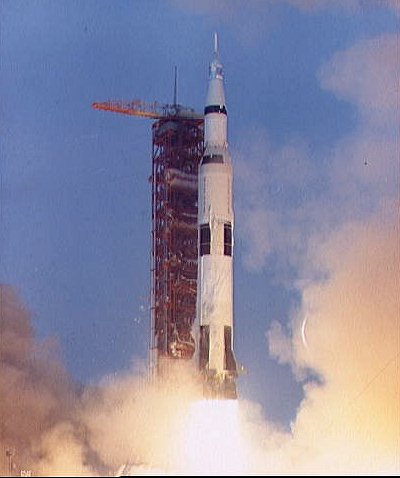
April 11, 1970 - Apollo 13 was launched from Cape Kennedy at 2:13 p.m.
Fifty-six hours into the flight an oxygen tank exploded in the service module.
Astronaut John L. Swigert saw a warning light that accompanied the bang and
said, "Houston, we've had a problem here." Swigert, James A.
Lovell and Fred W. Haise then transferred into the lunar module, using it as a
"lifeboat" and began a perilous return trip to Earth, splashing down
safely on April 17th.
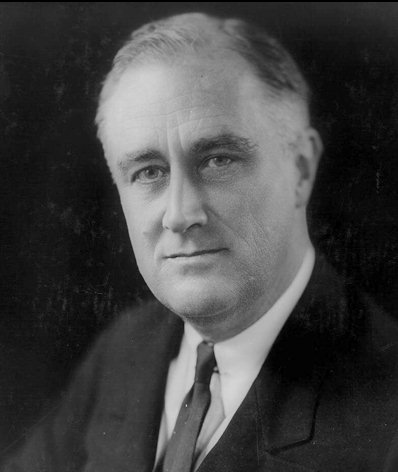
April 12, 1945 - President Franklin D. Roosevelt died suddenly at Warm
Springs, Georgia, after suffering a cerebral hemorrhage. He had been President
since March 4, 1933, elected to four consecutive terms and had guided America
out of the Great Depression and through World War II.
April 12, 1961 - Russian cosmonaut Yuri Gagarin
became the first human in space. He traveled aboard the Soviet spacecraft Vostok I to an altitude of
187 miles (301 kilometers) above the earth and completed a single orbit in a
flight lasting 108 minutes. The spectacular Russian success intensified the
already ongoing Space Race between the Russians and Americans. Twenty-three
days later, Alan Shepard became the first American in space. This was followed
in 1962 by President Kennedy’s open call to land an American on the moon
before the decade’s end.
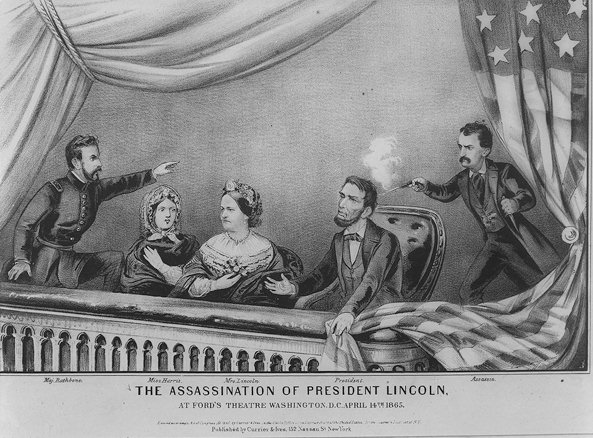
April 14, 1865 - President Abraham
Lincoln was shot and mortally wounded while watching a
performance of Our American Cousin at Ford's Theater in Washington. He
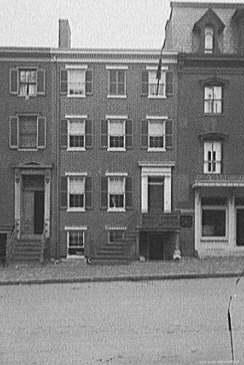
was taken to a nearby house and died the following morning
at 7:22 a.m.
April 15, 1912 - In the icy waters off Newfoundland,
the luxury liner Titanic with 2,224 persons on board sank at 2:27 a.m.
after striking an iceberg just before midnight. Over 1,500 persons drowned
while 700 were rescued by the liner Carpathia which arrived about two
hours after Titanic went down.
April 19, 1993 - At Waco, Texas, the compound of the
Branch Davidian religious cult burned to the ground with 82 persons inside,
including 17 children. The fire erupted after federal agents battered buildings
in the compound with armored vehicles following a 51-day standoff.
April 19, 1995 - At 9:02 a.m., a massive car-bomb
explosion destroyed the entire side of a nine story federal building in
Oklahoma City, killing 168 persons, including 19 children inside a day care
center. A decorated Gulf War veteran was later convicted for the attack.
 April 20, 1999 - The deadliest school shooting in
U.S. history occurred in Littleton, Colorado, as two students armed with guns
and explosives stormed into Columbine High School at lunch time then killed 12
classmates and a teacher and wounded more than 20 other persons before killing
themselves. (Photo)
Birthday - Adolf Hitler (1889-1945) was born in
Braunau am Inn, Austria. As leader of Nazi Germany from 1933 to 1945, he waged
a war of expansion in Europe, precipitating
the deaths of an estimated 50 million persons through military conflict and
through the Holocaust in which the Nazis attempted to
exterminate the entire Jewish population of Europe.
April 23rd - Established by Israel's Knesset as
Holocaust Day in remembrance of the estimated six million Jews killed by Nazis.
April 24, 1915 - In Asia Minor during World War I, the first modern-era genocide began with the deportation of
Armenian leaders from Constantinople and subsequent massacre by Young Turks. In
May, deportations of all Armenians and mass murder by Turks began, resulting in
the complete elimination of the Armenians from the Ottoman Empire and all of
the historic Armenian homelands. Estimates vary from 800,000 to over 2,000,000
Armenians murdered.
April 26, 1986 - At the Chernobyl nuclear power
plant in the Ukraine, an explosion caused a meltdown of the nuclear fuel and
spread a radioactive cloud into the atmosphere, eventually covering most of
Europe. A 300-square-mile area around the plant was evacuated. Thirty one
persons were reported to have died while an additional thousand cases of cancer
from radiation were expected. The plant was then encased in a solid concrete
tomb to prevent the release of further radiation.
April 28, 1945 - Twenty-three years of Fascist rule
in Italy ended abruptly as Italian partisans shot former Dictator Benito
Mussolini. Other leaders of the Fascist Party and friends of Mussolini were
also killed along with his mistress, Clara Petacci. Their bodies were then hung
upside down and pelted with stones by jeering crowds in Milan.
April 20, 1999 - The deadliest school shooting in
U.S. history occurred in Littleton, Colorado, as two students armed with guns
and explosives stormed into Columbine High School at lunch time then killed 12
classmates and a teacher and wounded more than 20 other persons before killing
themselves. (Photo)
Birthday - Adolf Hitler (1889-1945) was born in
Braunau am Inn, Austria. As leader of Nazi Germany from 1933 to 1945, he waged
a war of expansion in Europe, precipitating
the deaths of an estimated 50 million persons through military conflict and
through the Holocaust in which the Nazis attempted to
exterminate the entire Jewish population of Europe.
April 23rd - Established by Israel's Knesset as
Holocaust Day in remembrance of the estimated six million Jews killed by Nazis.
April 24, 1915 - In Asia Minor during World War I, the first modern-era genocide began with the deportation of
Armenian leaders from Constantinople and subsequent massacre by Young Turks. In
May, deportations of all Armenians and mass murder by Turks began, resulting in
the complete elimination of the Armenians from the Ottoman Empire and all of
the historic Armenian homelands. Estimates vary from 800,000 to over 2,000,000
Armenians murdered.
April 26, 1986 - At the Chernobyl nuclear power
plant in the Ukraine, an explosion caused a meltdown of the nuclear fuel and
spread a radioactive cloud into the atmosphere, eventually covering most of
Europe. A 300-square-mile area around the plant was evacuated. Thirty one
persons were reported to have died while an additional thousand cases of cancer
from radiation were expected. The plant was then encased in a solid concrete
tomb to prevent the release of further radiation.
April 28, 1945 - Twenty-three years of Fascist rule
in Italy ended abruptly as Italian partisans shot former Dictator Benito
Mussolini. Other leaders of the Fascist Party and friends of Mussolini were
also killed along with his mistress, Clara Petacci. Their bodies were then hung
upside down and pelted with stones by jeering crowds in Milan.
Acknowledgement: The History Place - This Month in History (Internet), Internet photos