Friday, December 27, 2024

Visit the Living with Nature Museum

Living with Nature Museum 
San Vicente, Ilocos Sur

A visit to a museum is a search for beauty, truth, and meaning in our lives. Go to museums as often as you can. - Maira Kalman

Dr Abe V Rotor

Students frequent the museum for research and study tour, often 
accompanied by their teachers and parents. Workshops are set up to
celebrate UN designated themes on environment, peace, education, 
indigenous culture, food, art, and the like.   
 
Visitors find time and leisure in going over some rare library collections,
like old book editions, documentaries and memorabilia of WWII, cold 
war era, and tumultuous seventies. The 1970s was a tumultuous decade 
marked by social change, political scandal, and cultural events


Figurines and relics in driftwood, carvings, paintings, specimens, 
grace the cyptobiology section of the museum. Among these are
reconstructed heads of Philippine deer, and Indigenous wood
carvings. 

"Museums inspire and challenge us to think in new ways. Exhibits can 
spark creativity, spur discovery, and inspire wonder through stories, 
music, art, information, and adventure." 
 
Contemporary and modern art in contrasting features is shown 
in an old dresser (left), and a spike studded chandelier (right). 


Ancestral pieces of furniture: upper photos, carved easy chair 
(silion, Ilk) and armchair.  Lower photos, black bed and aparador, 
both made of narra.  These were used by the author's parents 
and grandparents. Note contrasting designs depicting both
colonial and neo-colonial eras (European and Commonwealth).
  
A perfectly round stone shaped naturally by running stream 
used as cannon ball in the days of Panday Pira (c. 1488–1576) 
a Filipino blacksmith and maker of an early type of cannon. 

Fossilized bone fragment of a large animal 
in the Cretaceous era.

*The Cretaceous is defined as the period between 145.5 and 65.5 million years ago, the last 
period of the Mesozoic Era, following the Jurassic and ending with the extinction of the dinosaurs

 
Pipe (tobacco) used by the author in the seventies and eighties.
Visitors are LGU staff members of San Vicente municipality.

 
Probable tusk of an elephant (?) reportedly found in Cagayan Valley,
a subject of study on animal migration and land bridges in ancient past.

"The purpose of modern museums is to collect, preserve, interpret, 
and display objects of artistic, cultural, or  scientific significance 
for the study and education of  the public."
Visitors pay homage to Apo Resureccion, a life size wooden icon of the risen Christ
(Apo Resurreccion has been with us, Rotor Family, in our ancestral home for five generations now.)

"Museums build a sense of community identity. They serve as a gathering 
point for people of all backgrounds to come and enjoy the fun of 
sharing similar interests." 
 
An wine cellar still producing the traditional basi wine for five generations 

"Museums connect us to the larger world around us. They offer new 
experiences we can’t find in other places or by staying at home."
   
Statuette made of iron and wood against a painting symbolizing 
the on-going war of Israel in Gaza, made by a 10-year old child. 

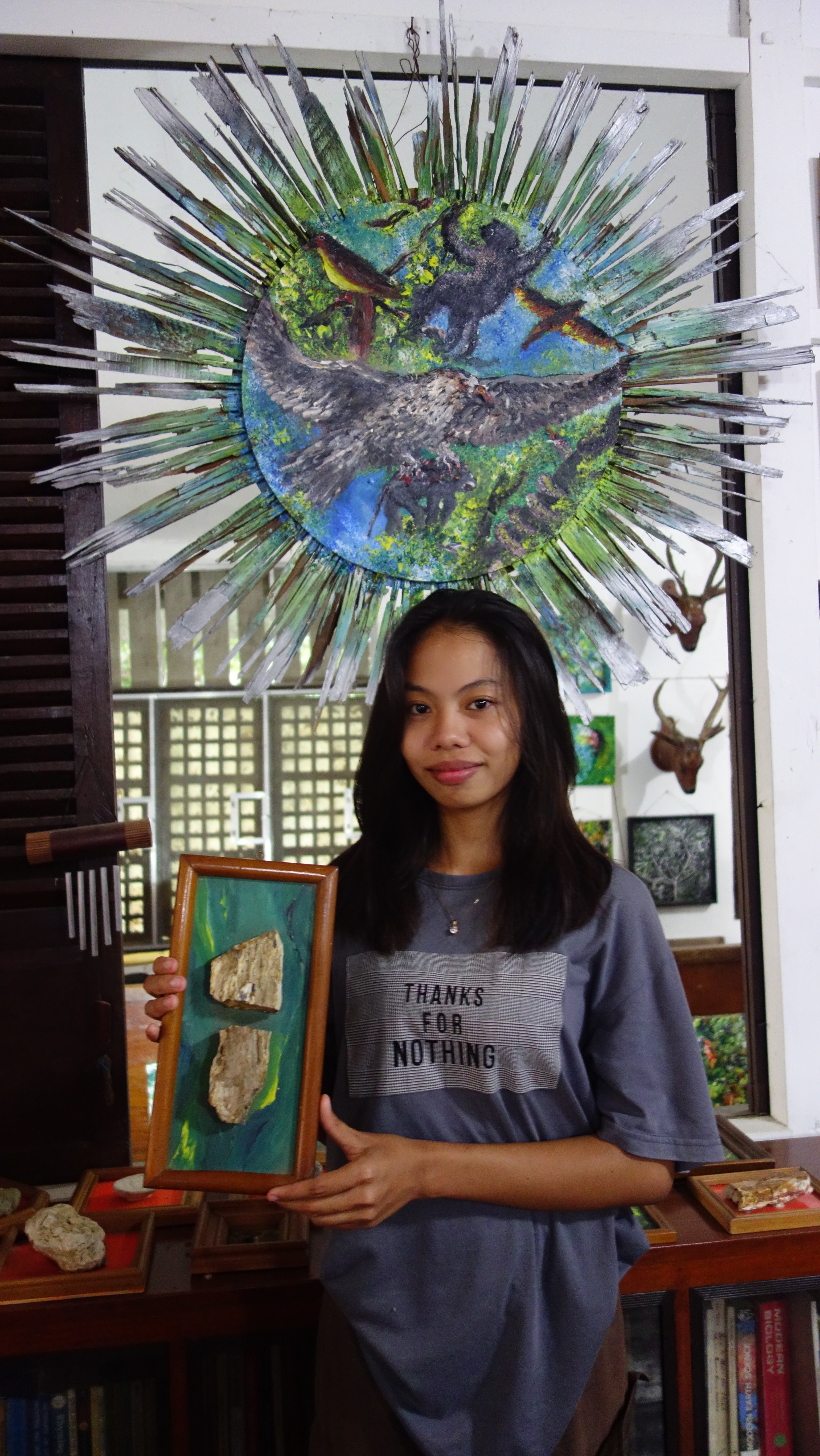
Country lass poses behind a reconstructed bust of Emilio Aguinaldo 
enshrined at the botanical garden of the Living with Nature Center

"Museums document history, offer community events, and serve 
as must-see tourist destinations." ~

Arch of the Centuries, University of Santo Tomas (Founded 1611)

  Arch of the Centuries, University of Santo Tomas (Founded 1611)

Dr Abe V Rotor
Former Professor, UST
Living with Nature School on Blog 

The two faces of the Arch of the Centuries UST  

The original Arch which faces the Main Building was the main doorway to the university building before it was destroyed during World War II when it was at Intramuros (left side). A newer arch faced España Boulevard, which is a reconstruction of the original arch.

The Arch of the Centuries was originally erected in 1611 at Intramuros, where UST was originally established. When the university transferred to its present location at Sampaloc, the Arch was also carried and re-erected piece-by-piece in 1954.


The original Arch which faces the Main Building was the main doorway to the university building before it was destroyed during World War II when it was at 
Intramuros. A newer arch faced España Boulevard, which is a reconstruction of the original arch.

In January 25, 2010, it was declared a National Cultural Treasure, along with the University Main Building, the Central Seminary Building, and the university field, by the National Museum of the Philippines.

Arch of Centuries in Intramuros before and after WW II. 


The Arch contains Doric columns, but is Baroque in its details. The inscription on the arch says "Gateway to the history of the finest breed of Filipinos," a reference to the numerous alumni who have made an impact in Philippine history. On the left pillar of the façade facing España Boulevard is commemorative plaque honoring national hero José Rizal, and on the right pillar is another plaque honoring President Manuel L. Quezon; both being UST alumni.

On the sides at the top of the Arch are panels depicting the life of Saint Thomas Aquinas, the patron saint of the university and of all Catholic educational institutions. (Wikipedia)
The Arch during the Lenten Season.  It is one of the Stations of the Cross.  
The Arch is the most popular vantage point for photography. It is a favorite location for class pictures such as this one. Author is at the middle in dark shirt.    
----------------------------------
The Arch Myth: Superstition has it that once you enter the Arch, you are not allowed to exit before you graduate, or else your stay in the university would be cut short. There had been countless tales of students who dared to break it though none can prove of its validity.
---------------------------------
Symbolically, the Arch stands brave and strong in inclement weather 
- physical and social - for more than 400 years.  
The Arch gloriously glows with the Christmas spirit during the traditional Paskohan of the University. 

Acknowledgement: UST Website, Wikipedia, artists and photographers whose works attracted many viewers of this post. 

University of Santo Tomas (Founded 1611) Oldest Center of Academic Excellence

University of Santo Tomas (Founded 1611)
Oldest Center of Academic Excellence
 
Dr Abe V Rotor

 
UST has one of the biggest student populations in Asia with some 50 thousand enrolled in two dozen colleges and faculties, from 
conservatory of music, fine arts, medicine to graduate school. 

Symbolic commitment for peace amongst religions.

Participants to the 7th Asian Conference of Religions for Peace, UST 2009

Graduate students take a break on a field study

On retreat for the quadricentennial of UST
Seminarians on seminar

The late Joey Velasco (in light t-shirt), is shown here with Dr Dante Lerma, and the late Dr Florentino Hornedo, and the author (far right) during his painting exhibition at UST. At the background is Hapag (Christ's Last Supper with Poor Children of Payatas QC). 2008Communications students under Dr Abe Rotor, pose with Joey Velasco (center, standing row), The untimely demise of the artist is a loss not only to art but humanity.   
 
Public school teachers in Metro Manila and suburbs pursue special courses at the UST graduate school under the government's program of upgrading education in the country.
Students working as a group is good training in bayanihan, a Filipino tradition.

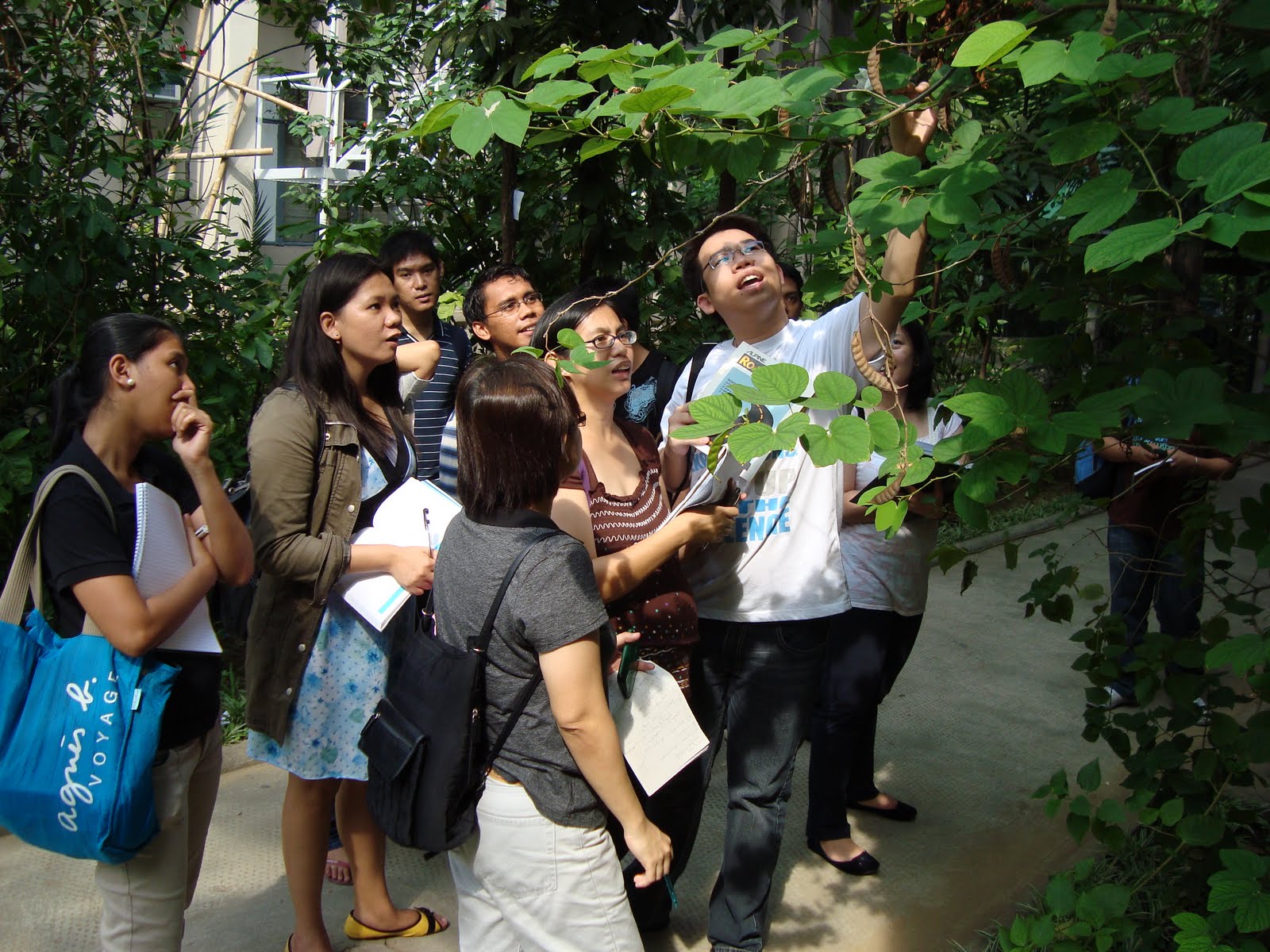
Graduate students in biology study the rich flora of the university campus. ~